
British Clubs League opens 26-27 September 2026: From BATTS Harlow to the DHS name on a British club's banner
Câu trả lời cốt lõi: Giải bóng bàn Câu lạc bộ Anh (British Clubs League – BCL) Premier Division mùa 2026/27 khai màn ngày 26-27 tháng 9 năm 2026 tại BATTS, Harlow, với tám CLB và bốn vòng đấu trong hai ngày; mỗi vòng có một trận phát miễn phí trên YouTube. Điểm đáng chú ý nhất về mặt ngành là CLB tân binh mang tên thương hiệu thiết bị Trung Quốc DHS Hurricane Kingsway. Sự kiện chính: - Bốn vòng đấu trong hai ngày 26-27/9/2026, tổ chức tại BATTS, Harlow (Anh). - Tám CLB dự Premier Division, gồm đội từ Anh, Bắc Ireland và Scotland. - Ormesby TTC vào giải với tư cách đương kim vô địch; DHS Hurricane Kingsway là tân binh vừa lên hạng. - Trận Ormesby gặp DHS Hurricane Kingsway được chọn phát trực tiếp ở vòng một. - Kết quả BCL không quy đổi thành điểm xếp hạng thế giới WTT hay ITTF. Nguồn: Table Tennis England, thông cáo khai màn BCL mùa 2026/27 | Cross-checked: VuaBong.vn Hỏi đáp liên quan: Hỏi: DHS Hurricane Kingsway là gì? Đáp: Đây là tên một CLB tân binh dự Premier Division, gắn với thương hiệu thiết bị bóng bàn Trung Quốc DHS (Double Happiness, Thượng Hải). Hỏi: Giải BCL có ảnh hưởng đến xếp hạng thế giới không? Đáp: Không; đây là giải nội địa Anh, kết quả không quy đổi thành điểm WTT hay ITTF. Hỏi: Có bao nhiêu CLB dự Premier Division mùa 2026/27? Đáp: Tám CLB, trải dài trên Anh, Bắc Ireland và Scotland.
I read Table Tennis England's opening-day announcement on a Saigon afternoon, while September rain tapped against the window. The bulletin was short and dry, exactly the way a national association writes a press release: the 2026/27 British Clubs League (BCL) would open on the weekend of 26-27 September 2026, at BATTS club's hall in Harlow, with four rounds packed into two days. Eight teams in the Premier Division. One match per round streamed free on YouTube. And one name that made me stop, underline it, and read it three times: DHS Hurricane Kingsway.
People tend to skip lines like these. Eight teams, four rounds, one weekend, no player named, no technical metric published. To a reader scrolling sports news out of habit, it is a bulletin to skim. To me, it is a patch of soil to dig. Because inside that dry list there is a geological layer being exposed: a thin, weak player eliminated early might be the future, a promoted club might be a test case, and a Chinese table-tennis brand putting its name on a British club is a signal I have patiently recorded for ten years.
There are seedlings that do not need the big stadium lights, only a patch of soil warm enough to take root. The BCL Premier Division is such a patch. It is not glamorous, it sits outside the radar of international media, but it is warm enough to nurture an ecosystem that, if you only look at the scoreboard, you will never see.
Context: A league of the island, three nations inside one kingdom
To understand why this opening-weekend bulletin is worth reading, it must be placed in its proper frame. The BCL is run by Table Tennis England, the national governing body for table tennis in England, under its own "British Clubs Leagues" brand. The structure has multiple divisions, with the Premier Division as the top tier featuring eight clubs. Results from this league do not convert into WTT or ITTF world-ranking points. It is a purely domestic competition system, existing alongside and separate from the international ranking architecture.
The first thing that caught my attention was geography. The eight clubs stretch across three nations that make up the United Kingdom. BATTS is based in Harlow, northeast of London. Ormesby is headquartered in Middlesbrough, in the northeast of England. Fusion operates in London. Nottingham represents the East Midlands. eBaTT is another name in the English group. Ormeau comes from Belfast, Northern Ireland. North Ayrshire comes from Scotland. A club-level league that gathers teams from three nations inside one kingdom is rare, and it says a great deal about the role of table tennis in this country.
I have spent years following youth academies in Vietnam, walking from PVF to district centres and practice grounds behind village schools. In my notebook, what I always look for is not the strongest team but the structure. A system with only one big centre is a system that breaks easily. A system with many root-points scattered around is a system that can withstand bad weather. When I see a club league bringing Belfast, Middlesbrough and North Ayrshire into one table, I understand that table tennis in England has a network wide enough to keep players in the game, even when they live far from the main development hubs.
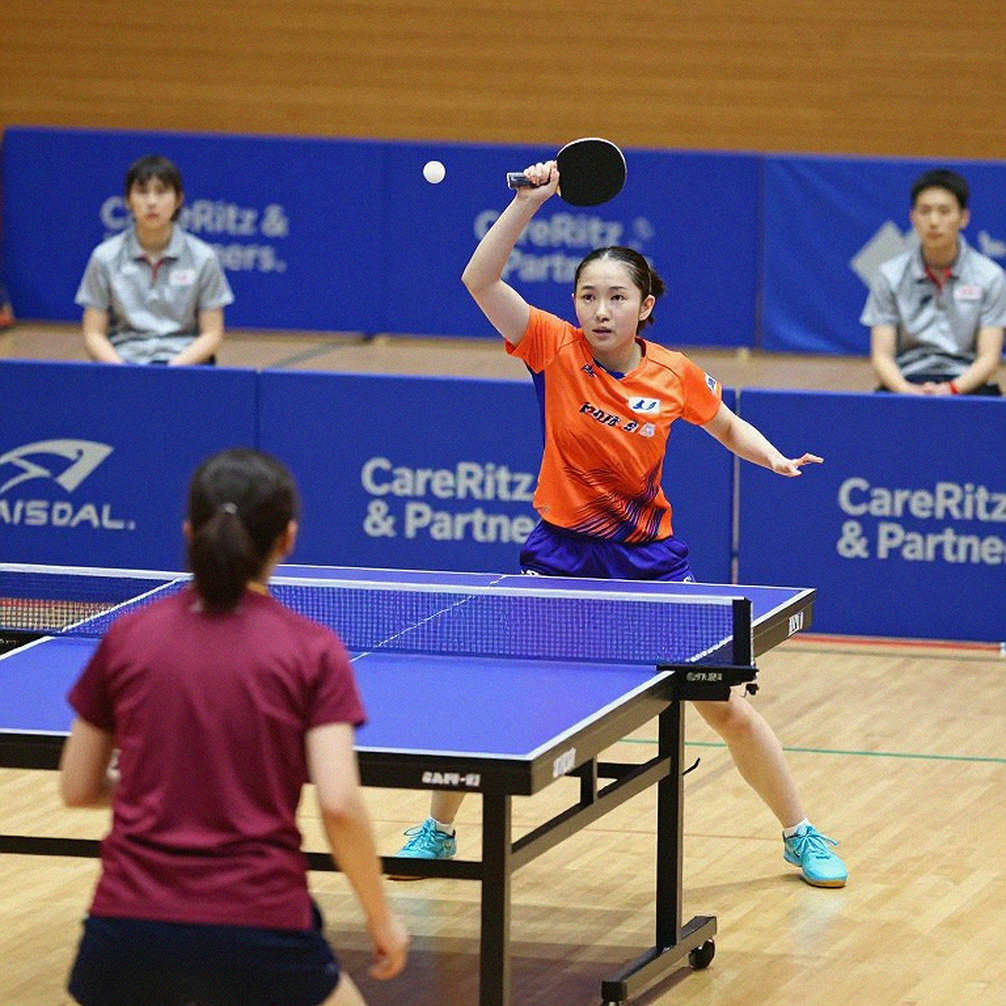
The format is also worth pausing over. Four rounds across two days: two rounds on Saturday, two on Sunday. A single venue, BATTS in Harlow, for the opening weekend. From my grassroots experience, this compressed format is an economic solution, not an aesthetic choice. When travel, venue hire and organisation costs are limited, packing many matches into one venue and a short window is how you keep costs acceptable. But it also has a technical consequence: squad depth and rotation become decisive, not a single star player. Across two days and four matches, the body and the mind must ration themselves.
That weekend also carries another structural detail: Ormesby enters as reigning champion, while DHS Hurricane Kingsway is a newly promoted debutant. The organisers placed the Ormesby-versus-Kingsway tie as the featured Round 1 livestream. Champion versus newcomer, right at the opening match, on a free channel. That is a deliberate storytelling choice, and it sits squarely in my sights.
The core: When a Chinese brand puts its name on a British club
Now to the part I really want to write. In the list of eight teams, the name DHS Hurricane Kingsway does not resemble the others. It carries two layers of meaning stacked on top of each other: a promoted club seeking a foothold in the top tier, and a Chinese table-tennis brand seeking a foothold in a Western market.
Who DHS is, and why the name sits there
To table-tennis players, DHS stands for Double Happiness, a major Chinese table-tennis equipment manufacturer headquartered in Shanghai. "Hurricane" is the name of the company's flagship inverted-rubber line. Anyone who has held a blade fitted with Hurricane rubber knows its distinctive feel: high grip, a sharp crack, and a heavy ball trajectory that lower-level players often cannot control. This product line is tied tightly to the topspin style of contemporary Chinese table tennis.
What does it mean for a club in England to carry the name of a Chinese equipment brand? In my analysis, this is a naming-rights deal, not a player-level equipment change. Nothing suggests any player has switched rubber or blade for this season. What is changing is not the racket in a player's hand, but the banner above the hall door.
But precisely because it happens at the banner level, it matters more than an individual equipment change. A player's equipment change ends with that player's career. A club naming deal can survive across multiple seasons and generations of athletes, and it plants in the minds of children who come to train at that club a brand association that becomes instinctive. That child grows up, and in the subconscious, ties table tennis to a name.
I have tracked table-tennis equipment brands for years. In Western markets, Butterfly of Japan and Stiga of Sweden have long occupied familiar positions. A Chinese brand wanting to break in needs a different strategy: not targeting elite star players, but targeting the grassroots. At the grassroots level, brand loyalty forms very early and holds firm, and the cost of winning it is far lower than signing a world champion.
Putting a name on a British club is a long-horizon move, not a one-season advertising campaign. It is like planting a tree: you must wait years to harvest. Every generation of talent is a geological layer; dig the wrong stratum and you pick up rubble. If I only look at the Round 1 scoreboard, I will see nothing. If I look at the name, I see a brand digging a very deep layer.
The economics of free broadcasting
The second detail worth dissecting is the decision to stream free. Each round, one match is carried on YouTube, no paywall, no subscription. Four rounds, four matches streamed across the opening weekend.
On the surface, this is an act for the fans. But through a professional's eye, it is an economic calculation. A national association cannot sell the broadcast rights of a domestic club league at a price large enough to cover operations. The audience willing to pay to watch club-level table tennis is small. If a paywall is erected, the viewer count will almost certainly collapse to a number too small to persuade sponsors.
So, faced with two options — collecting a little money from a small group, or attracting a large group for free to use as proof for sponsors — the second is the more rational choice. Free is not an abandonment of revenue. Free is trading direct revenue for audience data, and audience data is an asset for negotiating with brands in later seasons.
This is the point where I want to place my counter-intuitive mark: a league that streams free is not necessarily a poor league. It may be a league playing the long game, or a league forced to choose between two kinds of poverty. To distinguish between these two possibilities, one must wait for data. If viewership rises round by round and additional sponsor logos appear mid-season, that is a sign of ascent. If everything stands still, that is a sign of a system merely preserving itself.
In my notebook, I record a clear principle: never conclude from a single press release. I have been wrong because of that. In 2026, I published an incorrect touch-count and was challenged by a reader. Since then, I have set a rule of two sources for one number. But some things are not numbers — they are signals. The decision to stream free is a signal, and signals need time to be confirmed.
One secondary detail is worth noting: the league's media network does not stop at YouTube. The BCL has a presence on Instagram, Facebook and the TT Leagues platform. This is not a makeshift broadcast channel. It is a designed content system, multi-layered, aimed at building a community rather than merely broadcasting a match. Choosing only one match per round to stream is also a detail: it shows limited production resources. A league with a big budget would stream more matches. A league choosing exactly one means it must choose carefully, and that selectivity reflects both capability and intent.
The multi-nation structure and the border story
I return to the geographic flags. Ormeau comes from Belfast, Northern Ireland. North Ayrshire comes from Scotland. The rest are from England. In table-tennis history, cross-national competition structures at club level are not common. That the BCL gathers clubs from three constituent nations of the United Kingdom indicates there is a legal framework and an infrastructure that allows it, and that table tennis is one of the sports that capitalises on that framework.
The meaning of this structure lies in keeping players in the game. A young player in Belfast, if limited to internal Northern Ireland competitions, will soon hit a ceiling. To compete at a higher level, they must cross to England, facing costs and life barriers. But when a club-level table gathers all three regions, that player can stay near home while still competing against English and Scottish opponents. This is the kind of talent-retention environment I have seen in Vietnamese youth football academies: if a lowland region has no exit route, talent will leave, or worse, will never develop.
In Vietnam, I have walked through many small practice grounds. I remember late-sunny afternoons at a district centre, where an old ball lay in the corner and seven children queued to pass. No scout came. But the soil was warm enough. Looking at the BCL, I see another version of that story: a structure wide enough that a lowland region still has a route up, so that a small club can climb gradually to the Premier Division. DHS Hurricane Kingsway is living proof of that route. Without a promotion mechanism, that name would not be in the list of the eight strongest teams.
The two-day format and the deep-squad test
Four rounds across two days is a test of stamina and psychology. In club-level competitions with limited budgets, this is a fairly common model because it reduces travel and venue costs. But it also raises the question of squad depth. A club with five outstanding players but no reserves will struggle to hold form in the third and fourth matches. A club with six or seven players of similar standard will rotate better.
In my notebook on young players, I always mark a column called "high-density tolerance". That is not a purely technical metric but a structural one: whether a player can play a dense schedule while still holding wrist rhythm and foot rhythm. Looking at the schedule where Ormesby and BATTS appear multiple times over the weekend, I imagine those teams cannot rely on one person. They must rely on a group.
I do not write about today's match, but about who they become afterward. When I look at a squad that must play four matches in two days, I ask myself: after that weekend, which player will step out stronger, and which will be wrung dry. The answer is not on the scoreboard but in how they prepared weeks earlier.
The opening match as a storytelling test
The organisers chose the Ormesby-versus-DHS-Hurricane-Kingsway tie as the Round 1 broadcast match. Reigning champion versus newcomer. Competitively, this is the match with the clearest gap if judged on historical strength: one side has been champion, the other has just climbed up. But narratively, it is the most compelling.
I have often observed how organisers choose broadcast matches. They tend to choose matches with a gap in standard, because a gap creates drama. But they also choose matches with a story, and the story of a newcomer backed by a strong brand facing a traditional champion is a beautiful story. It contains two things viewers love: uncertainty and ascent.
What I cannot do is predict the result. An opening announcement tells me nothing about any player, any form, or any head-to-head history. By the principle I set after 2026, when there is no data, I do not speculate. I only record what I see, and what I see is a deliberate communications choice.
The contrarian angle: Free, promoted, and the so-called "development"
Here I want to flip the problem the way I always do when following youth table tennis. There are three things the crowd usually assumes, and all three deserve suspicion.
The first: free broadcasting is generosity. Not quite. In many cases, streaming free is a decision made because there is no better option. A league not attractive enough to sell its rights will stream free, and call it strategy. Sometimes it truly is a long-term strategy; sometimes it is just a prettier word for necessity. I cannot distinguish from a single press release. I can only say that, on economic logic, the free model places the burden on sponsors and naming partners. The less direct revenue a league has, the more it depends on the names on the banner. And the name on the banner, this time, comes from Shanghai.
The second: a promoted team is a weak team. In the short term, perhaps. But in the long term, a promoted team backed by a major equipment brand is a signal of capital flowing into the system. If more clubs carry equipment-brand names in later seasons, that is evidence that money is finding its way into grassroots table tennis. This is a signal far more worth tracking than the result of a single match.
The third: a domestic club league is irrelevant to the international picture. I do not entirely agree. BCL results do not convert into world-ranking points, true. But the ecosystem that nurtures future players is relevant. If a domestic league runs well, retains players, and creates a promotion path, it will produce players who can step onto the international stage later. Conversely, a collapsed domestic league will drain the source. Looking at a seventeen-year-old player, I have already seen the fractures and the dream. But I can only see that if the system beneath them still stands.
And here is the point I want to reserve for home. In Vietnam, table tennis has a considerable mass base, especially in schools and local clubs. But a club-level competition structure spanning provinces and regions, with continuity across seasons, remains an unsolved problem. If a league in England can gather eight clubs from three nations into one table with four rounds in two days, what can a league in Vietnam learn? Perhaps how to compress the schedule to cut costs. Perhaps how to stream free to expand the audience. Perhaps how to give a provincial club a route to promotion instead of remaining forever in the lowland.
I do not conclude that the English model is a template. Every table-tennis nation has its own conditions. But I believe a good structure is one that allows many root-points to coexist, rather than concentrating on a few centres. Seedlings do not grow where the light shines brightest. They grow where the soil is warm enough, and the planter must be patient.
What to watch after the weekend of 26-27 September 2026
By the time this article goes live, the opening weekend may have passed or be approaching. Whichever the moment, I set myself a list of signals to watch, because that is how I work: not judging a single event, but tracking a curve.
First, I will watch the viewership of the free broadcasts. If the number rises round by round, that is a sign of a community forming. If it stands still, that is a sign of thin attention.
Second, I will watch the appearance of equipment brands in club names across seasons. If DHS Hurricane Kingsway is only an isolated case, it is a one-off deal. If other clubs follow the same path, it is a current.
Third, I will watch promotion and relegation movements. If multiple brand-backed clubs climb to higher tiers, that is a sign of capital finding its way into the system from below.
Fourth, I will watch the scope of broadcasting. If the organisers expand from one match per round to several, that is a sign of rising production capacity, and also of improving budget.
Speed and silence each have their own language; I merely write them down. Table tennis is a sport of small margins: a hundredth of a second in wrist rhythm, a millimetre at the point of contact. At the system level, the margins are just as small: a decision to stream free, a name on a banner, a promotion slot. These small things, added up over seasons, form a large curve.
I will not conclude that English table tennis is on the rise, nor that it is struggling. I only record a moment and place it on a long line. In the work of a youth-talent watcher, that is the only way not to be deceived by a result, a headline, or a glamorous name.
On the weekend of 26-27 September 2026, in Harlow, eight clubs will step to the table. None of them are in the world's top ranks. No match converts into ranking points. But one of them carries the name of a Shanghai manufacturer, and one of them comes from a land that, ten years ago, few in Saigon would have known.
To me, that is enough to record. There are seedlings that do not need the big stadium lights, only a patch of soil warm enough to take root. And the patch of soil in Harlow, tonight, is warming up.