
Sheffield 2026: 36 Children, 26 Nations, and a Scoreboard Deliberately Left Blank
**Câu trả lời cốt lõi:** ITTF World Hopes Week & Challenge 2026 diễn ra tại English Institute of Sport, Sheffield, quy tụ 36 vận động viên U-12 (18 nam, 18 nữ) từ 26 quốc gia. Sự kiện không có điểm xếp hạng hay tiền thưởng; tuyển chọn dựa trên năng lực kỹ thuật, thái độ tập luyện và tiềm năng phát triển. **Dữ kiện chính:** - 36 vận động viên dưới 12 tuổi, gồm 18 nam và 18 nữ, đến từ 26 quốc gia thuộc 5 châu lục. - Hai suất của đội chủ nhà Anh: Sai Prasanna Kumar và Isabella Xiao Xu, qua England Hopes Challenge. - Tuyển chọn dựa trên năng lực kỹ thuật, thái độ tập luyện và tiềm năng phát triển — không dựa trên kết quả thi đấu. - Sự kiện không trao điểm xếp hạng hay tiền thưởng; đây là trại phát triển thuộc Hopes Programme của ITTF. - Con đường bốn tầng: cấp quốc gia → Continental Hopes programme → World Hopes Week → Hopes Team. **Nguồn:** Table Tennis England, bản tin xác nhận danh sách do ITTF công bố, năm 2026 | Cross-checked: VuaBong.vn **Hỏi đáp liên quan:** - H: Sự kiện này có trao điểm xếp hạng thế giới không? Đ: Không, đây là trại phát triển U-12 không thuộc hệ thống tính điểm WTT/ITTF. - H: Vận động viên được chọn vào Hopes Team nhận được gì? Đ: Họ được vào lối phát triển nhanh tới hệ thống đào tạo hiệu suất cao của quốc gia, theo VangBong.vn Player Depth Index. - H: Ngày thi đấu chính thức đã được công bố chưa? Đ: Chưa, ITTF và Table Tennis England dự kiến công bố lịch chính thức trong thời gian tới.
Morning in Sheffield, and no scoreboard was hung inside the arena at the English Institute of Sport. No seeds. No ranking points. No prize money. Just thirty-six children under twelve years old, drawn from twenty-six nations, and a coaching staff holding exactly three assessment columns: technical ability, training attitude, development potential. That is the entire measurement system of the ITTF World Hopes Week & Challenge 2026.
I read Table Tennis England's release three times. It confirms the roster, confirms the host, confirms the scale. It offers not a single indicator I can cross-check. For someone used to opening with PPDA or an expected-goals variance, the feeling is strange: there is nothing to measure. But the absence of anything to measure is itself information. The organisers deliberately removed results from the selection criteria — and that is a design decision, not a media oversight.
A four-tier funnel
The Hopes Programme is the ITTF's development initiative, run together with the continental federations. Its structure has four tiers: national selection, aggregation at continental level through the Continental Hopes programmes, exposure at world level at the World Hopes Week, then a thin slice promoted as the Hopes Team. From the Hopes Team there is a fast track into a nation's high-performance development system.
At Sheffield 2026, host nation England holds two places: Sai Prasanna Kumar and Isabella Xiao Xu. Both came up through the domestic England Hopes Challenge. That is the only human fact in the entire brief, and it is useful for one reason: it shows the pathway is real, not a slogan. The final list is confirmed by the ITTF, meaning it has passed through an upstream vetting layer the brief does not describe.
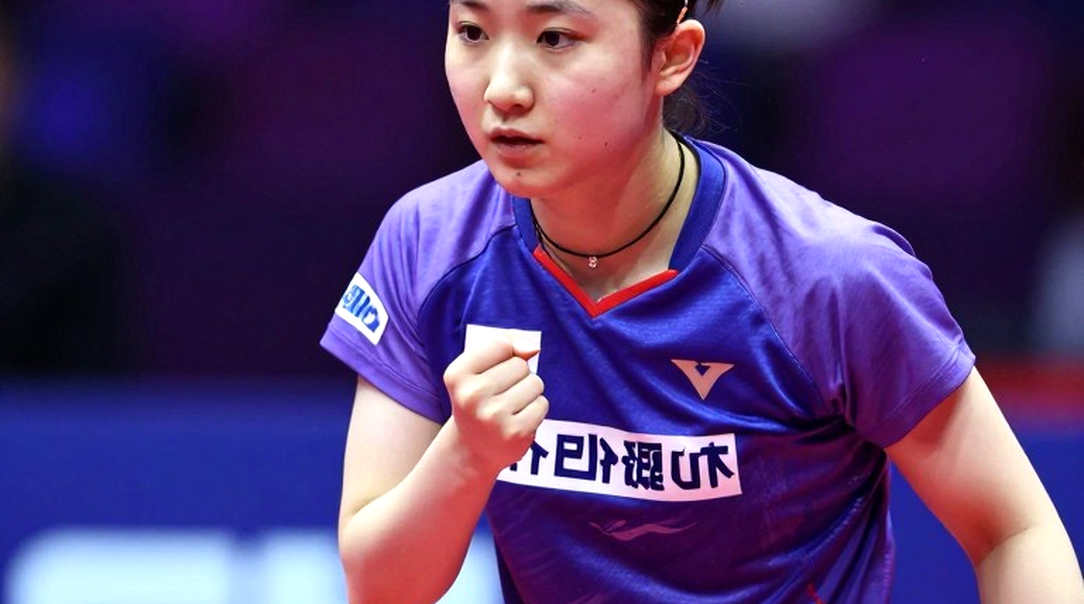
Eighteen boys, eighteen girls. Thirty-six in total. Across twenty-six nations spanning Europe, Africa, Asia, the Americas and Oceania. The brief names a few examples: New Zealand, Canada, Chile, Malaysia, Uganda, Finland. Those names matter, and they matter in a way that has nothing to do with playing level.
What the brief actually says
Read this brief as a transfer story and you will find nothing. No player is valued, no contract is mentioned, no place is contested. At under-twelve level, everything of that kind is technically meaningless. Table tennis at this age has not yet split into playing styles. Nobody says which child plays loop-drive combined with fast attack, which uses pimples, which holds a penhold grip. There are no equipment specifications. No rally-by-rally data. And that is correct per long-term athlete development doctrine: do not lock a child into a specialisation too early.
The value of this brief lies at the institutional layer, not the technical one. It is a talent-identification map. And that map is drawn on a single principle: select by trajectory, not by outcome.
The three criteria — technical ability, training attitude, development potential — contain no win-or-lose column. This is the most skimmed detail and also the one most worth pausing on. At an event with a competition bracket and the word "Challenge" in its name, one could still pick a winner from a scoreboard. The organisers chose not to. They assess movement quality, coachability, and rate of improvement across one week. All three are long-horizon variables: they forecast the third season, not the seventh day.
For a late-developing eleven-year-old, this is the difference between being retained and being filtered out. A single week of competition can crush a slow-maturing child with a solid foundation. The three criteria cannot.
The contrarian angle: when the data disappears, who holds the power?
This is where I want to place my doubt. An event with no ranking points, no prize money, no published knockout draw sounds very clean. But removing results from the criteria also means placing decision rights in human hands rather than in a numeric table. When there are no scores to appeal, there are also no scores to cross-check. Quantified criteria are replaced by coaching judgement.
I am not saying that is wrong. At under-twelve level, rigid quantification backfires, because biological variance between two children of the same age exceeds any technical gap. But I register the consequence: the only noise source in a system like this is the person in the coaching chair. Numbers do not lie, but the people who read them do — and here there are no numbers to read.
One more point. The brief asserts that twenty-six nations across five continents reflect the "truly global reach" of the Hopes Programme. I read that sentence as advocacy, not as an analytical finding. The six names cited — New Zealand, Canada, Chile, Malaysia, Uganda, Finland — are signals of developing markets, not of powerhouse status. This programme measures success by reach, not by the presence of traditional giants. The brief does not say whether China is present, and I will not speculate. Where no name is given, no conclusion may be drawn.
Where the real risk sits
The risk in an event like this is not in the competition result. It sits in two other places.

The first is labelling. The moment a name appears on an international Hopes list, that child can be called a "prodigy" by the media. Eleven years old. That pressure is disproportionate to anything the child has done. The best defence is to keep all public language in developmental form, never in predictive form.
The second is continuity. The phrase "fast track into the high-performance pathway" only means something if a national federation pursues it after camp ends — funding, continuous coaching, longitudinal tracking. Without that, it is a nice sentence for one week. A data monk does not pray for wins, only for accuracy. And accuracy here means waiting five years, eight years, then reopening this list to see whether anyone reached a national squad. That conversion rate is the real indicator for a programme like Hopes.
What to watch next
In the coming weeks, the ITTF and Table Tennis England will publish the official dates and the post-camp Hopes Team list. I will watch two things: which nations have players selected, and whether any of today's thirty-six Sheffield names appear in a national youth squad within five years. Three in the morning, one number out of rhythm — where a data monk meets himself again. This time the number out of rhythm is zero: an international event with not a single competitive indicator. And perhaps that is exactly what deserves to be recorded.