
The Cluj Incision: Turkey Falls 1-3 to Romania, Hopes Pinned to a Latvia Trapdoor
**Core answer** (≤60 words): Romania đánh bại Thổ Nhĩ Kỳ 3-1 (25-19, 25-21, 20-25, 25-18) tại bảng D EuroVolley 2026 nam, tổ chức ở BT Arena Cluj-Napoca. Thổ Nhĩ Kỳ giờ buộc phải thắng Latvia ở trận cuối để đi tiếp. Biên bản trận đấu không nêu tên cầu thủ và không có chỉ số kỹ thuật chi tiết. **Key facts** (mỗi gạch đầu dòng ≤25 từ): - Set: Romania thắng 25-19 và 25-21; Thổ Nhĩ Kỳ thắng set ba 25-20; Romania thắng set bốn 25-18. - Tổng điểm trận: Romania 93, Thổ Nhĩ Kỳ 83 (chênh lệch ròng +10, khoảng 2,5 điểm/set). - Chắn của Romania được cho là hạn chế phương án tấn công của Thổ Nhĩ Kỳ. - Thổ Nhĩ Kỳ đã thua ba trận; trận cuối gặp Latvia lúc 17:00 giờ Thổ Nhĩ Kỳ ngày hôm sau. - Biên bản ghi "Source: None" ở mọi điểm dữ liệu; toàn bộ kết quả chờ kiểm chứng. **Source attribution**: Nguồn gốc: tiêu đề "Efeler son maça kaldı" (báo chí Thổ Nhĩ Kỳ), ngày đăng chưa xác minh. Biên bản Stage-1 ghi "Source: None" — chưa đối chiếu được với cơ sở dữ liệu VuaBong.vn. **Related Q&A**: - Q: Thổ Nhĩ Kỳ còn cửa đi tiếp không? A: Còn, nhưng chỉ một cửa: phải thắng Latvia ở trận cuối bảng D. - Q: Ai quyết định trận đấu Romania? A: Biên bản không nêu tên cầu thủ; hệ thống chắn của Romania được cho là đòn bẩy chiến thuật. - Q: Khi nào Thổ Nhĩ Kỳ gặp Latvia? A: 17:00 giờ Thổ Nhĩ Kỳ ngày hôm sau trận Romania, theo biên bản chưa xác minh.
Four points. That was the entire gap between Turkey and at least one set at BT Arena Cluj-Napoca, in last night's 1-3 defeat to Romania. I sat down with the four-set record — 25-19, 25-21, 20-25, 25-18 — and what caught my eye was not the scoreline but the location of the points conceded. They were not scattered. They clustered in the back half of each set, precisely the zone I still call the "interference band": where pressure compresses an entire set into four or five rallies.
In the interference band, the team that keeps its structure survives. Turkey did not.
The diamond structure does not live on the drawing board; it lives in anonymous passes. At Cluj, Turkey's anonymous passes snapped exactly when Romania tightened its block.
A MATCH OF DEFICIENT NUMBERS
This was Turkey's fourth match in Group D of the CEV EuroVolley 2026 Men's. Their advance hopes now rest entirely on the final match against Latvia, scheduled for 17:00 Turkish time the following day, still at the Cluj venue. What I have in front of me is a record stripped to the bone: set scores only. No technical metric whatsoever. No spike-success rate, no block count, no perfect-pass efficiency, no ace-to-error ratio. No player named.
Let me say this upfront: every analysis below rests on a single reliable data axis — the set-score pattern. The other three pillars of any serious volleyball analysis — reception efficiency, attack distribution by zone, and blocks-per-set — are empty. If anyone tells you they know Turkey lost because of poor attacking, they are fabricating. The data does not permit that conclusion. Every data point in my record carries "Source: None," meaning the entire result sits in a pending-verification state against official CEV sources.
But the set-score pattern is enough to say one thing, and that thing matters.
CORE: ROMANIA'S BLOCK AS THE SYSTEM LEVER
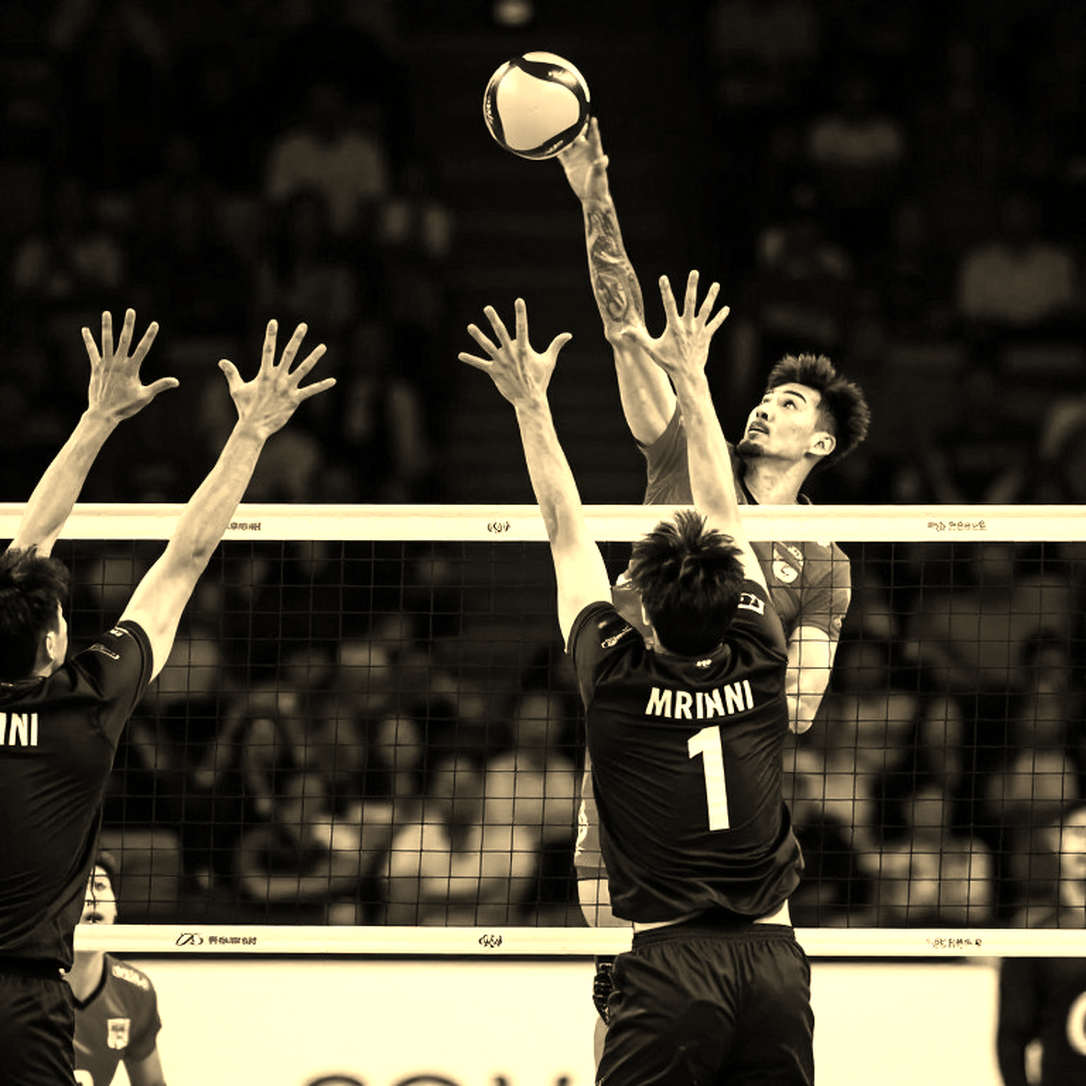
The original report itself admits Romania "restricted Turkey's attacking variations, especially through its block numbers." I read that sentence three times. It does not say Romania blocked a lot. It says Romania blocked correctly — with intent, aimed at the distribution zone Turkey prefers.
When a block reads the attack distribution, the consequence is not the blocks that score points. It is the blocks that do not: the attacker is forced into the blocker's hands, the ball rebounds slowly, the opposing defence builds a second touch, and suddenly a clean attacking situation becomes a chaotic rally. That kind of damage never shows on the stats sheet, but it erodes the scoreline the way a drip erodes stone.
Core insight: Romania did not win because its block was better; it won because it turned the block into a tool to reroute the match's tempo, forcing Turkey out of system — exactly where Turkey is weakest.
Set three is the counter-evidence. Turkey won it 25-20 by "executing its block-defence setup better" and "breaking Romania's block." One set. Only one. But it proves the Turkish staff can identify and partially neutralise an opponent's weapon within an interval. Most mid-tier European sides do not adjust that fast.
So why could they not sustain it into set four?
THE SERVE CHESSBOARD WAS NOT RECORDED
The original report describes set two as "a full tactical battle" of serves. That is the most technically fascinating detail, because tactical serving is where a coach actually touches the match. They name the serve zone, the weak receiver, the moment to serve hard. At EuroVolley level, a serve aimed at the right zone can break the first pass and turn a team into a collection of isolated attackers.
But the original provides no serve zone. No receiver named. No timing. This is the biggest blind spot in the whole record. The single most important tactical dimension of a volleyball match — serve targeting — is entirely unrecorded. Someone at Cluj won that chessboard, and we do not know who.
If forced to bet, I bet on Romania. Not because I have the data — I do not — but because of the set-three logic: if Turkey could adjust its block and still lost set four, the source of pain most likely came from the serve wave on the other side. Romania served Turkey out of first-pass structure, Turkey lost its shape, and set four drifted away in a run of late errors.
That is a hypothesis. Not a conclusion. Do not let anyone turn it into a conclusion on my behalf.
THE COUNTER-INTUITIVE POINT: THE PROBLEM IS NOT TALENT
A 1-3 defeat in a European championship is usually read as a "class gap." But look at the set margins again: 6 points, 4 points, 7 points — and in all three lost sets, Turkey stayed within reach into the back half before folding. Total points for the match: Romania 93, Turkey 83. A net differential of 10 points over four sets, roughly 2.5 points per set.

2.5 points per set is not the distance between two volleyball nations. It is the distance between two evenly matched teams, decided in the closing rallies — precisely the pressure zone where structure has to stand on its own backbone rather than on inspiration.
Turkey did not lose for lack of talent. It lost because in the closing rallies, its system was one layer thinner. In sets one and two, they let Romania take the finishing points. In set four, they dropped it themselves on a run of consecutive errors. Three times, the same break — that is not randomness. That is the fingerprint of a systemic problem.
And that systemic problem cannot be fixed by substitution. It can only be fixed by redesigning two rallies: their own serve, and the key rally against the opponent.
A TRAPDOOR NAMED LATVIA
Turkey's advance hopes now rest entirely on the Latvia match. There is no other path. And here is the frightening part: a 3-1 defeat leaves 0 table points under CEV group conventions — whereas a 3-2 loss leaves 1 point. If the wildcard race is decided by points or set ratio, Turkey has just shot itself in the foot in the most expensive way possible. That convention must be verified against official CEV sources before any calculation is used.
I also have no information on Latvia's current Group D record and cannot assess the balance of forces from what is available. But one thing I do know: the Turkish men have been a mid-tier European side for years, and a Latvia match at the trapdoor is no formality. It is a genuine test. Turkish domestic volleyball has a stronger league than Latvia's, but league quality does not automatically convert into points in a knockout-pressure match after a short turnaround.
People look at the diagram to know the lineup; I look at the deviations to know what the team is afraid of. And what Turkey is afraid of, after Cluj, is its own closing minutes.
THREE SIGNALS TO WATCH IN THE LATVIA MATCH
I do not believe in shopping; I believe in filling the gap the opponent does not yet know it has. The Latvia match is the last chance for Turkey to fill the gap Romania just exposed.
First, error rate in the back half of sets. If Turkey enters decisive sets with a high self-inflicted error rate, especially around the 18-22 mark, the mental issue has become structural, and Latvia will exploit exactly that seam.
Second, Turkey's serve targeting. Watch whether they aim at Latvia's weak receiver or serve safely to keep the ball alive. Safe serving against a peer opponent is a sign of fear, and fear spreads faster than any tactic.
Third, out-of-system attack distribution. If Turkey's first pass breaks, do they have a Plan B — a hitter who can put up a high ball, or an attack behind the setter — to stop the slide? If not, every broken first pass is a lost point, and the match will drift into the exact Cluj script.
These three signals can be verified within 24 hours. A prediction with identifiable markers is worth more than a vague pronouncement.
The Latvia result will answer those three questions. But the more valuable answer lies elsewhere. Will a mid-tier volleyball nation turn a trapdoor defeat into a new structure, or keep playing on the belief that the next set will be different?
At 51, I understand that the match does not end at minute 90, but in the second we dare to think differently. Turkey has exactly one such second left.