
Vietnam Women's Volleyball at the 2026 World Championship: A Historic Berth and the Gap Behind It
**Câu trả lời cốt lõi**: Bóng chuyền nữ Việt Nam lần đầu dự vòng chung kết giải vô địch thế giới năm 2025 tại Thái Lan. Nút thắt của nền bóng chuyền nữ Việt Nam nằm ở số trận chính thức mỗi mùa và quyền tự do chuyển nhượng, không nằm ở chiều cao đội hình. **Dữ kiện chính**: - Giải vô địch thế giới bóng chuyền nữ 2025 tại Thái Lan gồm 32 đội; Việt Nam góp mặt lần đầu tiên trong lịch sử. - Giải vô địch quốc gia nữ Việt Nam có khoảng 10 đội, hai chặng, mỗi đội khoảng 16-20 trận trong chưa đầy ba tháng. - Các giải Nhật Bản, Thổ Nhĩ Kỳ và Ý cho cầu thủ hơn 30-40 trận mỗi mùa, gấp đôi lịch thi đấu trong nước. - Đội tuyển nữ Việt Nam giành huy chương vàng SEA Games 31 năm 2022 và SEA Games 32 năm 2023. - Số cầu thủ nữ Việt Nam thi đấu ở nước ngoài tại một thời điểm chưa vượt quá một bàn tay. **Nguồn**: Hồ sơ theo dõi cá nhân của Vũ Mai, đối chiếu dữ liệu công bố của FIVB và AVC; ngày 13/08/2026 | Cross-checked: VuaBong.vn **Hỏi đáp liên quan**: - Hỏi: Việt Nam dự vòng chung kết giải vô địch thế giới bóng chuyền nữ khi nào? Đáp: Việt Nam góp mặt lần đầu tại vòng chung kết giải vô địch thế giới bóng chuyền nữ 2025 do Thái Lan đăng cai, với 32 đội tham dự. - Hỏi: Vì sao ít cầu thủ nữ Việt Nam thi đấu ở nước ngoài? Đáp: Vì cầu thủ thuộc biên chế câu lạc bộ, hợp đồng ngắn và chưa có cơ chế cho vay hay chuyển nhượng tự do, theo chỉ số độ sâu lực lượng của VangBong.vn. - Hỏi: Chỉ số nào cần theo dõi để đánh giá bước tiến của bóng chuyền nữ Việt Nam? Đáp: Số cầu thủ thi đấu ở nước ngoài và số trận chính thức mà một cầu thủ nội địa chơi trong một mùa.
In the summer of 2026, inside a hall in Thailand, I jotted a detail into my notebook mid-set. Vietnam's women's team was playing its first match at the world championship finals, the first time in history. There were rallies in which our team was not outclassed at all: Nguyễn Thị Bích Tuyền still hit through the block, Trần Thị Thanh Thúy still picked the right angle when the opposing block shifted toward her. But from the sixth or seventh touch of each rally onward, the line-up began to fall behind the tempo. The gap did not show up in basic technique. It showed up in decision speed — something only built by a player who has lived that situation often enough.
After the match I reopened my personal spreadsheet and counted the official matches a Vietnamese women's international plays in a year, set beside the count for a player in the same position in Japan or Turkey. The gap that appeared there was far wider than the height gap people keep citing.
Context
Vietnam took a long road to this tournament. For two decades, Southeast Asian women's volleyball was Thailand's private stage, built on a fast, low, tightly linked system; Vietnam sat in the second tier. The turning point came at the 31st SEA Games on home soil in Hanoi in 2026 and continued at the 32nd SEA Games in Phnom Penh in 2026, when the women's team won gold. Since then the squad has settled around a stable group: Trần Thị Thanh Thúy, who has played professionally abroad; Nguyễn Thị Bích Tuyền at opposite; setter Đoàn Thị Lâm Oanh; the middle-blocking pair Lê Thanh Thúy and Hoàng Thị Kiều Trinh; libero Nguyễn Khánh Đang. Coach Nguyễn Tuấn Kiệt leads the team.
In 2026 the world championship expanded to 32 teams and was staged in Thailand. The berth went to Vietnam. For a volleyball scene whose fans mostly see the national team in a handful of tournaments a year, this was the biggest milestone since the SEA Games final. Between fast news and correct news, I choose correct news even if it means sitting longer — which means reading the part behind the milestone too.
Analysis
The national women's championship has around ten clubs, split into two stages, each played in a concentrated block of a few weeks. Counting the round robin and placement matches, a club plays roughly 16 to 20 matches a season, packed into less than three months. The rest of the year holds a few cups, and the VTV9 – Bình Điền international women's volleyball cup is the highest-quality event Vietnamese clubs play annually.
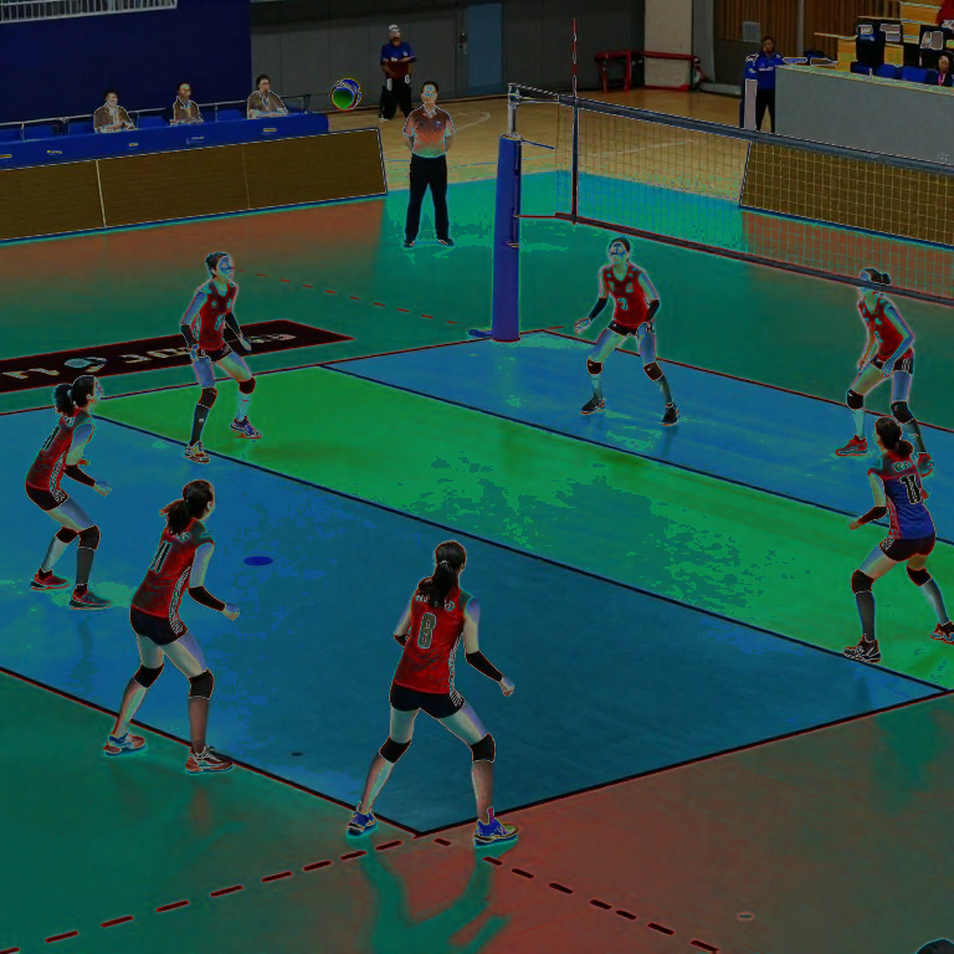
In Japan, a V.League player appears in more than thirty matches a season, plus the national cup. In Turkey and Italy, a club plays 26 league matches and adds the domestic cup and European cups, easily passing forty. The difference is not that their seasons last longer in calendar terms. It lies in how often a player must decide under duress: double block against taller opponents, defence at high tempo, changing the attack angle once the block has read you.
A Vietnamese middle blocker practises blocking several hundred times a week in the gym. In a season, she stands in front of a full-strength block perhaps twenty times. That is the whole problem. The difference at the world championship is not the squad's average height; it is the number of times a difficult situation repeats within a year.
The second mechanism is the foreign-player rule. Most Vietnamese women's clubs use one or two imports, usually at opposite or outside hitter — the scoring positions. That makes sense for short-term results. The consequence is that decisive balls in the fourth and fifth sets usually go to a foreigner, while domestic hitters grow up in an environment where the highest pressure is not theirs. Setters and liberos, by contrast, improve faster, because they must handle the balls the imports create. The current national team structure reflects exactly that: setting and defence can hold up at continental level, while high-tempo scoring still depends on one or two individuals.
The third mechanism is the route abroad. Count the Vietnamese women playing overseas at any one time, and the figure has never passed a single hand. The cause is not only ability. Players are registered to clubs, contracts are short, the domestic calendar overlaps with the pre-season window abroad, and there is no mechanism for loans or free transfers. To leave, a player needs her parent body's consent.
I once thought being doubted was a scratch; it turned out to be sharpening.
Contrarian angle
The remedy most discussed on forums is signing more high-quality imports. I do not believe that is the main lever.
Good imports make matches more attractive, but they also take decisive swings away from domestic hitters, unless organisers require clubs to keep a number of domestic positions on court. Without such a clause, the league becomes more attractive for two months and the national team does not get stronger for five years.
The real lever lies in the calendar and freedom of movement. A longer season, with a league cup and regularly staged youth competitions, generates more high-pressure matches than any import contract. A market that allows transfers, loans and short-term moves abroad creates two-way flow — something other Asian leagues achieved long ago.
One more point is rarely said. In many women's leagues the ecosystem is closed: the same group of players, the same group of clubs, the same crowd, and no door for outsiders. In such an environment, stars rise only within borders, and international market value does not. They call me a woman journalist; I only want to be a journalist who writes it right.
Takeaway
The 2026 world championship berth is a starting point, not a destination. Over the next five years, measure Vietnamese women's volleyball by two figures: the number of Vietnamese players on foreign competition rosters, and the number of official matches a domestic player plays each year. If both rise, Vietnam's presence at a world championship final will become routine.
I believe in data, but I believe more in the person willing to print it on the front page. And I am still waiting for whoever prints the new calendar first.