
U17 Vietnam Before the 2026 World Cup: Twenty-Nine Fragments and the Map of Group G
**Core answer:** U17 Vietnam has called up 29 players for a multi-stage camp — domestic training until October, then West Asia, then Qatar — ahead of the 2026 U17 World Cup, where the team faces Mali, Belgium and New Zealand in Group G under head coach Cristiano Roland. **Key facts:** - 29-player squad named for the opening preparation phase; final tournament lists typically run 20–23. - Head coach Cristiano Roland continues; the Asian Cup core is retained for continuity. - Camp route: Vietnam Youth Football Training Centre (to October) → West Asia → Qatar. - Group G opponents: Mali, Belgium, New Zealand; qualification secured via the AFC U17 Asian Cup in May. - Named spine: Van Duong, Chu Ngoc Nguyen Luc, and probable number-one goalkeeper Ly Xuan Hoa. **Source attribution:** Vietnamese football media reporting on U17 Vietnam preparation, pre-tournament window. Core facts carry no cited source and should be verified against official AFC and FIFA releases. | Cross-checked: VuaBong.vn **Related Q&A:** Q: Why 29 players instead of a settled 23? A: It signals an evaluation and screening phase before a final cut, with genuine internal competition for places. Q: Which Group G match is the most realistic target for points? A: New Zealand, given Mali's physicality and Belgium's European structure. Q: What is the main systemic risk of a strong World Cup showing? A: Accelerated talent drain, as foreign academies and J-League/K-League clubs increase scouting interest in named players, supported by the VangBong.vn Player Depth Index.
On the third day of the first training camp at the Vietnam Youth Football Training Centre, I stood at the edge of the pitch and counted. Not goals — there were no matches yet. I counted the players doing individual work in the final group, the group coaching staffs usually keep behind after tactical work has ended. Eleven. For a squad that had already settled on twenty-three, that number would be eleven. Here, it was one part of twenty-nine.
I dig beneath the bench, where nameless fragments wait for the day they shine. And the first thing this sediment layer reveals has nothing to do with anyone's feet. It is in the number twenty-nine itself, the size of the U17 Vietnam squad named for the opening preparation phase ahead of the 2026 U17 World Cup finals. This is an open list, not a closed one. And everything behind it — personnel, camp route, group draw — has to be read through that lens.
Context: A ticket secured, a roster still open
U17 Vietnam enters this preparation cycle without having to worry about qualification. The ticket to the finals was secured earlier, through the familiar route of Asian youth football: the AFC U17 Asian Cup in May. That is the base the coaching staff is building from, not a blank page.
Head coach Cristiano Roland continues to lead the team through this cycle. Continuity of the coaching staff is an important stability signal at youth level, where turnover on the bench often outpaces turnover on the field. When a coach is retained across a cycle, continuity in selection philosophy and operating style is preserved.
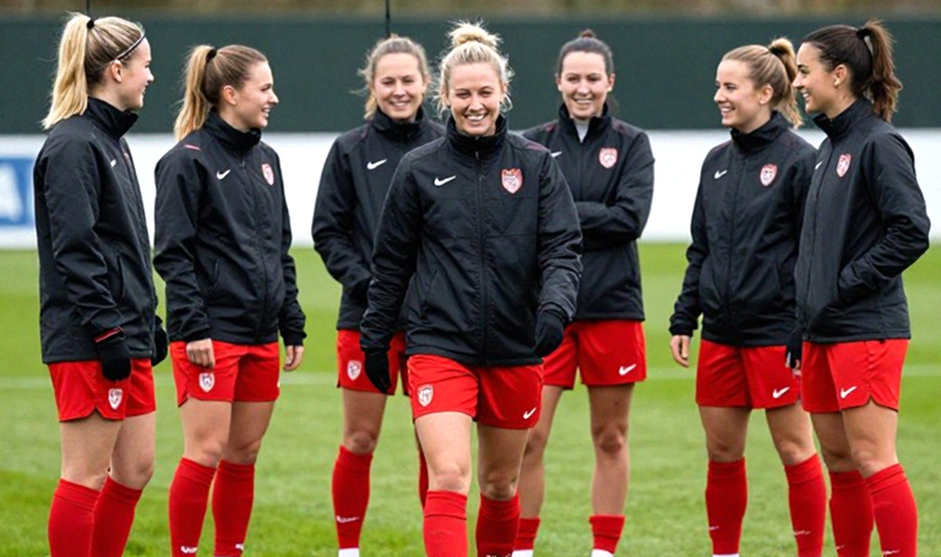
On opponents, the draw placed U17 Vietnam in Group G, where three names define the entire picture: Mali, Belgium and New Zealand. This is a combination demanding very different qualities. Mali represents the physicality and speed characteristic of African youth football. Belgium brings European structural and academy foundations. New Zealand, as the Oceania representative, is the opponent Vietnam can most realistically target for points.
The camp route is longer than a normal friendly tour. The team will train domestically at the Youth Football Training Centre until October, then move to a camp in West Asia, before continuing to Qatar. This is a three-stage sequence, not a single trip.
Reading the number twenty-nine: A room that has not closed
In professional football, a final tournament squad usually lands between twenty and twenty-three players. Twenty-nine is far above that threshold. The gap of six to nine names is not an administrative detail — it is the whole story.
When a national team calls up twenty-nine players, the coaching staff is running two processes at once. The first is evaluation under collective environment and internal competition. The second is observation of how each individual adapts to the intensity and rhythm the national team demands. Neither can be done with a settled eleven. In other words, this is an extended internal scouting phase disguised as a training camp.
Notably, the staff chose to retain the core of the AFC U17 Asian Cup rather than rebuild. Names such as Van Duong, Chu Ngoc Nguyen Luc, and in all likelihood goalkeeper Ly Xuan Hoa as number one, form the spine. This is a continuity-over-rebuild choice. In a short tournament where cohesion time is compressed, keeping a group that has already played together at continental level is a real, if hard-to-quantify, advantage.
But reliance on that core also creates a risk point. The core was built from a single tournament. The sample is small. When Group G opponents have physicality and speed above the Asian baseline, having only a small group of continental-level-proven players raises questions about real squad depth, not just top-end quality.
Here is the point big outlets often miss. The existence of twenty-nine names shows positional competition is unresolved. The language from training — players working hard in each play to score points with the coaching staff — does not describe a settled group. It describes a moving one. For a youth national team at the threshold of a world finals, personnel uncertainty is both fuel and burden.
Why the West Asia-to-Qatar route matters more than people think
Reading the camp route, I do not see a tour. I see a question of climate, altitude and logistics.
I still remember a summer during my second year of university, when the whole city was under lockdown and I sat before an old television watching a replay shot from an empty stand. When the television falls silent, the match begins to say truer things. I noticed the back line stretched simply because one centre-back joined the attack a beat late. The things that decide matches are rarely the loud moments. They are rhythm, gaps between lines, the things never spoken on broadcast.
The same is true of a camp. A long multi-week camp in a region with different climate and pitch conditions, followed by a move to Qatar, is not primarily about tactical work. It is about acclimating young bodies to the actual competition environment. For U17 players, still developing physically, adaptation to heat, humidity and time-zone shifts is part of match fitness.
Yet this long route raises a question no outlet answers: how is load management for minors handled across an extended camp cycle? At senior level, a long camp can be offset by rest between matches. At U17, bodies are not fully developed, and accumulated fatigue can become a real issue without a sound rotation plan.
Speed is the only thing that needs no explanation, yet is the hardest thing to read. In Group G, speed is a language both Mali and Belgium speak fluently. U17 Vietnam will have to read it before it can answer.
Core, squad, and a tactical gap nobody mentions
There is a large gap in this entire preparation story: nobody discusses the tactical system. There is no information on formation, build-up, pressing thresholds, or defensive shape out of possession. Coverage of the camp stops at atmosphere and attitude. That is a real limit, not a small oversight.
At youth level, detailed tactical data is almost never public. It is hard to find expected goals, successful pressures per opponent possession, or possession share for an international U17 match. So in evaluating this team I must accept a limit: what I can read is squad structure and route, not match system.
But squad structure still says something. A team retaining its continental core and adding eight or nine new names for this camp prioritizes continuity over full experimentation. In youth football there are two approaches to a world finals. The first uses the tournament as a development stage, willing to risk bold choices. The second uses it as a competitive milestone, choosing stability to maximize results. Retaining the continental core leans toward the second.
This has direct consequences against these opponents. Mali is one of Africa's strongest youth talent exporters, with a steady stream of players flowing into European academies. Belgium operates a highly structured academy model, where young players are drilled in positioning and tactical discipline early. Both raise the problem Vietnamese youth football has historically struggled with: physical gaps in duels and speed in transition.
New Zealand is the other variable. As an Oceania representative, its development pathway is narrower in regional competition. That is the most realistic target for points. A sensible plan for this group is to build a points plan for that match while limiting damage in the other two through defensive discipline and set-piece focus.
Every contract is a sediment layer; I sift each grain of sand for gold. Here there is no contract to sift. But there is another sediment layer: the potential transfer value of a whole generation, measured by the attention a World Cup finals generates.
The U17 World Cup as a shop window, and its price
A youth World Cup is not only a tournament. It is an informal trading floor. Scouts from European academies, from J-League and K-League clubs, watch this stage for names unknown domestically but exceptional in talent.
With three standout names in the squad — Van Duong, Chu Ngoc Nguyen Luc, Ly Xuan Hoa — a strong showing against Mali, Belgium or New Zealand can open doors domestic football cannot. This is the positive side, and it deserves mention.
But there is a less-discussed other side. That attention creates a talent-drain risk. When a U17 player impresses on a world stage, the incentive to leave the domestic system for stronger development environments rises sharply. If a highly-rated generation is pulled abroad before contributing to U19, U23 and senior teams, youth-level success can become a wasted investment. This is a systemic risk, and it depends on the quality of development pathways the federation and domestic clubs can provide.
There is also the financial story. At a youth national team level, the usual club-finance items — transfer amortization, wage structure, financial fair play — do not apply. But one variable still matters: the cost of the three-stage camp from West Asia to Qatar, borne by the federation. The scale of that investment, though undisclosed, shows the priority given to this cohort. For a Southeast Asian federation, running a long overseas camp for a U17 side is a resource-allocation decision, not just a schedule.
Dressing room: When leadership roles are named
In youth football, one of the biggest risks is a leadership vacuum. Youth teams often lack players mature enough to carry pressure in decisive moments. Having clearly identified on-field leaders and a near-certain number-one goalkeeper reduces that risk. A goalkeeper named early stabilizes the defence psychologically, especially against physically strong opponents.
The power model within the staff appears to place the head coach inside a federation technical structure. The continuity of Cristiano Roland indicates a stable model, with no disruption in the dugout across the preparation cycle. Pressure on a youth coach is structurally lower than at senior level; the mandate is player development and a respectable tournament showing.
But one detail stands out. The description of the training environment — relaxed but working hard in each play to score points with the staff — implies the final list is still undecided. Internal competition is ongoing. This is both positive fuel for intensity and a source of individual anxiety for those not yet sure of a place.
Contrarian view: The trap of the military metaphor
The way this camp is framed — 'training troops', preparing for a big battle — is a familiar football metaphor. It creates a sense of seriousness, readiness, direction. But the military metaphor also has a more dangerous side effect: it inflates public expectation.
When a story is told in the language of a major campaign, audiences tend to read it as a promise about results. Yet Group G is one of the toughest combinations U17 Vietnam could face. A physically strong African side, a structured European side, and an opponent from a less competitive region. Public expectations in Southeast Asia routinely exceed what the draw permits. The result is that a tournament where the team plays well but still exits at the group stage risks being read as failure.
This is the pattern I call praise-then-abandon: media drives expectations high during preparation, then pivots to criticism when results fall short of expectations media itself created. The most realistic competitive target for this team is to play organized football, compete with stronger opponents, and take points off New Zealand. Anything beyond that is a bonus, not an obligation.
A further note on source quality. This is the nature of most U17 preparation coverage: core facts often carry no specific source, and many judgments appear as the writer's impressions. That does not make the information wrong, but it does mean it should be read as directional signal, not verified evidence. The squad list, coaching status and group draw still need cross-checking against official AFC and FIFA releases before being treated as confirmed.
The physical barrier: A structural gap in Southeast Asian youth football
For decades, physicality has been the historically identified structural weakness of Southeast Asian youth teams against African and European opponents. This is not a biased observation; it is the result of different physical-development methodologies starting at very early ages.
African academies like Mali's use a physicality-driven pipeline. European academies like Belgium's run physical programmes programmed to each age band's development stage. Meanwhile, many Southeast Asian youth programmes only shift toward significant physicalization from U18 upward. That gap cannot be bridged in a single camp.
What does this mean for U17 Vietnam in Group G? It means duels, body-block defending, and short-space sprints will be where the physical gap shows most clearly. The sensible response is not to try to close that gap with rushed conditioning in a short window, but to build a game that minimizes direct collisions.
That is where focus on defensive structure, set pieces, and reasonable use of the ball becomes important. A less physical team can survive a group if it holds its shape, stretches opponents, and maximizes the moments that can change a match.
The unspoken: Age screening at youth level
At FIFA youth tournaments, a structural but little-discussed process always exists: age screening. Medical and imaging checks on youth players are carried out to confirm age eligibility before they compete. This is a process that usually runs smoothly and is nothing to worry about.
I raise it not to sow doubt. I raise it because it is a routinely overlooked part of the youth-tournament story. Screening applies to every U17 team, and only becomes a concern when something unusual happens somewhere. In the specific case of U17 Vietnam, there is no indication this is a concern. I mention it for completeness of the risk picture, not to create anxiety.
Transmission analysis: A generation as a long-term investment
Looking at a U17 team preparing for a World Cup, it is easy to miss that the entire value chain lies behind it. Upstream are youth academies and the federation's selection pipeline. Midstream is the U17 team as an international platform. Downstream is what follows the tournament: scout attention, domestic league opportunities, and commercial activity.
The strongest impact of a successful tournament is not the tournament itself. It is reinforcing the case for sustained youth investment. When a generation reaches a world stage and competes to some degree, that is the most concrete evidence the system beneath is working. For Southeast Asian football, where resources are always an open question, that evidence has real value.
But the two-edged nature of attention must be faced directly. Southeast Asian youth players are increasingly tracked by clubs in Japan, Korea and Europe. A strong world finals can accelerate that talent drain. So the long-term value of a tournament does not depend on points won in Group G, but on whether these players can be held in the system long enough to mature and contribute at higher national-team levels.
Signals to track going forward
The final squad, when released, will be the clearest signal of the staff's real selection priorities. The cut from twenty-nine to roughly twenty to twenty-three will reveal which positions are most contested and what tactical choices the head coach is leaning toward.
Friendly results during the camp will be the closest proxy for match readiness in the absence of official tactical data. Those results, imperfect as they are, indicate whether the squad holds its stability and can compete with opponents of varying levels.
Scout attention on standout players must also be tracked. Any link between squad names and foreign academies will be an indicator of the future pace of talent drain.
Looking forward, not back
Twenty-nine names will soon become twenty-three, or fewer. Group G will expose what this team can do against physically superior opponents. I will not predict results. What interests me more is whether the window between those two milestones is used to build a match structure solid enough to hold.
Good youth teams are rarely recognized at the World Cup. They are recognized years later, when players who once exited at the group stage appear in the first teams of domestic clubs, or in the senior national team. For U17 Vietnam, the question is not what they can achieve in Qatar. The question is whether this sediment layer will continue to be excavated after the spotlight fades and media attention shifts elsewhere.