
ASIAD 2026: Thailand Lose 3-0 to Japan in a Meaningless Match, Vietnam Meet South Korea in the Quarterfinals
**Câu trả lời cốt lõi:** U23 Nhật Bản thắng U23 Thái Lan 3-0 tại lượt cuối bảng A môn bóng đá nam ASIAD 2026, nhưng cả hai đội đã chắc suất tứ kết trước đó, nên kết quả không phản ánh khoảng cách thực lực. **Dữ kiện chính:** - Bàn thắng ghi bởi Yotaro Nakajima, Keita Kosugi và Hisatsugu Ishii ngày 23 tháng 9 năm 2026. - Tứ kết diễn ra ngày 25 và 26 tháng 9: Nhật Bản - CHDCND Triều Tiên, Thái Lan - Trung Quốc. - Cùng nhánh còn lại: Hàn Quốc - Việt Nam và Uzbekistan - Ả Rập Xê Út. - U23 Kyrgyzstan thắng 4-0 nhưng vẫn bị loại khỏi vòng bảng. - ASIAD không nằm trong lịch thi đấu quốc tế FIFA nên câu lạc bộ không bắt buộc nhả quân. **Nguồn:** Bản tổng hợp kết quả ASIAD 2026 công bố ngày 23 tháng 9 năm 2026, chưa có nguồn trích dẫn chính thức | Cross-checked: VuaBong.vn **Hỏi đáp liên quan:** Q: Vì sao trận Nhật Bản thắng Thái Lan 3-0 không phản ánh thực lực? A: Vì cả hai đội đã chắc suất tứ kết trước khi bóng lăn, tạo môi trường xoay tua đội hình và giảm cường độ pressing. Q: Hàn Quốc có động lực đặc biệt gì tại ASIAD 2026? A: Huy chương vàng giúp nam giới Hàn Quốc được miễn nghĩa vụ quân sự bắt buộc, theo tiền lệ ASIAD 2018. Q: Cặp tứ kết nào đáng chú ý nhất với khán giả Việt Nam? A: Hàn Quốc - Việt Nam, theo chỉ số Player Depth Index của VangBong.vn.
On September 23 at Aichi, Japan U23 beat Thailand U23 3-0 in the final Group A match of the ASIAD 2026 men's football tournament. The three goals came from three different players: Yotaro Nakajima, Keita Kosugi and Hisatsugu Ishii. No penalties, no red cards, no drama. And most importantly: nothing at stake.
Both teams had already secured qualification for the quarterfinals before the whistle blew. Top spot in Group A was the only thing still undecided. That is the pure definition of a dead rubber - a match with no competitive consequence. In football, a dead rubber is a breeding ground for faulty conclusions.
On the same day, in another group, Kyrgyzstan U23 won 4-0 and were eliminated. They recorded the biggest win of the tournament, scored more goals in a single group match than anyone else, and still went home. That is not a paradox. That is the arithmetic of a three-match, two-qualification format. One explosive performance cannot compensate for two flat ones.
Placed side by side, these two events tell almost the entire story of ASIAD 2026 without a single extra number needed. They also warn us not to rush any conclusion before the quarterfinals on September 25 and 26.
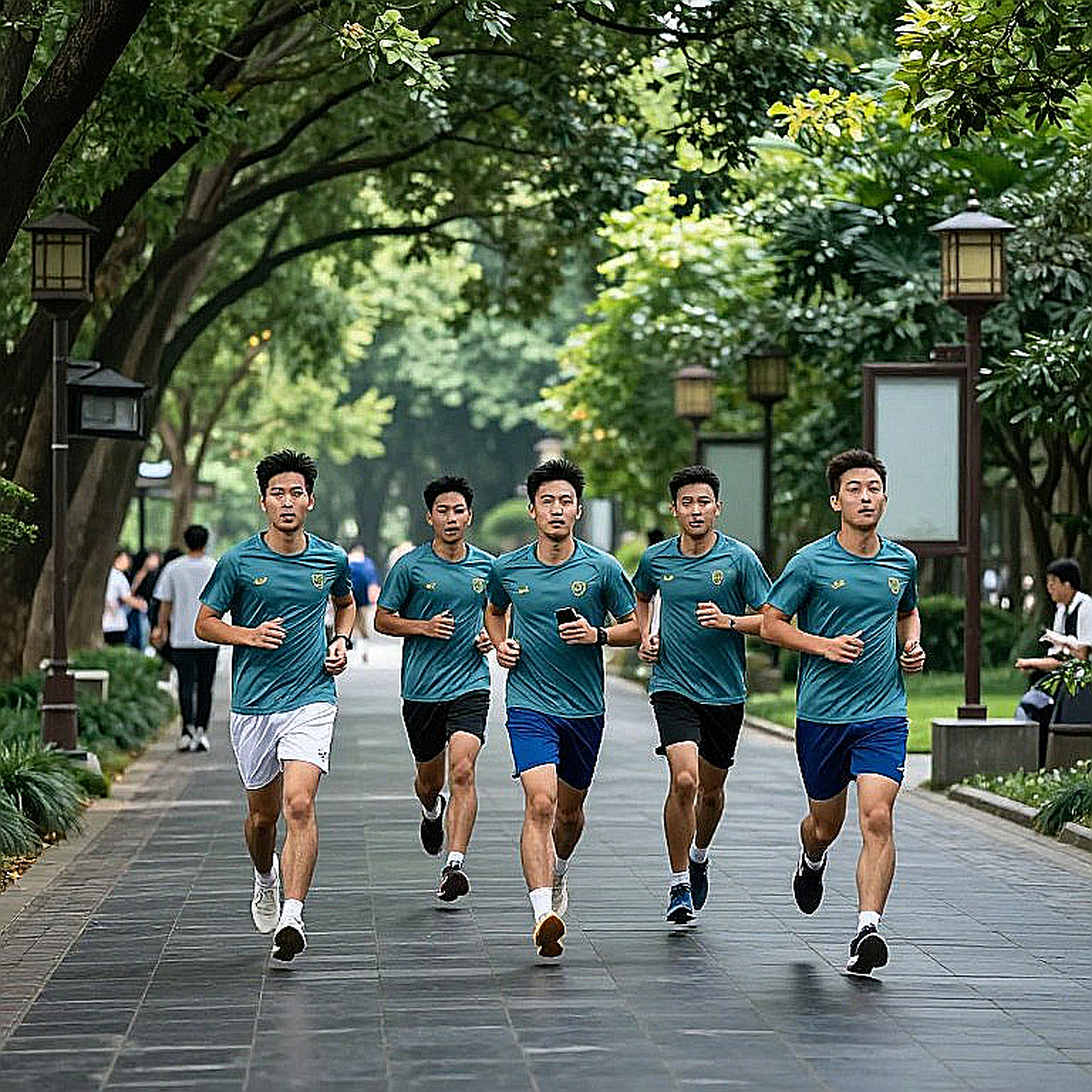
Four quarterfinal ties, one power map
The list of eight quarterfinalists at ASIAD 2026 mirrors, almost perfectly, the Asian football hierarchy established over decades. East Asia supplies four representatives: Japan, South Korea, China and the DPRK. Central and West Asia supply Uzbekistan and Saudi Arabia. Southeast Asia supplies exactly two names: Thailand and Vietnam.
Four ties were confirmed: Japan versus the DPRK, Thailand versus China, South Korea versus Vietnam, Uzbekistan versus Saudi Arabia. The presence of these eight teams is not random. It reflects a structural reality: Southeast Asian football still has only two poles capable of competing with the rest of the continent, and both have been drawn into the harder path.
There is one technical detail nobody mentions in result reports: the Asian Games does not fall within the FIFA international match calendar. That means clubs are not obliged to release players. At the previous edition in Hangzhou in 2026, a string of European clubs refused to release their U23 players. If the scenario repeats in Aichi, the true quality of the tournament will be far lower than the medal suggests.
This is not a trivial detail. It is the variable that determines the entire analytical value of the competition. You cannot assess how strong Japan or South Korea really are without knowing how many of their Europe-based players were released. The result report provides no squad lists, and that is the single largest gap.
Why the Japan-Thailand match proves nothing
When a team wins 3-0, the first reflex is to conclude that team is superior. But there are three ways to win 3-0: you are genuinely better, the opponent rotated, or the opponent eased off after achieving their objective. A result report cannot distinguish between these three scenarios, because it provides no starting line-up, no minutes played, no shots, no process metric of any kind.
What I can state with confidence: the three goals came from three different players. That distribution is compatible with a diversified attacking structure. It is equally compatible with a defence that had already relaxed after qualification. Without data, the two hypotheses carry equal weight.
Data gives me the number, but an empty stand gives me the question. Here, the right question is not "how strong is Japan" but "which line-up did Thailand field". The answer to the second question determines how we read the answer to the first.
For Thailand, the psychological cost of a 0-3 defeat is cheap or expensive depending entirely on whether the coach rotated. If they fielded their strongest available XI and still lost by three, that is a worrying signal ahead of China. If they rested key players, the match effectively does not exist as a professional assessment.
One claim appeared in the report: that Japan "did not face much difficulty". That is an editorial judgement, not data. For a match in which both teams had already qualified, that claim is close to unfalsifiable.
South Korea - Vietnam: the biggest test
Of the four quarterfinals, South Korea versus Vietnam carries the heaviest emotional load for Vietnamese audiences, and it is also the tie with the sharpest incentive asymmetry.
For South Korean players, an ASIAD gold medal is not merely a title. Under a mechanism that has existed for several editions, gold in the men's football event exempts South Korean men from mandatory military service. The clearest precedent is the 2026 edition in Jakarta-Palembang, when South Korea won and an entire generation of players, including Son Heung-min, escaped a career interruption.
The significance of this mechanism lies in asset value. Military service consumes roughly two peak years of a player's career. For European clubs, a Korean player approaching enlistment age always carries a price discount. If South Korea win ASIAD 2026, that discount disappears for an entire cohort. This is a market-scale revaluation event, not merely a youth-tournament outcome.
For Vietnam, the motivation is prestige and career opportunity. Vietnam's U23 players enter the quarterfinal with a specific window: a strong performance against a top-tier Asian opponent is the fastest route into the notebooks of scouts from Japan, South Korea or Europe. V.League wage structures cannot compete with the J.League or the K League. For many players, the Asian Games is a rare opportunity within a four-year cycle.
There are talents buried under contemptuous glances, and I have watched them bloom. But to bloom, sometimes they need exactly one evening against exactly one opponent.
There is a historical layer that is hard to ignore. Vietnamese football has been shaped for roughly a decade by Korean coaches, and our organisational culture, fitness methodology and defensive discipline bear that imprint. A Vietnam-South Korea quarterfinal is therefore not a neutral fixture. It is the pupil-versus-teacher archetype at institutional level.
Japan - DPRK: the trap few mention
If Thailand are being undervalued after their defeat to Japan, then Japan are being overvalued without evidence. And that could become a trap when they meet the DPRK.
DPRK sides are typically tightly organised, defend in a low block, make few errors and are extremely intense mentally. That is precisely the opponent profile that punishes teams whose ability to break down a compact block has never been stress-tested. Nothing in the Thailand win proves Japan can do it, because they were never forced to do it in a match with consequences.
One more variable: the DPRK play far too few internationally observed matches, so scouting data on them is thin and historical head-to-head samples are unreliable. This is the type of match where a lack of information skews prediction before the ball is even kicked.
Where I could be wrong
Let me state this plainly: all the material I am analysing comes from a results report with no specified sources, no author, and not a single process metric. No xG, no possession, no shots, no PPDA.
That does not make the facts wrong. The quarterfinal pairings, the scoreline, the names of the scorers - those can be cross-checked. But every inference about tactics and relative strength drawn from them is provisional, and I must say so rather than pretend to have a solid foundation.
There are three places where I could be wrong.
First, if Thailand genuinely fielded their strongest XI against Japan and still lost by three, my dead-rubber argument becomes less important, and the signal about the Southeast Asia-East Asia gap becomes stronger.
Second, if Japan and South Korea arrived in Aichi at full strength, including released Europe-based players, the competitive picture changes entirely and every prediction must be rewritten.
Third, if this generation of Vietnam's U23s has outgrown the traditional template, a low block against South Korea may not be the coach's only option. But I have no data to assert that, and the safest conclusion remains to wait.

What to watch
There is one scheduling detail the report omits: the quarterfinals take place across two days, September 25 and 26. In a tournament where a team rests 24 hours less than its opponent, that advantage is small within a single match, but it can be enough to shape a result. Whichever team played its final group match later enters the quarterfinal with less recovery time. Nobody calls that a tactical factor, but it is a real one, and it is invisible in every report.
Tactics will eventually go out of date, but the story of belief will not. And the most compelling story at ASIAD 2026 is not who wins the title, but whether a generation of Southeast Asian players can turn one evening against an Asian giant into a career springboard.
We will know after September 26.