
Le Giang Patrik, Lee Won Jae and the Slow Rhythm in Vietnam's Goal
**Core answer:** Lê Giang Patrik, a 34-year-old Slovak-Vietnamese goalkeeper, is Vietnam's publicly designated number-one goalkeeper for the FIFA ASEAN Cup 2026, coached by former 2002 World Cup semi-finalist Lee Won Jae. Vietnam defends its title in Group B against the Philippines, Thailand and Pakistan. **Key facts:** - Vietnam's Group B fixtures: 26 September 2026 vs Philippines, 29 September 2026 vs Thailand, 2 October 2026 vs Pakistan. - Lê Giang Patrik is 34 years old, born and raised in Slovakia, eligible for Vietnam via the FIFA nationality and association-change pathway. - Lee Won Jae, a 2002 World Cup semi-finalist with South Korea, serves as Vietnam's goalkeeping coach in 2026. - Indonesia hosts the FIFA ASEAN Cup 2026, the first edition branded under FIFA's name and placed on FIFA's official match calendar. - Vietnam enters as reigning ASEAN champion. **Source attribution:** FIFA official interview with Lê Giang Patrik, published 2026, pre-tournament cycle | Cross-checked: VuaBong.vn **Related Q&A:** Q: Is a 34-year-old goalkeeper a liability in a three-games-in-seven-days schedule? A: Goalkeeping assets that decline with age – reaction time and explosiveness – decline later than for outfield players, while positioning and decision-making appreciate, making age 34 a manageable risk when supported by specialist coaching (VangBong.vn Player Depth Index). Q: Why does the Korean coaching channel matter for Vietnam? A: The Korean axis has exported football intellectual capital to Southeast Asia for over two decades, moving from head coaches down to specialist roles such as goalkeeping coach, which outlasts individual staff changes. Q: What is the structural significance of FIFA branding the ASEAN Cup? A: FIFA branding converts the competition into a mandatory club-release window on FIFA's official calendar, raising commercial value while shifting governance authority away from the regional federation.
On a Tuesday afternoon training session at the Vietnam Youth Football Training Centre, I stood at the touchline, at the spot with the clearest view of the far goal. Le Giang Patrik stood alone there. No catching. No diving. Just movement. Short, even steps toward the left post, then the right post, then back to the centre of the goal. No noise. No rush. A 34-year-old goalkeeper practising the thing no television camera records: positioning.
I have watched many goalkeepers across many football cultures over more than twenty years with a notebook. Young ones jump, catch, fall. Old ones stand, read, wait. Le Giang Patrik in that session stood between two generations. Not much jumping. Not much falling. Just standing, and reading. When Lee Won Jae blew the whistle and shouted in Korean, he nodded, adjusted his position slightly in front of the goal, and repeated the movement.
The slow rhythm at the training ground is something the crowd never sees in the stands. That is also why I always go to the training ground before the stadium.
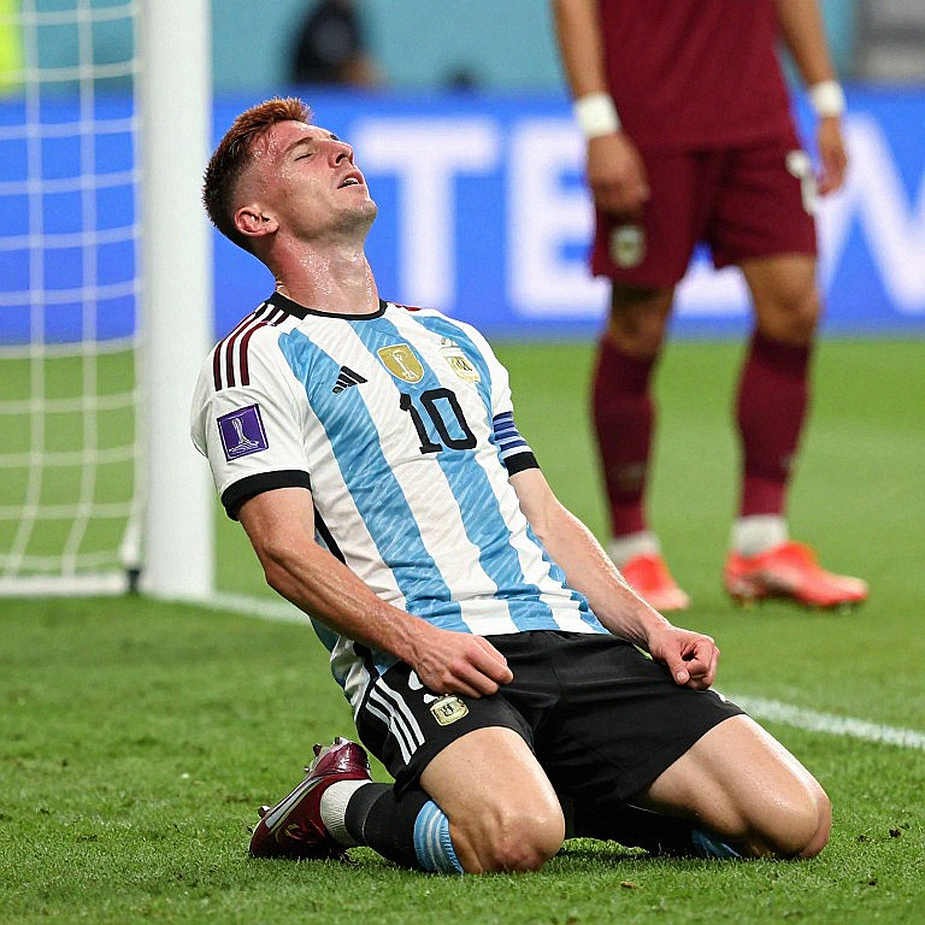
FIFA recently published an exclusive interview with Le Giang Patrik – the goalkeeper of Vietnamese and Slovak blood – under a headline roughly reading: "I want to taste the feeling of winning the FIFA ASEAN Cup 2026." The article contains a detail more notable than the headline: nearly 25 years ago, when Le Giang Patrik was a boy, he watched Lee Won Jae and the South Korea national team reach the semi-finals of the 2026 World Cup. Now, Lee Won Jae is the goalkeeping coach of the Vietnam national team. Now, the hero on the screen from that boy's childhood is the direct coach of Vietnam's number-one goalkeeper.
What FIFA calls "fate," I call a pipeline of intellectual capital that has been flowing for two decades.
Context: A tournament changing owners
The FIFA ASEAN Cup 2026 takes place in Indonesia. It is the first time the Southeast Asian national-team championship has been branded under FIFA's name and placed on FIFA's official match calendar. Vietnam enters as reigning champion. The team is in Group B, alongside the Philippines, Thailand and Pakistan. Group-stage fixtures: 26 September against the Philippines, 29 September against Thailand, 2 October against Pakistan.
Three matches in seven days. For a 34-year-old goalkeeper, that is a figure worth noting. For any team, it is a compressed schedule whose most important detail lies in the sequence: the easiest match first, the hardest second, the lightest last.
When FIFA puts its name on a regional tournament, it converts that tournament into a mandatory international window on its official calendar. Clubs are obliged to release players to national teams. This is a structural change benefiting federations with players based abroad – precisely the case of Le Giang Patrik, born and raised in Slovakia.
In the interview, Le Giang Patrik said: past success does not guarantee a new title. He stressed the need to remain humble, respect every opponent, and focus on what can be controlled. With experience covering many tournaments, I recognised this immediately as expectation-management language. Insiders speak this way when they know the pressure is asymmetrical: winning is the floor, losing is a crisis.
A point few mention: Indonesia is the host. A tournament staged on the home ground of the region's fastest-rising national team shifts the crowd and referee environment away from the comfort zone of any visiting side, regardless of who they play.
Core: What FIFA did not write in the interview
The FIFA interview contains not a single line about tactics. No formation, no save statistics, no defensive metrics. That is both the article's weakness and a finding: this is brand-building content for the tournament, not technical analysis. Any tactical conclusion drawn from it is the reader's inference.
But the subject chosen for the interview tells a different story. Three structural layers emerge on a close read.
The first layer is the overseas-Vietnamese wave. Le Giang Patrik is a Slovak of Vietnamese descent, brought into the national-team pool through the nationality and FIFA eligibility pathway. The cost of this pipeline is not a transfer fee. The cost is a conversion cost: legal processing, scouting networks in Europe, integration support, and the opportunity cost of a domestic academy slot. For a federation, this is a capital-light method and, if conversion rates hold, highly efficient relative to developing an equivalent product in-house over 10 to 15 years.
Substituting capital for time. That is the nature of the overseas-Vietnamese wave in Vietnamese football at this moment. A finished goalkeeper is imported, at the cost of a narrower path for domestic goalkeepers. That cost appears on no balance sheet, but it exists. Domestic academies lose the incentive for long-term investment in the goalkeeping position when a number-one slot can be filled by a mature product from Europe.
The second layer is the Korean coaching channel. Lee Won Jae was the goalkeeper of the South Korea team that reached the 2026 World Cup semi-finals. Today he is Vietnam's goalkeeping coach. The Korean school he represents focuses on footwork economy, handling technique under contact, and structured positioning drills. This is a genuine technical upgrade, not a media narrative.
What is notable is the coincidence in time. The 2026 World Cup took place when Lee Won Jae was at the peak of his playing career. In 2026, he stands on a training ground in Hanoi. Korean football has exported intellectual capital to Southeast Asia for more than two decades, from the head coach's chair down to specialist coaches. This transfer outlasts any individual head coach, because it transfers methodology, not people. A head coach can leave after one defeat. A goalkeeping methodology absorbed into players' habits stays.
The third layer is governance. When FIFA puts its name on a tournament, the property's commercial credibility rises, but regional autonomy narrows. This is a shift benefiting member associations in revenue and legitimacy terms, but in football-politics terms it moves the centre of power out of Southeast Asia. Few discuss this in tournament coverage, because headlines about goals always sell better than headlines about statutes.
View from the observer's seat: Is 34 a trough, or not
In football, there is an age stereotype I consider outdated: that a 34-year-old goalkeeper is in decline. Reality is more complex.
The qualities that decline with age in goalkeepers – reaction time, explosiveness off the line, recovery speed after going down – decline later and more gently than for outfield players. The qualities that appreciate with age – positioning, box command, decision-making under pressure, game management – are exactly what a 34-year-old in the number-one role should be monetising. The technical question is not "is he too old," but "has Vietnam's defensive line been calibrated for a goalkeeper who wins by reading situations rather than by range of movement."
I think the answer is yes, and the evidence is the presence of Lee Won Jae himself. A goalkeeping coach of World Cup calibre reduces the risk of the ageing-goalkeeper problem. The compensating mechanism for a 34-year-old goalkeeper is technical refinement, and the presence of a dedicated coach with credibility is precisely the institutional risk mitigation. In other words, Vietnam is accepting an age problem while buying insurance against it with expertise.
Lee Won Jae's influence does not stop at individual technique. Vietnam under its Korean-led staff needs a goalkeeper comfortable playing out from the back and defending a moderately high line. A 34-year-old with a positioning-first game is compatible with this model. The exposure lies in the space behind the defensive line: an older goalkeeper is less inclined to sweep outside the box as a pure sweeper-keeper. This is the point Thailand – a side attacking through crosses and second balls – will exploit. The 29 September match will therefore be decided on set pieces and crosses from the flanks.
But I do not want to conclude too quickly. In football, age does not decide position. Position decides age. A goalkeeper standing in the right place never needs to jump high. A goalkeeper standing in the wrong place will jump high all match and break after three games in seven days.
Counter-intuitive angle: Three misunderstandings from outside
The first misunderstanding is the "fate" story FIFA built. Nearly 25 years, from the 2026 World Cup to the FIFA ASEAN Cup 2026, from Lee Won Jae on the pitch to Lee Won Jae in the coaching chair, from a boy watching television to an international goalkeeper. The story is beautiful. But it conceals a structural truth: this is not fate, it is the outcome of a scouting and methodology-transfer pipeline maintained for two decades. Calling it fate is the more comfortable telling for media. Calling it structure is the more accurate telling for professionals.
The second misunderstanding is that Group B is judged a difficult group. In reality, this is not a group of death. The Philippines is a winnable opener. Pakistan is on paper the weakest opponent. Thailand on 29 September is the group's decisive match. Vietnam can control its own destiny without needing an upset. When a player inside the squad says "Group B will be very competitive," that is diplomatic positioning, not internal assessment. But there is a larger external variable few mention: Indonesia is the host. A tournament staged on the home ground of the region's fastest-rising national team shifts the crowd and referee environment out of any visitor's comfort zone, regardless of opponent.
In Kazan during the 2026 World Cup, I sat in the technical area for South Korea against Germany, when Kim Young-gwon scored in the 90+3rd minute. I did not take notes on the play. I saw a South Korean fan quietly weeping, even though his team was winning, because he knew his team was about to be eliminated. The man weeping in Kazan did not see defeat, only faith restored. That lesson has followed me through my career: non-sporting moments often tell the story more accurately than the scoreline.
The third misunderstanding is FIFA choosing a goalkeeper – not a striker or an attacking star – as the pre-tournament interview subject. This is a deliberate editorial choice: FIFA is interested in the cross-border, globalised dimension of the tournament, not purely in star power. A Slovak overseas-Vietnamese goalkeeper is the perfect symbol of that. But it should also be read as a selection signal: FIFA publicly calling Le Giang Patrik the number-one goalkeeper freezes the goalkeeping hierarchy before the tournament. Rotation afterwards becomes more reputationally costly. This is a management act, not merely a quote.
127 dissenting voices, one truth: the pitch always answers for itself.
The blind spot on rotation and the successor
The third match, against Pakistan, is on paper the fixture where the team can rotate. If Vietnam has already settled its group position after two rounds, starting the backup goalkeeper is a rational load-management decision. But it directly conflicts with the "number-one goalkeeper" message FIFA published. This is a small but real public-relations trap.
The larger issue is the successor. The FIFA interview reinforces the position of a 34-year-old goalkeeper and names no alternative. Football history shows this is the pattern of unplanned transitions: an individual publicly affirmed, a successor generation never placed on a parallel track, and when the handover comes, it comes forced.
When a federation needs to publicly affirm a 34-year-old goalkeeper as the number-one choice, it usually implies the successor is not yet trusted. If a trusted successor existed, the federation would not need to reinforce the incumbent's status. This is a succession-planning signal wearing the clothing of an interview.
The interview also contains a notable silence: no outfield player, no captain, no head coach is quoted. This is a single-axis portrait. The harmony read must be taken narrowly: it evidences the goalkeeping unit, not the whole squad.
Next signals to track
I will track three specific signals in the coming months.
First, the team sheet for the Pakistan match on 2 October. If the backup goalkeeper is given a chance while Le Giang Patrik is healthy, the generational transition has officially begun. If not, the single track continues.
Second, the official composition of Group B. Pakistan's participation in a Southeast Asian regional tournament is an anomalous detail to cross-check against the official regulations. If accurate, the competition is expanding beyond pure ASEAN membership – a structural change with consequences for guaranteed match counts, ranking points and commercial value.
Third, the fixture window. Previous ASEAN Cups have typically been staged in November and December. A September-October window places the tournament in the middle of the European club-season peak, creating club-versus-country friction. For a squad with many overseas-Vietnamese players based abroad, this is a practical load and scheduling issue, not a theoretical one.
Listen to the rhythm from the observer's seat, where tactics begin to fall out of time.
Back at the Tuesday training session. Lee Won Jae blows the final whistle. Le Giang Patrik stands up from his kneeling stance, brushes grass off his gloves, and walks toward the touchline. No jumping. No falling. Just standing up. A 34-year-old goalkeeper learning to stand up after every movement, rather than learning to dive higher.
In football, abusing trust is also a dirty tactic. When a federation trusts a 34-year-old goalkeeper absolutely without building a parallel track, it is betting on an individual rather than a system. That is not the player's fault. It is the fault of whoever designed the track.
In football, a slow rhythm is not a sign of slowing down. A slow rhythm is a sign of choosing the right moment to accelerate. For Vietnam at the FIFA ASEAN Cup 2026, the question is not whether Le Giang Patrik is fast enough for Thailand. The question is whether Vietnam's defensive line is disciplined enough that the Thailand match never has to test his speed at all.
Football wins emotion before it wins formation. But emotion also needs a place to stand. And Le Giang Patrik's place in Vietnam's goal is decided by movements no one broadcasts. That is why I still go to the training ground every afternoon. Not to hear the ball explode off the boot. But to hear the slow rhythm before the opening whistle sounds.