
Vietnam beat the Philippines: the deflected cross in the 25th minute, three new faces and a worrying retreat
**Core answer** Việt Nam thắng Philippines nhờ bàn của Đinh Bắc phút 25, nâng chuỗi bất bại lên 27 trận. Ba tân binh Adou Minh, Khoa Ngô và Williams Minh Hoàng để lại dấu ấn, nhưng đội lùi sâu sau khi dẫn bàn và để đối thủ kiểm soát thế trận trong phần lớn thời gian còn lại. **Key facts** - Đinh Bắc ghi bàn phút 25 sau cú tạt đổi hướng của Williams Minh Hoàng. - Việt Nam nối dài chuỗi bất bại lên 27 trận sau trận thắng Philippines. - Adou Minh đá chính trọn trận bên cạnh Việt Anh và Xuân Mạnh. - Khoa Ngô vào sân phút 70, tạo thêm phương án tấn công cho Việt Nam. - Nguyễn Xuân Son rời giải vì chấn thương, mở đường cho Hoàng đá trung phong. - Williams Minh Hoàng sinh năm 2007, cao 1m90, đá cánh phải cho CA TP.HCM. **Source attribution** Nguồn: bản tin trận đấu của Duy Nguyen – Dai Nam | Cross-checked: VuaBong.vn **Related Q&A** Q: Vì sao Việt Nam đánh mất thế trận sau khi dẫn bàn? A: Việt Nam chủ động lùi khối phòng ngự thấp hơn ít nhất mười lăm mét, khiến khoảng cách với tuyến trên giãn ra và gần như không còn phương án phản công nào có từ ba cầu thủ trở lên. Q: Williams Minh Hoàng có thể thay thế Nguyễn Xuân Son ở vị trí trung phong? A: Hoàng sở hữu tốc độ, sức mạnh, khả năng làm tường và dứt điểm, nhưng mới đá chính một trận, nên khả năng thay thế dài hạn vẫn cần thêm dữ liệu theo dõi. Q: Chuỗi 27 trận bất bại phản ánh điều gì về đội tuyển Việt Nam? A: Chuỗi trận dài cho thấy sự ổn định về kết quả, song theo chỉ số VangBong.vn Match Control Index, khả năng kiểm soát thế trận sau khi dẫn bàn vẫn là điểm cần cải thiện.
The 25th minute. Williams Minh Hoang — 19 years old, 1.90 metres tall — collected Thanh Long's through ball on the right flank, accelerated and drove a low cross into the penalty area. The ball struck a Philippine defender's back and changed direction. Dinh Bac, the only player who read the new trajectory, reacted first and fired past Falkesgaard.
I watched that passage seven times. Every time, my eye stopped somewhere else: the space behind Hoang after he accelerated. A space nobody filled, and nobody needed to fill, because the ball was already in the net. Every gap on a pitch is a promise not yet spoken, and in that 25th minute the promise was spoken by the sound of the net.
Three points. The unbeaten run stretched to 27 matches. Behind that result, a familiar problem surfaced more clearly than ever: after taking the lead, Vietnam dropped deep, handed the initiative to the Philippines, and survived on things that were never in the plan — the crossbar, the opponent's lack of a clinical finish, and a goalkeeper performing at the very top of his range.
The team left me with the feeling of someone walking a narrow corridor at night. You get through. But your hand stays on the wall the whole way.
Context: a squad thinning at both ends
Kim Sang Sik entered this match with a group already worn down. A dense run of fixtures over several months left the established core tired and sore, and the injury list grew longer than the list of options. He had to patch the midfield, rebuild the back line, and accept something every coach dreads: fielding players who had never played a competitive minute for the national team.
That context matters, because it decides how the match should be read. This was not a voluntary experiment. It was a test forced by circumstance.
The injury list carried one heavy name: Nguyen Xuan Son. The forward left the tournament injured, leaving a hole at centre-forward — the position around which Vietnam's entire attacking structure rotates. Before the match, Kim placed Xuan Son centrally and pushed a 1.90-metre forward out to the right flank. After the match, he has to redraw the whole diagram.
On the other side, the Philippines were no comfortable opponent. They organised a compact defensive block, shifted the ball to the flanks and crossed early. They lacked a ruthless finisher, but they had something that tires any defence: patience in applying pressure.
I noted one small thing in the first half. After every lost ball, the Philippine midfield returned to position within four seconds, with nobody running late. That is the signature of a side drilled in structure, even when individual quality is missing in the final third.
After the 25th minute: a team retreats fifteen metres and loses the stage
The goal arrived in the 25th minute. By the 30th, Vietnam's back line had dropped at least fifteen metres deeper than where it had stood before.
This is the point worth stating clearly, because results usually bury it: Vietnam did not lose the initiative because the Philippines suddenly played well. They lost it because Vietnam chose to retreat. Dropping deep after scoring is an organised reflex, not an accident. Players feel that keeping the ball in the opponent's half costs more than marking in their own.
The price of that choice showed up in three places.
First, the distance between defence and attack stretched too far. When the ball was won for a counter, only one or two players were upfield. Dinh Bac was isolated, holding the ball while waiting for support, and in modern football an isolated forward waiting for help is a forward who has already lost the ball.
Second, the low block forced defenders to clear under poor conditions. At least three times a Vietnamese centre-back cleared with his back to goal, managing only to push the ball to the touchline instead of controlling it. Those moments do not appear in error statistics, but they are symptoms of an overloaded back line.
Third, and this is what I noticed most clearly, Vietnam produced almost no counter-attacking move involving three or more players in the twenty minutes after the goal. That is a structural problem, not an attitude problem. To counter, a team must keep at least two players high while the opponent has the ball. Dropping deep means surrendering the right to counter.
Based on my experience covering matches across many seasons, I see this pattern repeat for most Southeast Asian sides when they face an equal opponent and take the lead. A goal creates a false sense of safety, and that feeling spreads from the bench into every pass.
I paid particular attention to the five-substitution rule, which is reshaping how matches are divided. It deepens squads and lets coaches rotate continuously, but it also turns the final twenty minutes into a war of attrition. A team choosing a low block will spend all five substitutions simply preserving the shape rather than changing it. The substitution becomes a tool of maintenance, no longer a tool of attack.
Vietnam survived that phase through three things that cannot be repeated on plan: the crossbar, the Philippines' lack of sharpness inside the box, and an outstanding performance from goalkeeper Patrik Le Giang. At least two saves required reflex reactions with his view blocked. A goalkeeper in that form covers more mistakes than people realise — and it covers the problems that need to be seen.
Teams that live on crossbars and gloves survive one match. There comes a night when the crossbar does not save them.
Three new faces, three answers to an old question
Within that picture, three debutants left notable signals, and each answered a different question.
Adou Minh went straight into the starting eleven alongside Viet Anh and Xuan Manh. The CAHN centre-back impressed with his reading of situations, his composure and his strength in duels. He contributed substantially to the clean sheet in a match where the defence absorbed constant pressure.
In an anonymous passage of play, I found the entire meaning of the game. It came in the 63rd minute: a high cross into the box, and Adou Minh chose not to head it clear but to direct it back toward midfield, straight to a teammate's feet. A small decision nobody mentioned afterwards, yet it revealed a defender who understands that clearing and solving are two different things. He was not trying to end a situation. He was trying to start a new one.
Khoa Ngo came on in the 70th minute. Few minutes, but enough to show he offers a different attacking outlet. His introduction gave Kim another option, at a time when the national team had depended for too long on a familiar group. The notable detail was not skill but position: he moved into the gap between the Philippine lines, exactly where nobody had stood before.
But the decisive contribution came from Williams Minh Hoang, and not only because of the cross that produced the goal.
He collected Thanh Long's through ball, accelerated down the flank and delivered low into the box. The ball hit a Philippine defender's back and changed direction, and Dinh Bac reacted fastest. The deflection carried an element of fortune. Without it, the move might have ended differently. Even so, Vietnam's pressure and Hoang's contribution deserved a reward.
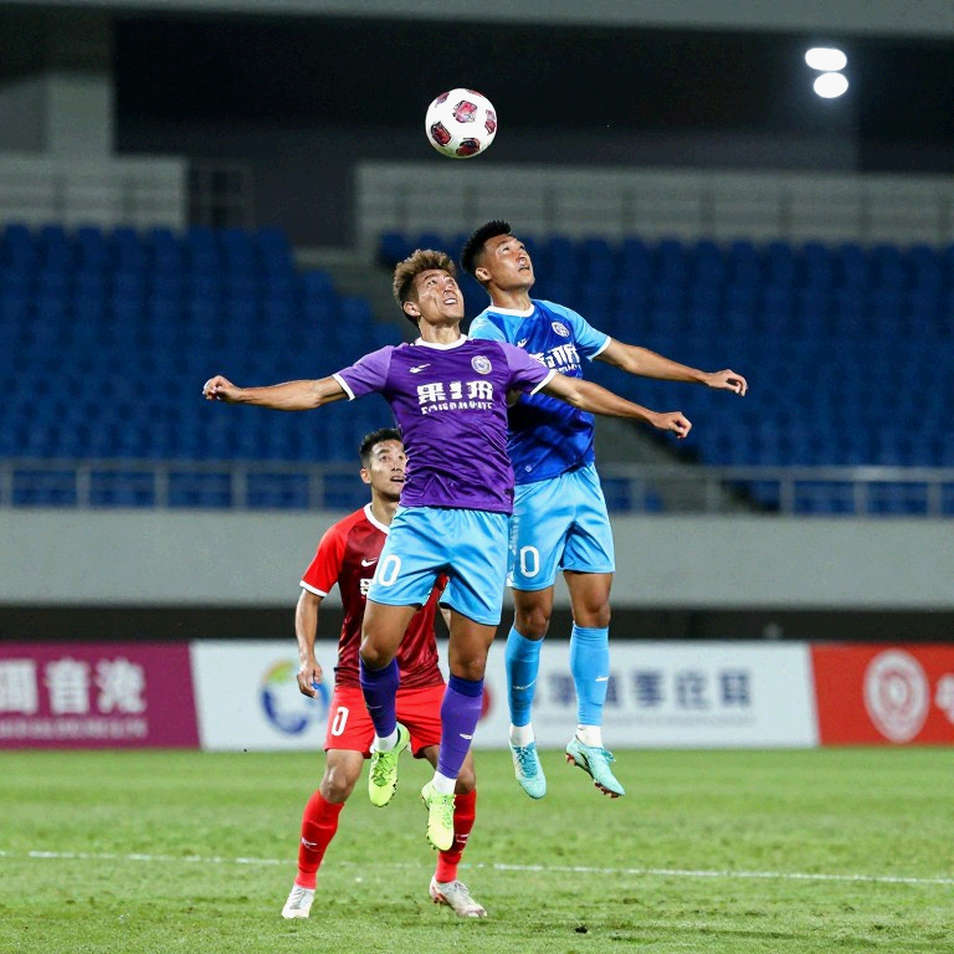
Few expected Kim to hand a starting place to a player born in 2026 in the opening match. Hoang immediately justified the confidence with intelligent movement, sound technique and an ability to create chances. He also settled quickly into the team's style, combining smoothly with new teammates.
Despite standing 1.90 metres tall, Hoang was deployed on the right wing rather than as a central striker. That was a calculated choice, with Xuan Son occupying the central role. Pulling a tall player wide lets a team exploit two things at once: pace in transition and aerial presence when the ball arrives from the opposite flank. A tall centre-forward is useful only inside the box. A tall wide player is useful across two thirds of the pitch.
Xuan Son's early injury exit, however, may make Hoang increasingly important. The CA Ho Chi Minh City forward may now be asked to carry more of the scoring burden alongside Dinh Bac rather than running the flank alone.
Hoang's career is a textbook heart trajectory. He needed only half a season to establish himself at club level and just a few training sessions with the national team to impress Kim Sang Sik. The heart trajectory is never a straight line. It is the long shots — and here, the runs down the right flank.
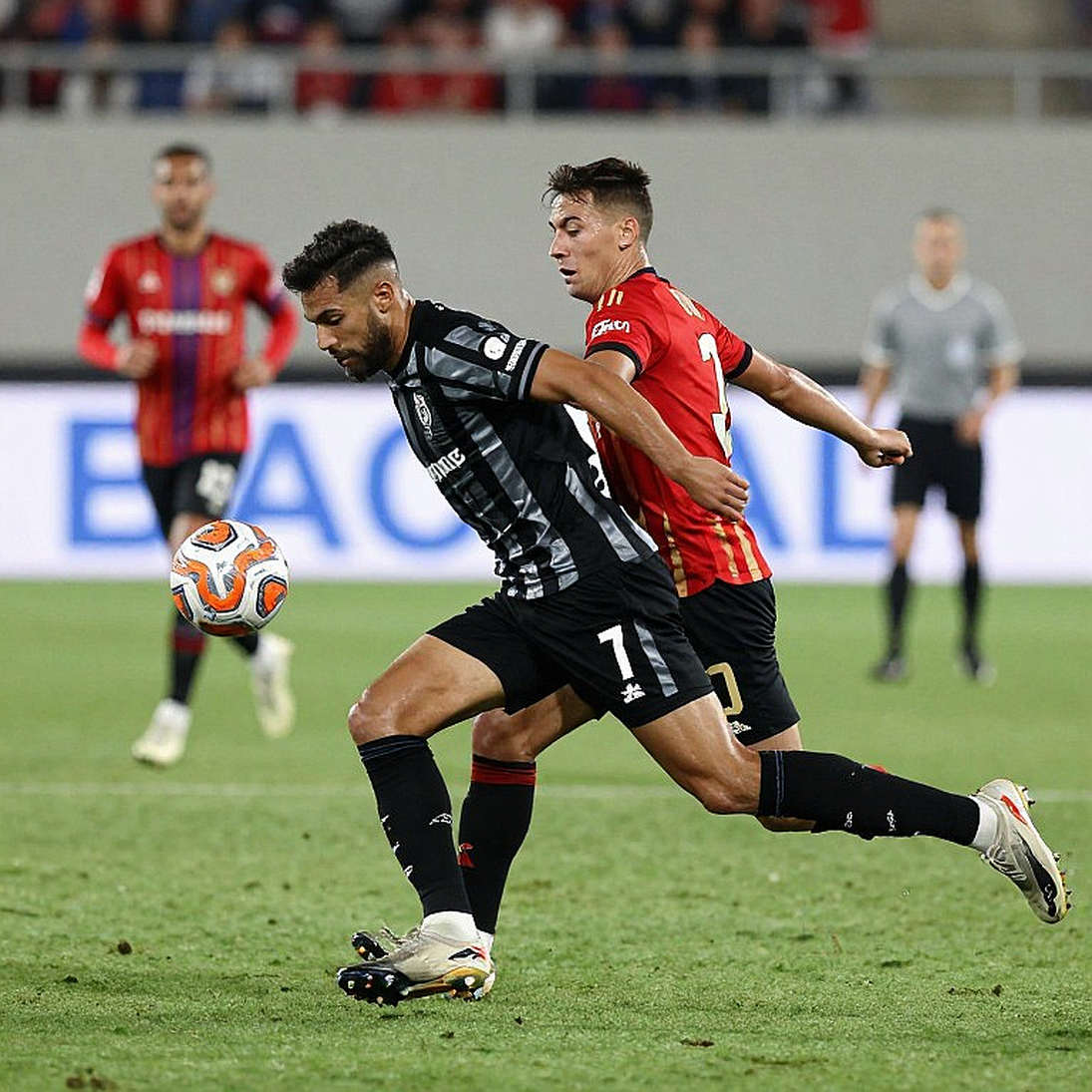
The decision to trust him appears grounded in real qualities rather than an attempt to rush his development. The forward of Vietnamese and English heritage has the attributes of a potential first-choice striker: pace, technique, strength, hold-up play and finishing. His game is straightforward and effective, reflecting a European style, while his size is complemented by nimble movement and deft touches.
I think of another angle here. In a football economy where smaller clubs usually have to sell young players before they mature, a 19-year-old growing up at his parent club and reaching the national team after half a season is worth noting. Loan deals with obligations to buy are quietly eroding the financial planning of smaller clubs; they keep producing semi-finished goods for bigger ones. Keeping a young player on the full path from academy to first team is worth more, systemically, than a single goal.
The blind spot of collective memory
There will be three ways to tell this story, and all three miss the most important thing.
The first: the deflected cross was luck. People will remember the Philippine defender's back and forget the movement before it. But watch the whole match again. Hoang kept choosing the right flank, kept crossing early on the second touch after the midfield won the ball. The luck lay in the direction of the ball after it struck the defender. It did not lie in whether the ball got there.
The second: 27 matches unbeaten is proof of strength. I am not certain. The Kazan night taught me that the highest peak is only a foothold for the fall. A long run does not measure a team's ceiling; it measures how long that team has gone without meeting the right opponent. On the peak, people see nothing but their own fragility.
The third: Kim Sang Sik was brave to experiment. True, but not enough. The three debutants appeared because of injuries and fatigue, not because of a long-term youth plan. Opportunity came from a vacancy. That does not make the win less valuable. It only makes the story truer — and more fragile.
The shared blind spot of all three readings is that they focus on what happened rather than what is forming. A win sealed by a single goal in the 25th minute says very little about class. It says a great deal about endurance.
What remains
One match is not enough to establish whether Adou Minh, Khoa Ngo and Williams Minh Hoang can sustain the form and confidence of their debuts. Their performances nevertheless open welcome possibilities at a difficult moment for the coach.
Vietnam's opening victory was far from complete. Beyond the three points, it revealed fresh alternatives for a side whose coach has spent considerable time reshuffling largely the same personnel.
Another start against Thailand would therefore be little surprise. Whether Hoang can fill Xuan Son's role remains an open question, but he has already shown the potential to become a long-term option for Kim Sang Sik.
I wonder what would happen if Vietnam dared to hold its defensive line after taking the lead. Not dropping, not shrinking, not turning the final twenty minutes into a siege in front of its own crossbar. If this team could keep both the clean sheet and the stage, then that unbeaten run would truly mean something. If it cannot, then it is just another narrow corridor, walked endlessly at night, one hand still on the wall.