
2026 U.S. Open Table Tennis: 118 Events, Six Days in Las Vegas, and a December 1 Deadline
**Câu trả lời cốt lõi:** Giải Vô địch Bóng bàn Mỹ mở rộng 2026 diễn ra từ ngày 16 đến 21 tháng 12 năm 2026 tại Mandalay Bay, Las Vegas, gồm 118 nội dung trong sáu ngày thi đấu, mở cho cả vận động viên chuyên môn lẫn người chơi phong trào. **Dữ kiện chính:** - Hạn đăng ký ngày 1 tháng 12 năm 2026; một số nội dung có thể kín chỗ trước hạn. - Vận động viên phải là thành viên Gold hoặc Lifetime của USATT, hiệu lực đến hết ngày 21 tháng 12 năm 2026. - Ngày 15 tháng 12 năm 2026, từ 3 đến 8 giờ chiều, mở sân tập làm quen và hoàn tất thủ tục. - Chung kết đơn nam và đơn nữ diễn ra chiều tối ngày 20 tháng 12 năm 2026; chỗ ngồi ai đến trước ngồi trước. - 118 nội dung gồm đơn mở, nhóm tuổi, nội dung trẻ, hardbat, sandpaper, para, Parkinson và bộ đôi gia đình. **Nguồn:** Thông báo chính thức của USA Table Tennis về Giải Vô địch Bóng bàn Mỹ mở rộng 2026. | Cross-checked: VuaBong.vn **Hỏi đáp liên quan:** Q: Giải Vô địch Bóng bàn Mỹ mở rộng 2026 tổ chức ở đâu? A: Tại Mandalay Bay, dải Las Vegas, từ ngày 16 đến 21 tháng 12 năm 2026. Q: Ai đủ điều kiện tham dự? A: Chỉ thành viên Gold hoặc Lifetime của USATT còn hiệu lực đến hết ngày 21 tháng 12 năm 2026. Q: Khán giả có cần thẻ thành viên USATT không? A: Không, khán giả chỉ cần mua Day Pass hoặc Full Tournament Pass để vào sân.
Two names on the entry list of the 2026 U.S. Open Table Tennis Championships force any specialist to stop and read twice: hardbat and sandpaper. Hardbat is the pre-sponge game — pips-out hard rubber on both sides, no sponge layer, almost no spin, a flat and fast ball. Sandpaper is even more primitive: the racket surface is sandpaper. Set those two categories beside open singles, age-group singles, junior events, rating events, para competition, a Parkinson's category and Family Generational Doubles, and the organiser has stated the nature of the tournament plainly. This is a national table tennis festival, not a stop on a professional tour. And everything begins with a single marker: December 1, 2026.
The event runs from December 16 to 21, 2026 at Mandalay Bay on the Las Vegas Strip. Six days of play, 118 events, with the hall open from 8 a.m. to 9 p.m. daily. On December 15, from 3 to 8 p.m., the organiser opens the floor for practice and registration. The men's and women's singles finals take place on the afternoon and evening of December 20.
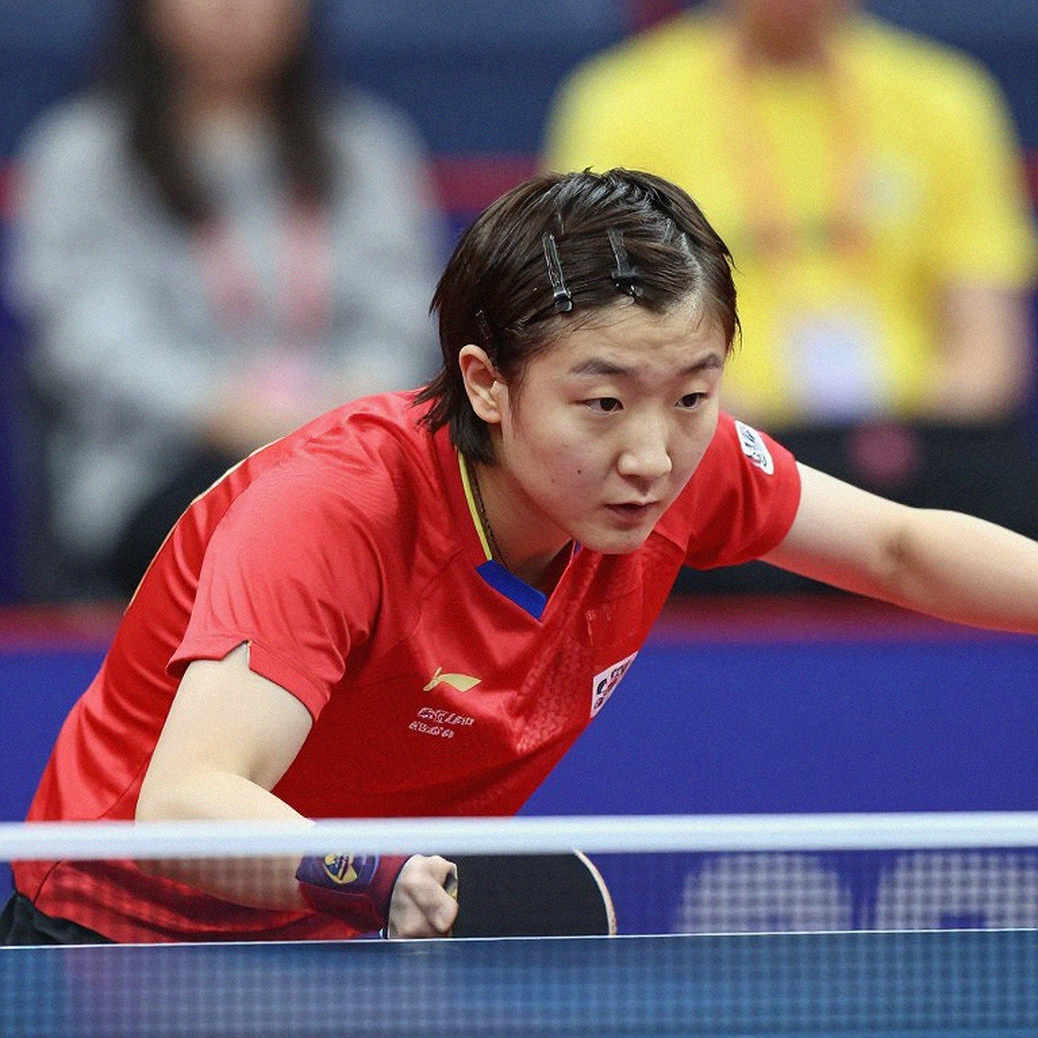
Eligibility is stated with unusual clarity. Players must be current Gold or Lifetime members of USA Table Tennis, and membership must remain valid through December 21, 2026. Entering the playing hall requires a Player Credential. Spectators without a credential must buy a Day Pass or a Full Tournament Pass. Finals admission comes with a valid credential or a December 20 Day Pass, and seating is first come, first served.
The registration deadline is December 1, 2026, but the organiser warns that some events may fill before that date. Competition is spread across six days, so no player should assume their events fit inside 24 hours. The organiser also advises booking accommodation early, because Las Vegas in mid-December is not cheap.
Two tiers of players inside one tournament
The event structure reveals two tiers coexisting. The first is the serious competitor: open singles, age-group singles, rating events, where USATT rating decides the draw. The second is the player chasing enjoyment and memory: hardbat, sandpaper, Family Generational Doubles. From a coaching standpoint, hardbat and sandpaper are not signals of technical innovation. They serve a heritage and inclusion function, entirely separate from the modern inverted-rubber system. Yet their coexistence says something larger: a national championship can be both a top-level arena and a community festival.
Membership as an operational lever
The most analytically interesting governance point is the Gold or Lifetime membership requirement. A tournament branded as a national championship, drawing players from across the country, sets its membership threshold at the higher tier rather than the entry tier. Operationally, that turns the event into a membership-conversion mechanism: to compete, a player must upgrade or renew first, and must confirm validity extending to December 21. For newcomers this is a genuine barrier, not a formality. For the organiser, it is a stable revenue stream tied to the biggest event of the year.
Add the Day Pass and Full Tournament Pass system for spectators, and the financial picture becomes clear: selling entries, selling hall access, selling seats. I do not write on feeling. I record what the footwork says and what the numbers confirm.
A dual benchmark: Vietnam, Japan, the United States
Based on my experience tracking matches inside Japan's junior competition system, I am used to a different logic. In Japan, a national championship is usually built to filter: fewer events, denser professional intensity, every match serving a specific selection purpose. In the United States, 118 events across six days show the opposite priority — widen access, retain players, grow the base.
Both approaches have a reason to exist, and judging them on one scale is a mistake. Measured against Japan's filtering standard, the U.S. event looks shallow. Measured against America's inclusion standard, Japan's system looks closed. For Vietnamese table tennis, the deviation lies elsewhere: there is no domestic rating system dense enough to stratify players, so every tournament carries both selection and grassroots duties at once. Process does not kill discovery. It teaches you to dig in the right place, at the right depth, at the right moment.
The LA 2028 window
The tournament sits roughly two years before the Los Angeles 2028 Olympics. That gap is close enough for a national event to become a media focal point, and far enough that no selection claim is yet required. The organiser's announcement never mentions the Olympics, and I keep that caution intact. A tournament with 118 events, a Parkinson's category and family doubles is designed for volume of participation, not for a small elite. Expecting it to produce a generation of internationally competitive players goes beyond the data.
The risk matrix
The largest risks are administrative. A player discovers the Gold or Lifetime requirement too late to renew before December 1. A favoured event fills before the deadline, locking out late entrants. A six-day schedule inflates travel and lodging costs without early planning. All three are calculable, medium-probability risks with medium-to-high impact. None relate to technical execution, injury or selection disputes.
The contrarian angle
Here is the counterintuitive part. An event promoted as the biggest week in American table tennis names no athlete at all. In sports media, that is a deliberate choice. When an organiser declines to build a star, it is selling experience rather than results. That approach stabilises revenue across years, but it caps media reach. Such a tournament struggles to produce a breakout moment, and struggles to become a destination for international scouts.
I once tracked a young striker who scored nine goals in 14 matches but started only three times, and it took a 14-page report to argue he deserved more. The lesson I kept: to find talent, go where talent actually appears. In Japan's junior system I learned that talent is not loud. It waits for someone still enough to listen. For a tournament whose centre of gravity is inclusion, where should the talent-hunter look?
The 2026 U.S. Open will not be judged by the technical quality of its December 20 finals. It will be judged by how many players understood the rules before December 1, how many events filled early, and how many families turn a trip to Las Vegas into an annual tradition. Emotion writes the story, but data keeps the career.