
Kentucky and the Lesson of a Set That Went from .079 to .420: When a Balanced Attack Beats a Single Star
**Trả lời cốt lõi** Kentucky (xếp hạng 4) đánh bại Louisville (xếp hạng 3) với tỷ số 3-1 trong trận đối đầu nội bang Battle of the Bluegrass thuộc mùa giải bóng chuyền nữ đại học Mỹ 2025. Chiến thắng được xây trên hàng tấn công cân bằng: bốn tay đập đạt hai chữ số kills và chuyền hai Kassie O'Brien tung 59 đường kiến tạo. **Dữ kiện chính** - Brooklyn DeLeye ghi 22 kills, tỷ lệ dứt điểm .269, thêm 11 digs — double-double thứ năm trong mùa. - Morgan Gaerte (trung tâm) ghi 20 kills; lần đầu Kentucky có hai cầu thủ vượt 20 kills một trận mùa này. - Kentucky ghi .079 ở set 1 rồi .420 ở set 2; thắng set 3 và set 4 với tỷ số 25-21, 25-19. - Kassie O'Brien có 59 đường kiến tạo, cao nhất mùa; Molly Tuozzo có 21 digs, cao nhất mùa. - 6.045 khán giả dự khán — trận top-5 đầu tiên từng được tổ chức trên sân nhà Kentucky. **Nguồn** Volleyballmag.com — bản tin trận Kentucky vs Louisville, mùa giải NCAA 2025 | Cross-checked: VuaBong.vn **Hỏi đáp liên quan** Hỏi: Ai ghi nhiều kills nhất trong trận Kentucky vs Louisville? Đáp: Brooklyn DeLeye dẫn đầu với 22 kills, trên Chloe Chicoine của Louisville với 17 kills. Hỏi: Vì sao Kentucky thắng dù thua set đầu? Đáp: Khâu đỡ phát bóng ổn định trở lại, giúp O'Brien phân phối bóng cho bốn tay đập đạt hai chữ số kills và nâng tỷ lệ dứt điểm tập thể từ .079 lên .420. Hỏi: Trận kế tiếp của Kentucky là gì? Đáp: Kentucky mở màn SEC trên sân Vanderbilt vào thứ Tư, ba ngày sau trận đối đầu Louisville.
The first set closed, and one line in the box score stopped me mid-rewatch: Kentucky hit .079. Across the net, Louisville hit .342. A team ranked No. 4 nationally, playing at home in Historic Memorial Coliseum in front of 6,045 spectators — the fifth-largest crowd in program history — opened the match about as badly as a team can.
Then the second set finished 29-27, after 16 ties and 7 lead changes. In that set, Kentucky hit .420.
A gap between .079 and .420 inside the same match, against the same opponent, cannot be explained by luck. That gap is the whole story of this match. And it is why I sat down to write, instead of skimming the final box score and moving on to the next fixture.
Based on my experience tracking matches, jumps in hitting percentage like this rarely come from hitters suddenly swinging better. They come from first contact.
Context: an in-state rivalry at the highest tier
“The Battle of the Bluegrass” is the name given to the meeting between Kentucky and Louisville — two programs less than 130 kilometres apart, both inside the elite tier of American women's college volleyball. Louisville arrived ranked No. 3 nationally and riding a 10-match win streak. Kentucky was No. 4, having just closed non-conference play at 8-2, a stretch that already included a win over Wisconsin, itself a top-tier side.
This was the first top-five matchup ever hosted at Kentucky's home arena. The figure of 6,045 spectators says that more clearly than any press release could.
Structurally, the match sat at the very end of the non-conference window. Three days later, Kentucky opens SEC play on the road at Vanderbilt — the program's first-ever trip to Memorial Gymnasium. In other words, this match came immediately before a scheduling pivot: from the sparse rhythm of early season to the density of conference play.
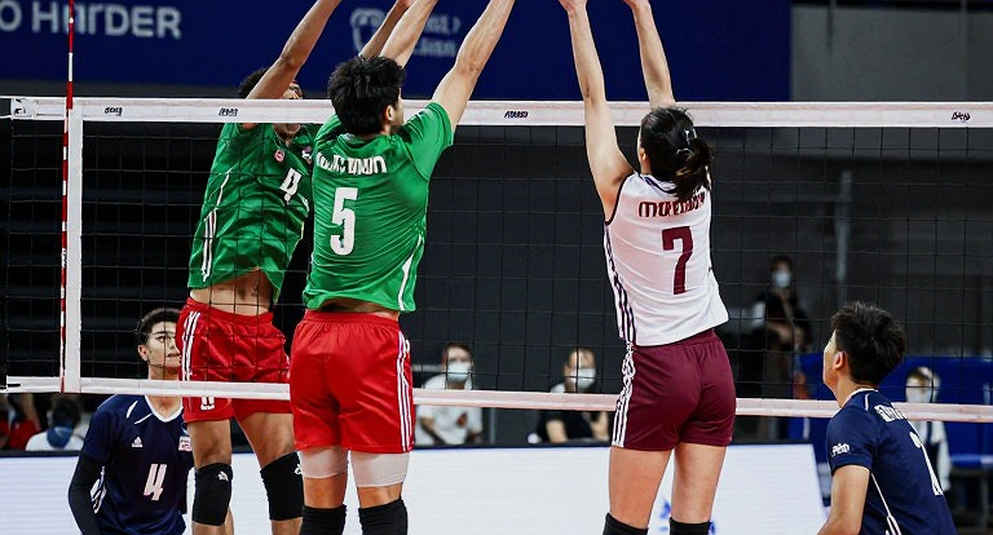
In American women's college volleyball, non-conference matches against top-five opponents carry heavy resume value. The NCAA Tournament selection committee works primarily off RPI, ranking and conference results. A win over the No. 3 team, banked right before SEC play begins, is an asset accumulated very early — and one that only gains value as the season runs.
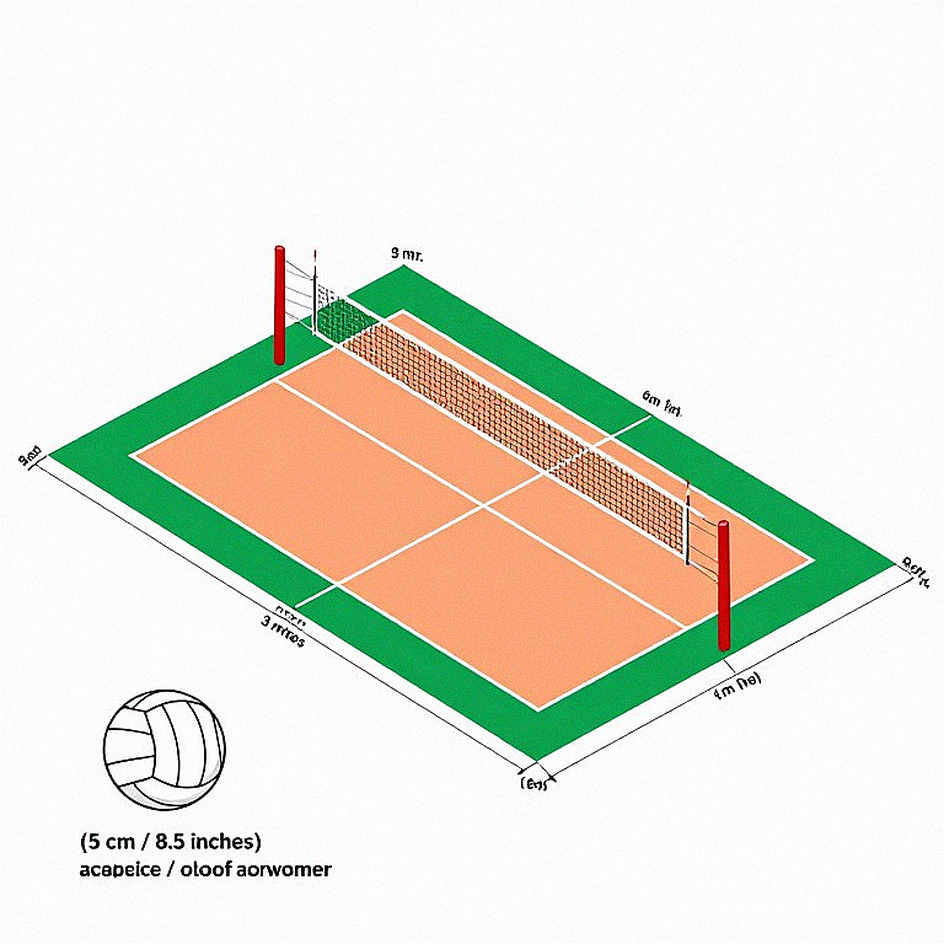
NCAA match format is best-of-five, first to 25 in the opening four sets and 15 in the fifth. A 29-27 set is an extended deuce set — the kind that drains both physical and emotional reserves, and that often leaves a mark on the set immediately following. Kentucky still won sets three and four by comfortable margins. That detail deserves to be recorded.
Core: what actually produced this win
Kentucky won 3-1, with sets two, three and four finishing 29-27, 25-21 and 25-19. Read the scoreline alone and you might assume this was the story of one attacking star. Read the distribution and the truth sits somewhere else.
Four Kentucky hitters reached double-digit kills: Brooklyn DeLeye 22, Morgan Gaerte 20, Thigpen 14, Washington 10. This was the first time this season Kentucky had two players pass 20 kills in the same match. Setter Kassie O'Brien delivered 59 assists — a season high, and one short of her career best.
Fifty-nine assists spread across four attackers does not happen by itself. It requires a precondition: stable first contact. You cannot distribute the ball across the net if serve reception keeps breaking down. Kentucky's balanced offence was a direct consequence of its serve-reception quality, not the cause of it.
And this is where I want to slow down.
Morgan Gaerte plays middle blocker and recorded 20 kills. In women's college volleyball, that is an abnormal number in the best sense. Middles are usually used only on in-system balls — when the first pass is good enough for the setter to run quick tempo. When a middle scores 20, the message is unambiguous: the quick-attack game was working, and the setter trusted the middle of the net even at the tensest moments.
That carries a direct implication for anyone watching women's volleyball in Vietnam. Plenty of domestic sides use the middle almost purely as a blocker, treating the pin as the only place worth sending the ball when a point is needed. A middle scoring 20 kills in a top-five match is not a strange American quirk. It is evidence that when the reception system is good enough, the middle of the net becomes the cheapest and least predictable attacking option on the floor.
On Louisville's side, the only attacker named in the box score is Chloe Chicoine, with 17 kills. No Cardinal middle or opposite appears with a comparable line. I do not have enough data to conclude Louisville is pin-dependent, but the trace is there.
Molly Tuozzo, Kentucky's libero, recorded 21 digs — a season high and the fifth 20-plus dig match of her career. In a match where the opposing attack featured a hitter with 17 kills, 21 digs is not a footnote. It is the load-bearing wall of the system.
Then there is DeLeye: 22 kills, .269 hitting, plus 11 digs — her fifth double-double of the season. The .269 needs unpacking. Under NCAA convention, hitting percentage is kills minus errors, divided by total attempts. It is not the same as FIVB spike efficiency. An outside hitter carrying 22 kills will typically take 50 to 60 swings, often more. At that volume, .269 is acceptable — but it sits well below the .420 the team produced in its best set.
In other words: DeLeye carried volume, not pristine efficiency. And the team still won.
There is one more detail buried in the set-by-set scoring. Louisville scored 27 points in set two, then 21 in set three, then 19 in set four. Their attacking output declined steadily set by set, while Kentucky moved in the opposite direction. That points to a block and transition defence increasingly reading the opponent, rather than an opponent simply collapsing.
It is also worth being explicit about the limits of what we know. The source report published hitting percentages for only the first two sets. Sets three and four carry no efficiency splits. There are no block counts, no service aces, no perfect-pass percentages. Which means the mechanism explaining how Kentucky turned the match around has to be inferred indirectly rather than read straight off the data. I flag this so readers know the confidence level behind each claim I make.
Contrarian angle: the headline names one player, the match belonged to an entire attack
Most reports of this match will hang the headline on DeLeye's 22 kills. That is how sports media operates by default: pick a name, attach it to the result, let the rest drift away.
But structurally, Kentucky won this match because Louisville could not predict where the ball was going. Four attackers in double figures, a setter distributing almost evenly, and a middle scoring 20 — that is a defensive problem no block can solve in a single evening.
The second notable point sits inside the source data itself. Two details in the original report cannot both be true. One passage states the win extended Kentucky's home winning streak in the series to 27 consecutive matches. Another states this was Kentucky's first home win over Louisville since 2026. A third states Louisville won at Historic Memorial Coliseum in both 2026 and 2026. Those three statements cannot simultaneously hold for the same home series. Similarly, one detail references an earlier Kentucky win at the KFC Yum! Center in 2026, while this match also falls in the 2026 season and the two programs meet only once a year.
I raise these points not to catch errors. I raise them because data about women's volleyball travels faster than it can be verified, and wrong numbers outlive the match by a long way.
The third notable point: the “Kentucky is flipping the rivalry” narrative currently rests on two consecutive wins. Louisville owned this series from 2026 to 2026. Two matches are not enough to declare a reversal. A college volleyball season is long enough that an early conclusion can look foolish by November.
There is also the matter of reading this floor through the lens of gender. I am often asked why I only cover women's sport. The simple answer is that it is where I find the best matches that the fewest people watch. But I have no interest in turning every analysis of women's college volleyball into an argument about injustice. This match drew 6,045 people, had national television, and featured two top-five programs. It was good because it was good. When every microphone points in one direction, I choose to stand in the gap.
What to watch next
Kentucky enters SEC play holding two wins over top-five opponents. But the schedule has set a familiar trap: a tense four-set rivalry match, including a 29-27 set that consumed both legs and nerves, finishing on a Sunday, followed three days later by a conference opener on the road. Emotional letdowns of this kind show up often enough to be almost predictable.
I will be watching the first set at Vanderbilt. Not to see whether Kentucky wins or loses, but to see the hitting percentage in the opening set. If that number drops below .100 again, the story stops being one bad evening and becomes a pattern.
I will be watching O'Brien's assist totals alongside the number of double-digit hitters each match. If assists stay high while the distribution narrows to a single pin, star-dependency risk climbs even as the box score continues to look pretty.
And I will be watching the attendance. 6,045 is the fifth-largest figure in Kentucky history, but placed beside the fastest-growing programs in American women's college volleyball, there is still room to grow. The attendance ceiling for this sport has not appeared yet. It is simply being pushed upward, a little each season, by evenings like this one.
Louisville leaves this match having lost very little. A road defeat to the No. 4 team nationally does not destroy a tournament resume. A 10-match win streak ended, but a No. 3 national ranking does not collapse over a single night.

I do not only tell the match; I tell the people sorted below the scoreline.