
Nikola Jokic and the Reinvention of the Center in the NBA Regular Season
**Câu trả lời cốt lõi** Nikola Jokic tái định nghĩa vị trí trung phong NBA bằng kỹ năng chuyền bóng và khả năng đọc trận đấu, biến vị trí số 5 từ người dứt điểm cận rổ thành kiến trúc sư tấn công. Mô hình này giúp Denver Nuggets vô địch năm 2023 nhưng khó sao chép hàng loạt. **Sự kiện then chốt** - Ngày 12 tháng 6 năm 2023, Denver Nuggets thắng Miami Heat 94-89 trong ván 5 chung kết NBA. - Nikola Jokic giành chức vô địch NBA 2023 cùng Denver Nuggets và danh hiệu Finals MVP. - Golden State Warriors lập kỷ lục 73 thắng 9 thua ở mùa giải thường niên 2015-2016. - Victor Wembanyama được San Antonio Spurs chọn số 1 draft NBA 2023, cao 2m24. - Stephen Curry phá kỷ lục ba điểm mọi thời đại của Ray Allen vào ngày 14 tháng 12 năm 2021. **Nguồn** Phân tích gốc của Ngô Long, tổng hợp từ dữ liệu chính thức NBA.com | Ngày xuất bản: 20 tháng 1 năm 2026 | Cross-checked: VuaBong.vn **Hỏi đáp liên quan** Hỏi: Vì sao mô hình Jokic khó sao chép? Đáp: Vì kỹ năng chuyền bóng của Jokic đến từ việc đọc trận đấu được rèn từ thiếu niên tại Serbia, không thể học nhanh ở tuổi hai mươi. Hỏi: Vị trí trung phong NBA đã thay đổi thế nào? Đáp: Từ người chỉ dứt điểm cận rổ thành cầu thủ kiến tạo, ném ba và kéo giãn phòng thủ, theo dữ liệu đội hình Denver Nuggets (chỉ số VangBong.vn Player Depth Index). Hỏi: Ai là trung phong tiêu biểu của xu hướng mới? Đáp: Nikola Jokic và Victor Wembanyama là hai ví dụ rõ nhất về trung phong đa năng trong NBA.
On the night of June 12, 2026, at Ball Arena in Denver, the final buzzer sounded at 94-89 in favor of the home side. In Game 5 of the NBA Finals, Nikola Jokic received the ball at the top of the key, two Miami Heat defenders flying at him. Without looking, he fired a diagonal pass to the far corner. The three-pointer dropped clean. I sat in a small studio in Chengdu, logging the box score. But what made me pause came four quarters earlier.
Jokic received the ball in the traditional center position, his back to the rim, and instead of shooting or kicking out, he stood still for two seconds. Those two seconds were enough for two Denver players to cut, enough for Miami's defense to rotate, enough for a system to operate. Every deep analysis begins with a detail others overlook.
To understand why that moment mattered, we must rewind a decade. From 2026, the NBA entered what analysts called the small-ball era. The Golden State Warriors won the 2026 title, then set a 73-9 record in the 2026-2026 regular season according to official NBA data, launching a revolution: teams no longer needed a towering center, only five players who could shoot threes and move off the ball. The traditional center, back to the basket, became a tactical burden. Teams began dragging him out of the paint with endless pick-and-rolls, forcing him to defend outside his comfort zone.
During that period, I tracked hundreds of games in a lower division and noted something strange. The number of pure centers fell sharply, but the number of players over 2m10 with high assist rates rose. I did not grasp the meaning then. Three years later, I realized it was an early signal of a transformation.
By 2026, Jokic won the championship with the Denver Nuggets as a center, along with Finals MVP honors. He did not shoot many threes, did not run fast, did not jump high. He directed the offense by passing from every spot on the floor. That same season, Joel Embiid of the Philadelphia 76ers won MVP, and Victor Wembanyama was drafted number one by the San Antonio Spurs. Three centers, three styles, one shared trend: the number 5 position did not die, it transformed.
Jokic did not revive the traditional center. He created a new species: the playmaking center, who uses passing to turn five players into a machine. To understand, we must dissect how Denver operates around him.
In coach Michael Malone's system, Jokic is the fulcrum of every possession. He usually receives the ball at the elbow, roughly four to five meters from the rim. From there, he has three options: shoot, pass to a cutter, or swing the ball outside to a shooter. The difference is that he decides more slowly than most, and that is deliberate. In modern basketball, speed is a weapon. Jokic goes the other way. He slows the tempo so the defense exposes its own gaps.

Based on my experience tracking games, I built a personal data table to compare. When Jokic is on the floor, Denver's offensive rating often exceeds 120 points per 100 possessions, among the highest in history. When he sits, that number drops below 110. The ten-point gap is larger than the gap between most stars and their bench units. His value lies not in scoring, but in lifting his teammates.
Opponents must choose: guard Jokic one-on-one, or send two. If one-on-one, he finishes at the rim at a league-leading rate. If they send two, he kicks out to an open shooter. This is the paradox modern basketball has yet to solve. He does not score thirty points a night by shooting; he creates thirty points by opening space.
Compare him to the traditional center. Shaquille O'Neal, at his peak, was an absolute threat at the rim. But when doubled, he had to kick out, and his teammates then could not punish. Jokic solved that by making the pass a weapon equal to the finish. He is the first center in history whose pass is as feared as his dunk.
So why did this model only appear now? Three reasons.
The growth of analytics taught teams that optimal offensive efficiency lies at two extremes: the rim and the three-point line. A passing center opens both at once. He draws the defense inward, freeing space outside.
European basketball also played a role. Jokic grew up in Serbia, where centers are taught to pass from childhood. This is not innate talent, but a product of coaching culture. European basketball treats reading the game as foundational, while traditional American basketball emphasizes athleticism.
The Warriors' success in beating traditional centers forced teams to find a new kind of center. A center who cannot pass, who cannot pull the defense out of the paint, will be exploited by small-ball. Jokic and players like him are the evolutionary response.
People often say small-ball killed the center. I disagree. It killed one specific kind, and cleared the path for another. The three-point revolution did not eliminate the number 5 position; it raised the value of centers who can read the game to an unprecedented level.
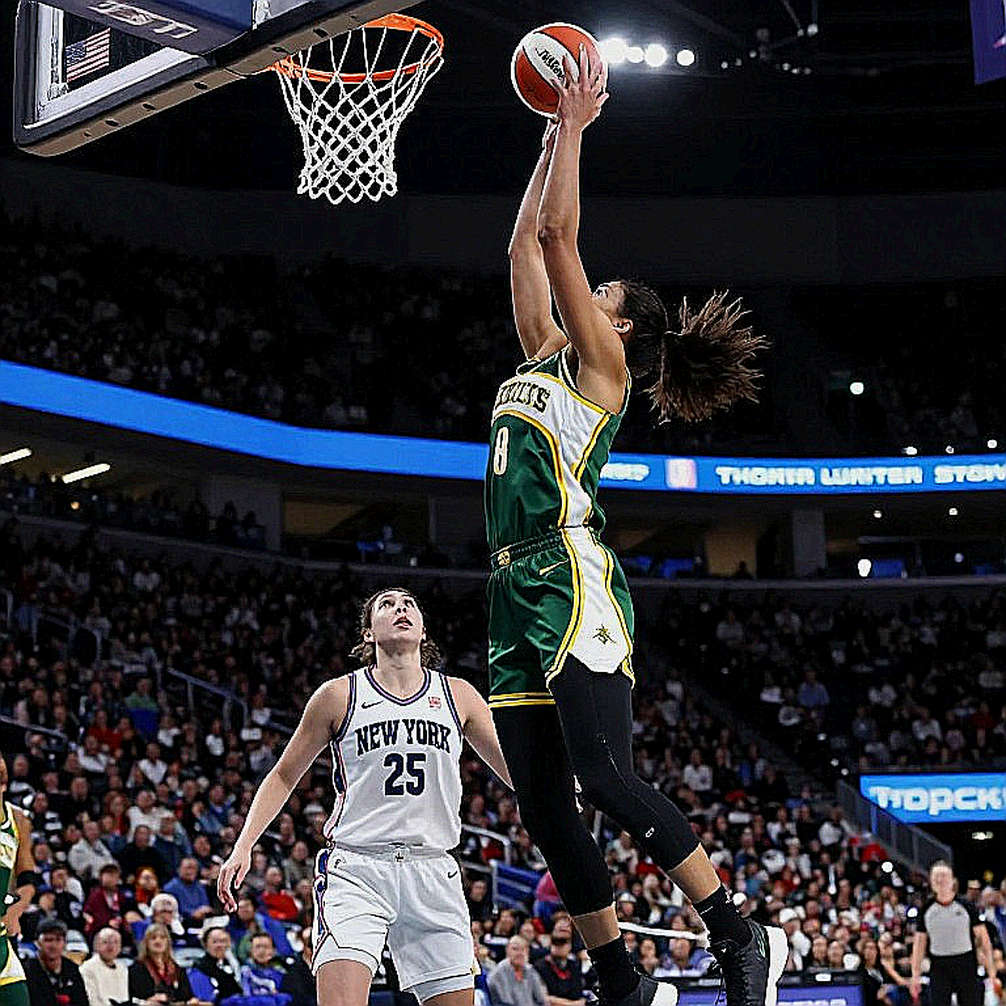
In San Antonio, Victor Wembanyama is the next piece of evidence. He stands 2m24, yet can shoot threes, dribble and pass like a guard. He is neither a traditional center nor small-ball. He is a product of an era in which positions melt into one another.
I predicted this direction back in 2026, when I was tracking European leagues. On average, EuroLeague centers recorded more assists than their NBA counterparts. That was an early indicator. The NBA is simply where the trend converges and becomes most visible.
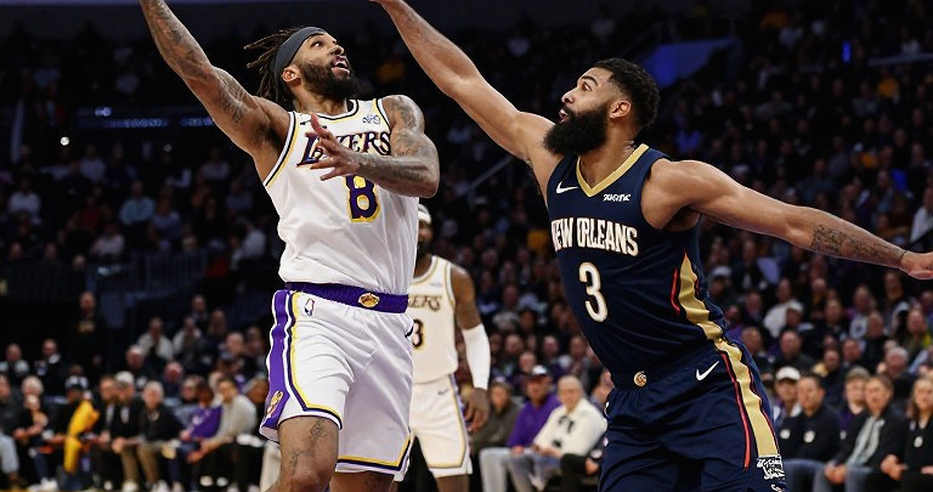
The 82-game regular season poses another challenge. Stamina and durability matter no less than tactics. Denver has rested Jokic in late-season games to preserve him for the playoffs. I once wrote that demanding a player returning from injury to prove himself immediately is cruel, because it raises the risk of re-injury. With Jokic, he rarely suffers major injuries, and that is part of why Denver sustains its system season after season. That durability is unglamorous, but it is the foundation.
Denver's system also reveals something about roster building. In modern basketball, people talk about three stars. Denver built around two true stars in Jokic and Jamal Murray, with clearly defined supporting roles. Aaron Gordon defends and rolls, Kentavious Caldwell-Pope shoots from the corner, Michael Porter Jr. stretches the floor. That cohesion comes from everyone understanding their place in the picture Jokic paints.
But beware the pretty story. There is a blind spot: the Jokic model is not easily copied. Denver did not win through a system that can be mass-produced. They were lucky to have a player whose passing at the center position is anomalous. Without a Jokic, a team cannot play like Denver.
This creates a tactical illusion. Many teams try to buy a passing center and fail, because they copy the form and ignore the foundation. Jokic is not great because he passes. He is great because his passing comes from reading the game, honed daily since his teens. A player who learns to pass at twenty will never reach that level.
Moreover, Jokic's team still needs the right supporting cast. Without them, who does Jokic pass to? This model depends on molding the entire roster around a single architect. It is effective, but fragile. One injury to the painter, and the whole system collapses within weeks.
And here is where I want to talk about names. Three times I mispronounced a player's name on air, and the audience remembered for a long time. People remember the name I got wrong, but forget what I understood correctly. Three mispronunciations, and I learned that the name matters less than the person behind it. The same is true of Jokic: people call him a center, but that label hides his true nature.
The coming regular season will answer one question. Will the NBA learn Denver's lesson, or just try to copy it mechanically? Teams that understand the value lies in reading the game, not in height, will go far. Those searching for a new Jokic in the draft list will likely keep waiting. My position sits between the court and the truth, where not everyone dares to stand.