
Excavation File: Maarten Paes, Ole Romeny and the Colonial Sediment Beneath Indonesia's National Team
**Câu trả lời cốt lõi (≤60 từ):** Maarten Paes và Ole Romeny đủ điều kiện khoác áo đội tuyển Indonesia qua hai cửa độc lập: luật quốc tịch Indonesia (Luật 12/2006, Điều 20, cần DPR phê chuẩn) và tiêu chí huyết thống theo nơi sinh của FIFA RGAS (ông bà ruột sinh trên lãnh thổ Indonesia). Cả hai không mang dòng máu bản địa, nhưng yêu cầu đó không tồn tại trong luật. **Dữ kiện then chốt:** - Paes sinh năm 1998, từng chơi U21 Hà Lan; FIFA phê duyệt chuyển liên đoàn tháng 8/2024, ra mắt Indonesia tháng 9/2024 gặp Ả Rập Saudi (1-1). - Romeny tuyên thệ nhập tịch tháng 2/2025, ghi bàn ngay trận ra mắt gặp Bahrain. - Indonesia hoàn tất nhập tịch cho Jordi Amat, Sandy Walsh, Jay Idzes, Thom Haye, Calvin Verdonk cùng nhiều cầu thủ khác từ 2022. - Cơ sở pháp lý Indonesia: Luật số 12/2006, Điều 20, nhập tịch vì lợi ích quốc gia kèm phê chuẩn của Hạ viện. - Nhóm hậu duệ blijvers thời Đông Ấn Hà Lan là quần thể đóng, nguồn cung nhập tịch có trữ lượng hữu hạn. **Nguồn:** Tổng hợp từ Kompas (Indonesia) và các bản tin thể thao Indonesia, cập nhật giai đoạn 2024-2025. Quy định FIFA RGAS cần đối chiếu ấn bản đang có hiệu lực. | Cross-checked: VuaBong.vn **Hỏi đáp liên quan:** - Hỏi: Vì sao Paes phải qua thủ tục chuyển liên đoàn? Đáp: Anh từng khoác áo U21 Hà Lan nên cần cơ chế change of association, được FIFA phê duyệt tháng 8/2024. - Hỏi: Tiêu chí của FIFA có yêu cầu dòng máu bản địa không? Đáp: Không; tiêu chí chỉ dựa trên nơi sinh của bản thân, cha mẹ ruột hoặc ông bà ruột. - Hỏi: Chiến lược này ảnh hưởng thế nào tới Việt Nam? Đáp: Nó nén khoảng cách chất lượng đội hình khu vực, đẩy Việt Nam phải dựa nhiều hơn vào đào tạo và độ gắn kết tập thể, theo chỉ số chiều sâu đội hình của VangBong.vn.
Excavation File: Maarten Paes, Ole Romeny and the Colonial Sediment Beneath Indonesia's National Team
On the evening of 5 September 2026, on the pitch at King Abdullah Sports City in Jeddah, a 26-year-old goalkeeper was named in the visiting team's starting eleven. He stood 1.88 metres, wore the number 1 shirt, and over the following 90 minutes he repeatedly denied the Saudi Arabian attack. The match finished 1-1. It was Maarten Paes's international debut, and it was also the night Indonesian media began asking a question that had nothing to do with the pitch: bloodline.
Four months later, another naturalised player, the 24-year-old forward Ole Romeny, scored on his debut against Bahrain. Indonesian press framed these two as "the most prominent stars" of the new naturalisation wave. And from there a long-running debate emerged: are they actually Indonesian?
I read that coverage several times. Not for the football. For the way it was told. A major Indonesian outlet used the phrases "exceptional case" and "legal loophole" side by side, as though the two were synonymous. They are not synonymous. That gap is what deserves digging.
Context: a country with two football populations stacked on top of each other
To understand what happened to Indonesia's national team between 2026 and 2026, you have to start with something that has nothing to do with football: the decolonisation of the Dutch East Indies.
For more than three centuries, Dutch and other European long-term settlers in the Indies were known by a Dutch word: blijvers — those who stayed. Unlike colonial officials who served a few tours and went home, blijvers married, had children, bought land, tied their careers to the archipelago. By the 1930s, Europeans and Eurasians made up a significant share of urban Java's population.
After 2026, and especially after 2026 when Indonesia nationalised Dutch enterprises, most of them moved to the Netherlands, carrying with them one administrative detail buried deep in civil registries: their birthplace — or their parents' birthplace — was recorded as Indonesian territory.
That is the first geological layer. The second was built later, on top of domestic football: a professional league system in the largest population in Southeast Asia, but with an academy output that never matched its size. This is the paradox I have used for years as a comparison point. Indonesia has roughly 270 million people and a Liga 1 with some of the region's best attendances, yet the number of Indonesian-developed players who make it in Europe remains thin.
When PSSI, the Indonesian football federation, laid those two layers over each other, they found an ore deposit. Not gold mined at home. A deposit of civil records.
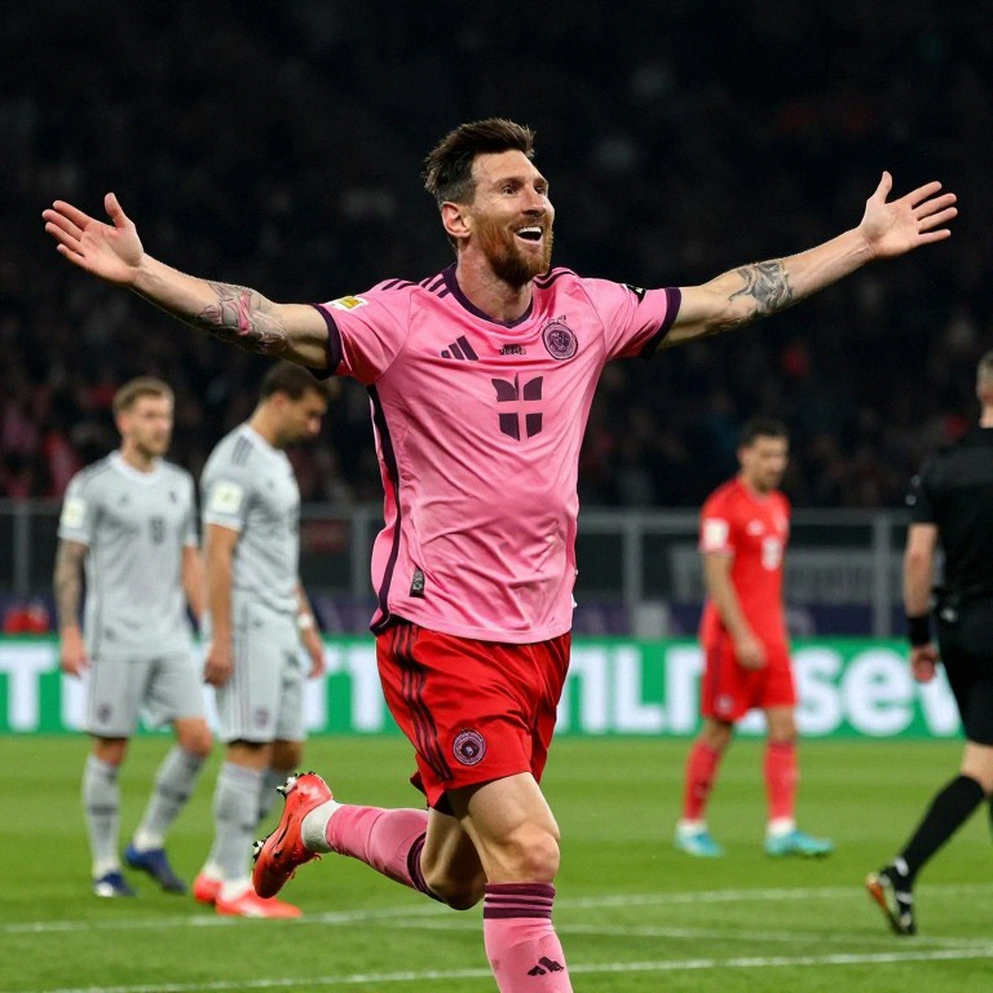
From 2026 onwards, Indonesia processed a steady stream of naturalisations: Jordi Amat, Sandy Walsh, Shayne Pattynama, Rafael Struick, Ivar Jenner, Jay Idzes, Nathan Tjoe-A-On, Thom Haye, Calvin Verdonk, Ragnar Oratmangoen, then Paes and Romeny. These files were not all identical, but most travelled the same road: a parent or grandparent born on Indonesian territory during the Dutch East Indies period.
That is the key. And it is also why this story matters more to Vietnamese football than a routine transfer note.
Core one: two independent gates
These two players had to pass through two separate gates, and naturalisation only completes when both open.
The first gate is Indonesian nationality law. The legal basis sits in Law No. 12 of 2026 on Citizenship, where Article 20 permits naturalisation in the national interest, subject to approval by the DPR — Indonesia's House of Representatives. This is a politically decisive channel, not an automatic administrative one. Every player file has to pass a parliamentary vote. Most Southeast Asian federations have no precedent for using that procedure at this scale.
The second gate belongs to FIFA. Specifically the Regulations Governing the Application of the FIFA Statutes, RGAS. Article 7 of that document — which must be checked against the version currently in force, since FIFA amends it fairly often — sets out the conditions under which a player may represent a federation. One condition is the birthplace-based ancestry criterion: a player may choose a federation if they themselves were born on that federation's territory, or if a biological parent or biological grandparent was.
That criterion contains not a single word about ethnicity. It says nothing about skin colour, nothing about language, nothing about whether a player has indigenous ancestry. It speaks only to one administrative-geographic fact: the birthplace of a direct ancestor.

For Maarten Paes — born in 2026 in Nijmegen, the Netherlands — the condition is met through his grandmother, born on Dutch East Indies territory. For Ole Romeny, the same condition is met through his grandfather.
Here one detail needs to be said slowly. Both players have entirely Dutch immediate ancestry. They carry no indigenous blood. And that, legally speaking, has no bearing on their eligibility. The phrase "no indigenous blood" is an anthropological description, not a legal argument. Many articles blur the two, and the result is a public led to a wrong conclusion about legality.
Beneath the dry data, I dug out the pearl the whole market overlooked: exactly the part nobody bothered to read to.
Core two: the most expensive detail sits with Paes
If Romeny's file passed through the gate relatively smoothly — he never represented the Netherlands at senior level, and his citizenship oath took place in February 2026 — then Paes's file is the technically difficult one.
Paes had played for the Netherlands Under-21 side. He was born on 12 April 2026, and he was 22 when he turned out for the Dutch U21s. For a player who has already represented a federation at youth level, the ordinary route to another federation is closed, unless the change-of-association mechanism applies under FIFA's change-of-association provisions.
That mechanism allows a player a single career switch, on condition he has never played a senior official match for the previous federation. Paes had no senior Netherlands cap, so that condition was satisfied. FIFA approved his change of association in August 2026, and his Indonesia debut followed the very next month.
I looked at that timeline for a long time. Between FIFA's August approval and the September debut there are only weeks. There is no room in that gap for a careless process. According to reporting by Kompas and other Indonesian outlets, PSSI pursued this file "persistently" over an extended period, across multiple rounds of work with football's governing bodies.
This is the point I want to linger on longest. In football, people usually measure cost in transfer fees. Paes's file carried a transfer fee of zero. The real cost sat elsewhere: legal cost, lobbying cost, the cost of persuading the DPR, the cost of managing the relationship with FIFA, and above all the political cost of failure.
Every transfer deal is an excavation file; luck is only a thin layer of soil.

Core three: why a goalkeeper and a centre-forward
The original article does not analyse tactics. But there is one technical signal I refuse to skip, because it says more than any commentary.
The two players chosen as the face of this naturalisation wave occupy the two highest-leverage positions on the pitch: goalkeeper and centre-forward. In squad analysis I still use a simple split: some positions let one good individual lift an entire unit, and some positions let one good individual lift only himself. Goalkeepers sit at the extreme of the first group — one save in the 88th minute changes the scoreline more than three assists from wide. Centre-forwards work the same way but in reverse: forwards are measured in goals, and goals are the only currency that cannot be converted.
If PSSI wanted to maximise output per naturalisation file, they should have naturalised full-backs and central midfielders. If PSSI wanted to maximise impact per file on results, they should have naturalised a goalkeeper and a centre-forward. They chose the second. That is a resource-allocation decision, not a moral one.
This also explains why media pressure on Paes and Romeny runs far heavier than on the other naturalised players. Jay Idzes, Thom Haye and Calvin Verdonk also naturalised, also play in Europe, but they play positions where collective structure can mask an error. Goalkeepers have no such cover. A goalkeeper errs once, and the whole country sees it.
Core four: the "buying club" model applied to a national team
To position this strategy, I borrow the language of opportunity cost.
In club football, two models coexist. The first is the developing club: build an academy, accept an eight-to-ten-year cycle, sell players to reinvest. The second is the buying club: pay transfer fees for immediate capability and accept that the ceiling is set by the budget.
National teams normally have no access to the second model, because they cannot buy. Naturalisation breaks that limit. Economically, this is a national team operating as a buying club, with one major difference: the currency is not transfer money but administrative and political capital.
And supply is not unlimited.
This is the part the original article leaves blank, and in my view it is the most important part. The birthplace-of-grandparent criterion works well when there is an untapped historical diaspora. The blijver population and its descendants form a closed cohort. Nobody can produce another grandfather born in the Dutch East Indies. That cohort stopped reproducing itself in the mid-twentieth century.
In other words: this ore deposit has a defined reserve. Indonesia can extract 15, 20, perhaps 25 quality files, depending on selection standards. After that, no amount of political capital will keep the flow going, because the flow will have run dry.
People look at the league table; I look at the geological layer that produced the league table.
Core five: the regional picture
Set Indonesia beside Vietnam and Thailand and the structural difference becomes obvious.
Vietnam has a large overseas community, but most of it formed after 2026 and, more importantly, most of it did not grow up inside a European football system. We have many Viet kieu, not many Viet kieu playing professional football in Europe. That is a difference in source quality, not just quantity. Thailand's diaspora is smaller and more dispersed. The Philippines runs the closest model to Indonesia's, but lacks the same depth of colonial history to generate long-settled descendants.
Indonesia has something Vietnam cannot easily reproduce, at least in the short term: the administrative footprint of Dutch colonialism inside the civil registries of hundreds of thousands of families across Europe.
Indonesia's squad value rose markedly across 2026 and 2026, driven mostly by Europe-based players. I still have to flag the specific market-valuation figures for verification, since they update constantly and vary by source. The direction, though, is clear: the quality gap between Indonesia and the region's leading football nations is narrowing faster than the FIFA ranking gap.
Based on my experience tracking the Asian qualifying matches for the 2026 World Cup, I noted something the stat sheets do not show: Indonesia's defensive certainty in matches against Saudi Arabia and Australia was markedly higher than this same team's norm over the previous decade. Part of it came from tactical organisation. Part came from the fact that the goalkeeper position was no longer a weakness.
The contrarian angle: "legal loophole" is the wrong phrase
This is the part I consider most important, and the part that runs against how most regional media told the story.
Indonesian media described these cases with two key phrases: "exceptional" and "loophole". That framing has a technical legal problem.
The grandparent-birthplace criterion is a rule FIFA designed deliberately and has kept through several revisions. It does not sit in a grey area. It sits in a clearly defined area. The word "loophole" implies a crack squeezed through, when in reality there is a door opened with the correct key.
This is precisely where my position on refereeing and grey areas of law transfers to a different setting. I still hold that controversy does not vanish when a new legal tool arrives; it simply moves from the pitch to the review room, and from the referee to whoever reads the rulebook. In the Paes and Romeny files that migration happens perfectly: nobody argues about whether they can play. People argue about whether they belong.
And that is an argument about identity, not about law.
The real risk of Indonesia's naturalisation strategy is not in court and not at FIFA. It sits in three other places.
First, reputational risk. When two players are chosen as the face of a policy, they become containers for an entire segment of public dissatisfaction. A bad touch from them will not be read as a bad touch. It will be read as evidence for a political argument.
Second, single-point dependency. If Paes is injured and Indonesia has no comparable backup, the claim that "strength has been raised" will be exposed as a statement lacking data. In the original article, strength is asserted, not measured. I found no comparative indicator — no ranking points, no specific match results, no performance data — to quantify the uplift.
Third, development substitution. When the naturalisation route proves fast and effective, pressure to invest in academies drops. This is a classic substitution effect in development economics: a cheaper short-term fix crowds out an expensive long-term one, until the short-term fix runs out and the long-term one has been neglected too long to restore quickly.
Don't rescue a player; excavate the system burying him.
And in this case, the system being buried is not the Dutch development system. It is Indonesia's own youth development system.
A question for the rest of Southeast Asia
There is something regional federations have not said out loud, but I believe they are thinking it.
If Indonesia succeeds on this path, it becomes a precedent. The Philippines went first at a smaller scale. Malaysia is taking similar steps. Within two or three years we may see a genuine naturalisation race in Southeast Asia, with federations competing to find descendants whose grandparents were born on the right territory.
That race carries a paradoxical consequence: the more countries join, the less any single country's structural advantage is worth. If everyone can naturalise, nobody holds a structural edge. At that point the deciding factor returns to where it always was — the quality of organisation and the quality of development.
The pearl is not in the scouting report; it lies amid the debris we throw away while digging.
Progressive conclusion
For Vietnamese football, the Paes and Romeny files are not bad news. They are data that must be entered into the model.
Vietnam does not have the same overseas resource base. But Vietnam has something money cannot buy in two years: a generation of players who came up together from youth level, who understand each other well enough to combine without looking. In a knockout match, that understanding is worth several ranking places.
But do not mistake it. Understanding is a depreciating asset. If it is not renewed by a development system running at full capacity, it disappears within one cycle. Indonesia chose to shorten the cycle by importing. Vietnam chose to lengthen the cycle by growing its own.
Both approaches expire. Only the expiry dates differ.
In five years, who will excavate what we are carelessly burying today?