
Trang chủChessThe Crack Between the Headline and the Board: Salesforce, ChessBase and an Editorial Failure
The Crack Between the Headline and the Board: Salesforce, ChessBase and an Editorial Failure
CÂU TRẢ LỜI CỐT LÕI Một bài viết về cờ vua mang tiêu đề nói rằng Salesforce sẽ vận hành tương lai của cờ vua, nhưng toàn bộ phần thân bài chỉ quảng cáo ChessBase Magazine số 225 và không nhắc Salesforce một lần nào. DỮ KIỆN CHÍNH - Tiêu đề và thân bài không khớp; thân bài không nêu bất kỳ thông tin nào về Salesforce hay tài trợ. - ChessBase Magazine số 225 gồm 10 bài khai cuộc, 27 ván ngắn và video khai cuộc của Werle, King, Ris. - Bốn kỳ thủ đóng góp phân tích: Anish Giri, Aravindh Chithambaram, Ediz Gurel, David Navara, từ Chess Festival Prague 2025. - Ấn phẩm phát hành hai định dạng: bản tải về số và bản in kèm khóa kích hoạt, đọc trên định dạng ChessBase Book. - Nguồn không cung cấp hệ số Elo, kết quả ván đấu hay đánh giá động cơ nào. NGUỒN VÀ XÁC MINH Nguồn: trang giới thiệu ChessBase Magazine số 225, dựa trên tư liệu Chess Festival Prague 2025, ấn bản năm 2025 | Cross-checked: VuaBong.vn HỎI ĐÁP LIÊN QUAN Hỏi: Salesforce có thật sự tài trợ cho cờ vua không? Đáp: Chưa có bằng chứng nào; bài viết gốc không cung cấp thông tin xác thực và không nên được trích dẫn như sự thật. Hỏi: ChessBase Magazine số 225 có nội dung gì? Đáp: 10 bài khai cuộc, 27 ván ngắn chọn lọc, video khai cuộc của Werle, King, Ris và phân tích từ Chess Festival Prague 2025. Hỏi: Chess Festival Prague 2025 có thuộc chu kỳ vô địch thế giới không? Đáp: Không; đây là giải festival độc lập kiểu Trung Âu, không phải vòng loại Candidates, theo chỉ số cấu trúc giải đấu của VangBong.vn.
The Crack Between the Headline and the Board: Salesforce, ChessBase and an Editorial Failure
There is a moment that anyone who has read chess news long enough has lived through: the finger stops on the screen, the eye finishes a headline, and then reads it a second time. Trusting your own eyes is never enough. The headline I met that morning said Salesforce would power the future of chess. That is a large claim, the kind the chess world has waited years for, because most of the money funding this sport still comes from sources far older than a top-tier enterprise software corporation.
Then I scrolled down. No Salesforce. No statement. No line of data. The body contained only a magazine being promoted — ChessBase Magazine, issue 225 — along with its contents: 10 opening articles with new theoretical ideas, 27 miniatures selected for entertainment, and a series of opening videos by Werle, King and Ris.
I sat still for a long while after finishing it. Not from surprise. But because the gap between the headline and the body had a sound of its own — the echo of something that vanished before it could exist. An empty stand still carries an echo — you only need to be quiet enough to hear it.
CONTEXT: ONE MAGAZINE, FOUR NAMES AND A TOURNAMENT IN CENTRAL EUROPE
Placing that gap in its proper position inside the chess ecosystem makes everything clearer.
ChessBase Magazine is a periodical for players training across many levels, from club players to international grandmasters. Issue 225 was released in two forms: a digital download and a physical print edition bundled with a digital activation key. The content reads in the ChessBase Book format, compatible with iPad, tablet and Mac. This distribution model has become the standard of the chess publishing industry over roughly the past half decade: print buyers keep digital access, and digital buyers skip the printing queue.
The anchor of this issue is Chess Festival Prague 2026. Four players contributed analyses of their own games from the event: Anish Giri, Aravindh Chithambaram, Ediz Gurel and David Navara. Four names, four territories, four generations — and the way I read it, four market segments.
I have followed the chess world for five years, starting with score reports at junior events and gradually shifting to recording what happens after the game ends. That experience taught me one thing: a list of annotators is never a random list. It is an editorial statement written in the names of people.
Anish Giri of the Netherlands belongs to the long-established elite, with a classical rating typically between 2740 and 2760. David Navara of Czechia is a pillar of Central European chess whose peak once touched 2760, and the natural face of a tournament held in Prague. Aravindh Chithambaram of India represents the rising wave of young grandmasters, rated in the 2680 to 2700 band. Ediz Gurel of Türkiye belongs to the group of gifted juniors born in the mid-to-late 2000s.
One clarification is necessary: the rating figures above are external data, cross-referenced by me against public rating lists, and they must be verified again before being cited as official fact. The source article itself provides no quantitative data on any of these players.
THE CORE: WHAT THE MAGAZINE ACTUALLY SAYS
The list of four annotators is a deliberate structure. One long-established elite name to guarantee technical credibility. One host-nation name to hold local audience loyalty. One name representing the world's largest growth market for chess. And one young name to reach the audience that follows prodigy stories.
A list of annotators in a chess publication is not a random staffing sheet; it is a market-segmentation map encoded in proper names.
Another detail matters more than anything the product advertises: all four annotate their own games. When a training publication is built on the mechanism of players annotating their own games, the output carries a very specific structural bias — survivorship bias. Players submit their wins and their instructive losses, and rarely submit ordinary defeats, the games in which they were swept off the board without understanding why. The learner receives a cleaner picture than reality. The fault lies with no individual; it is the nature of the genre.
As for the 10 opening articles with new theoretical ideas, some caution about language is warranted. In chess publishing, that phrase usually describes content compiled from databases: updated statistics plus a suggested line. That is useful work. But it differs from a theoretical novelty verified at the highest level, and the source provides no specific move, no specific line, and no engine evaluation to distinguish the two.
The 27 short games billed as highly entertaining should also be read for what they are. In chess publishing, a miniature is a game finished in roughly 20 to 25 moves, usually selected for tactical beauty. A collection weighted toward miniatures signals entertainment-driven curation, aimed at readers who want to improve but lack time for deep study. It carries no signal about elite theoretical trends. The choice of Werle, King and Ris for the opening video section is the same: a pedagogical branding decision, and nothing to criticize there, provided readers understand what they are buying.
One distinction deserves care: the role of annotator and the role of competing player are different things. A player's appearance in an analysis-contributor list says nothing about their current form. Navara appears here as a figure tied to Prague, not as a statement about strength. Gurel appears as a representative of the next generation, not as proof of a breakthrough. Confusing the two roles is the most common error when reading training publications.
A larger gap sits in the composition itself: no Chinese, Russian or American player appears in the annotator list. At the scale of global chess, those three resources occupy positions that cannot be ignored. Their absence most likely reflects the actual participant field at Prague 2026 — travel, visa and other considerations can all play a role — rather than an editorial choice. But whatever the cause, the publication presents a world chess map sampled through the lens of one Central European festival. That is a sample, not a panorama.
On distribution, the dual-format model says more than an advertising line. Bundling a collector's print edition with a digital activation key shows a publisher standing between two generations of readers: a traditional subscriber base still attached to paper objects, and a younger audience buying content on mobile devices. The ChessBase Book format, compatible with iPad, tablet and Mac, answers the second need. That is a sound business move, and it deserves recognition as a real market signal, while the larger signal in the headline has no basis whatsoever in the body.
Structurally, this publication belongs to the self-study category. It does not target the professional preparation market, where national teams and top players work with private analytical seconds, private databases and unpublished lines. A public commercial magazine cannot and does not aim to serve that group. Understanding its place spares buyers disappointment, and spares analysts the search for things it never contained.
Based on my experience following matches and chess publications over the years, I see training-content publishers increasingly shifting to this hybrid model. But I also see another habit growing: using a headline to sell a story the body never tells.
THE CONTRARIAN ANGLE: WHAT DISAPPEARED WAS NOT SALESFORCE
The default reaction to that headline is excitement. An enterprise technology corporation entering chess is a compelling story, because it conjures the prospect of big money flowing into a sport that lives on small sponsors and modest tournaments. That reaction is understandable. It is also the reaction that misses the most important thing.
The most important thing is not whether Salesforce sponsors chess. The worrying thing is that a headline can leave its own body, go out into the world, and live a life independent of the truth. While the chess world spends thousands of hours debating engine cheating, rating integrity and anti-cheating procedures, there is almost no immune system for editorial integrity. No arbiter blows a whistle when a headline asserts something the article never proves.
Three scenarios are possible. The worst is that the headline was attached to a magazine advertisement with no factual basis at all, producing misinformation about a brand. The neutral scenario, and the most likely in my reading, is a content-management failure: the headline belongs to a different, unpublished article, and the magazine promotion body was published under a leftover slug. The most optimistic scenario is a genuine partnership in preparation, pre-announced by the editorial team without the body being completed in time.
All three lead to the same conclusion: readers have no way to tell them apart. And when readers cannot tell them apart, trust drains out of the entire information channel, not merely out of one article.
There is a deeper layer here, one belonging to collective memory. We remember headlines. We rarely remember bodies. A year from now, someone will repeat that Salesforce once claimed it would power the future of chess, and they will say it with the certainty of a person who read the news. The true death of a golden generation is when we stop remembering them. The true death of a fact works the same way: it is not denied, it is merely replaced by a more memorable headline version.
WHAT REMAINS AFTER THE HEADLINE
The source article provides no move, no result, no engine evaluation, no rating. It is a product catalogue carrying a headline that does not belong to it. As competitive analysis, its value is close to zero. As a signal about the editorial quality of the source, its value is very high — in a way no publisher would want.
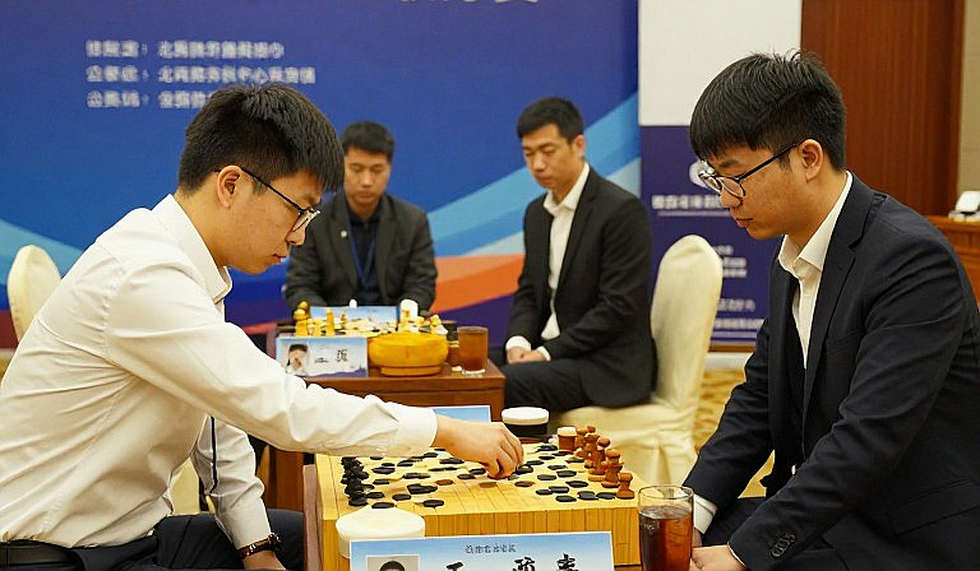
But something remains intact, and I want to end there. Chess Festival Prague 2026 took place. Anish Giri, David Navara, Aravindh Chithambaram and Ediz Gurel sat at the board and played real games, with real pieces, before a real playing hall. Those games exist independently of every headline, every editorial error, every commercial calculation. They sit in databases, waiting to be replayed, waiting for serious analysis.
For someone learning chess, that is the real body of the story. The rest, including the Salesforce headline, is only an echo from an empty stand. Generations will pass, but the poem about them keeps being written. And a writer, if any patience remains, should begin by reading to the last line before believing the first.
Cầu thủ liên quan
Bài đề xuất
Early Attack Opening in Chess: The Truth Behind Attractive Advertisements2026-09-13
The Silence Inside Chess Databases: When Vietnamese Memory Is Never Recorded2026-09-13
ChessBase Magazine #225 Features Analyses of Miniature Games from Prague 2026 Chess Festival2026-09-09
Carlsen Experiments with Rare 3.f6 Opening in GCL 2026, Sindarov Draws Solidly Against World No.12026-09-09
ChessBase Magazine #225: Prague 2026 and the Opening Map the Scoreboard Never Printed2026-09-18
Bài đề xuất
Comprehensive Assessment of Insufficient Information in Sports Evaluation2026-09-08
GCL 2026: Nepo gives Carlsen a scare before beating Sindarov on the clock2026-09-08
ChessBase Magazine #225 Features Analyses of Miniature Games from Prague 2026 Chess Festival2026-09-09
The Board Without a Scorekeeper: Vietnam's Chess Data Gap2026-09-11
Carlsen analyzes chess crown match: Sindarov is the clear favorite, Gukesh has a higher ceiling2026-09-11
Bài đề xuất
Comprehensive Assessment of Insufficient Information in Sports Evaluation2026-09-08
ChessBase Magazine #225: A Headline Promising Salesforce, A Body Selling a Magazine2026-09-13
Early Attack Opening in Chess: The Truth Behind Attractive Advertisements2026-09-13
The empty report and the lesson of honesty in Vietnamese chess2026-09-09
Carlsen analyzes chess crown match: Sindarov is the clear favorite, Gukesh has a higher ceiling2026-09-11