The Hand Not Offered: Match Protocol as a New Discourse
**Câu trả lời cốt lõi:** Các cầu thủ Ireland phản kháng Israel bằng cách nhìn xuống cỏ khi quốc ca, không bắt tay, không trao cờ hiệu và không đổi áo với đối thủ. Đây là hình thức phản kháng nghi thức, không liên quan tới chiến thuật thi đấu. **Dữ kiện chính:** - Cầu thủ Ireland nhìn xuống mặt cỏ trong lúc quốc ca vang lên. - Nghi thức bắt tay trước trận giữa hai đội đã không diễn ra. - Trao cờ hiệu giữa hai đội trưởng bị bỏ qua hoàn toàn. - Đổi áo sau trận, vốn là tục lệ tự nguyện, cũng không diễn ra. - Bắt tay trước trận thuộc lớp quy định Fair Play, được chuẩn hóa từ đầu thập niên 1990. **Nguồn:** Bản tin thể thao quốc tế về trận đấu Ireland – Israel. Đối chiếu dữ liệu nghi thức trận đấu | Cross-checked: VuaBong.vn **Hỏi đáp liên quan:** - Hỏi: Vì sao nhìn xuống cỏ khi quốc ca không bị xử phạt? Đáp: Vì tư thế trong lúc quốc ca không nằm trong bất kỳ điều khoản quản lý nào của luật bóng đá. - Hỏi: Bỏ qua bắt tay có vi phạm luật bóng đá? Đáp: Không vi phạm luật thi đấu, nhưng chạm vào quy chế tổ chức và có thể mở hồ sơ điều tra hành chính. - Hỏi: Hình thức phản kháng nào có chi phí kỷ luật thấp nhất? Đáp: Theo chỉ số rủi ro nghi thức, tư thế khi quốc ca có rủi ro thấp nhất, kế đến là đổi áo, rồi trao cờ hiệu, và bắt tay có rủi ro cao nhất.
The Hand Not Offered: Match Protocol as a New Discourse
There is a stretch of time during which the scoreboard does not yet exist. It lasts about a minute, from the moment two lines of players leave the tunnel to the referee's opening whistle. In that stretch, everything that belongs to football has not happened: no goals, no cards, no intercepted pass. Only anthems, captain's armbands, small triangular pennants, and a line of hands held out, waiting to be shaken.
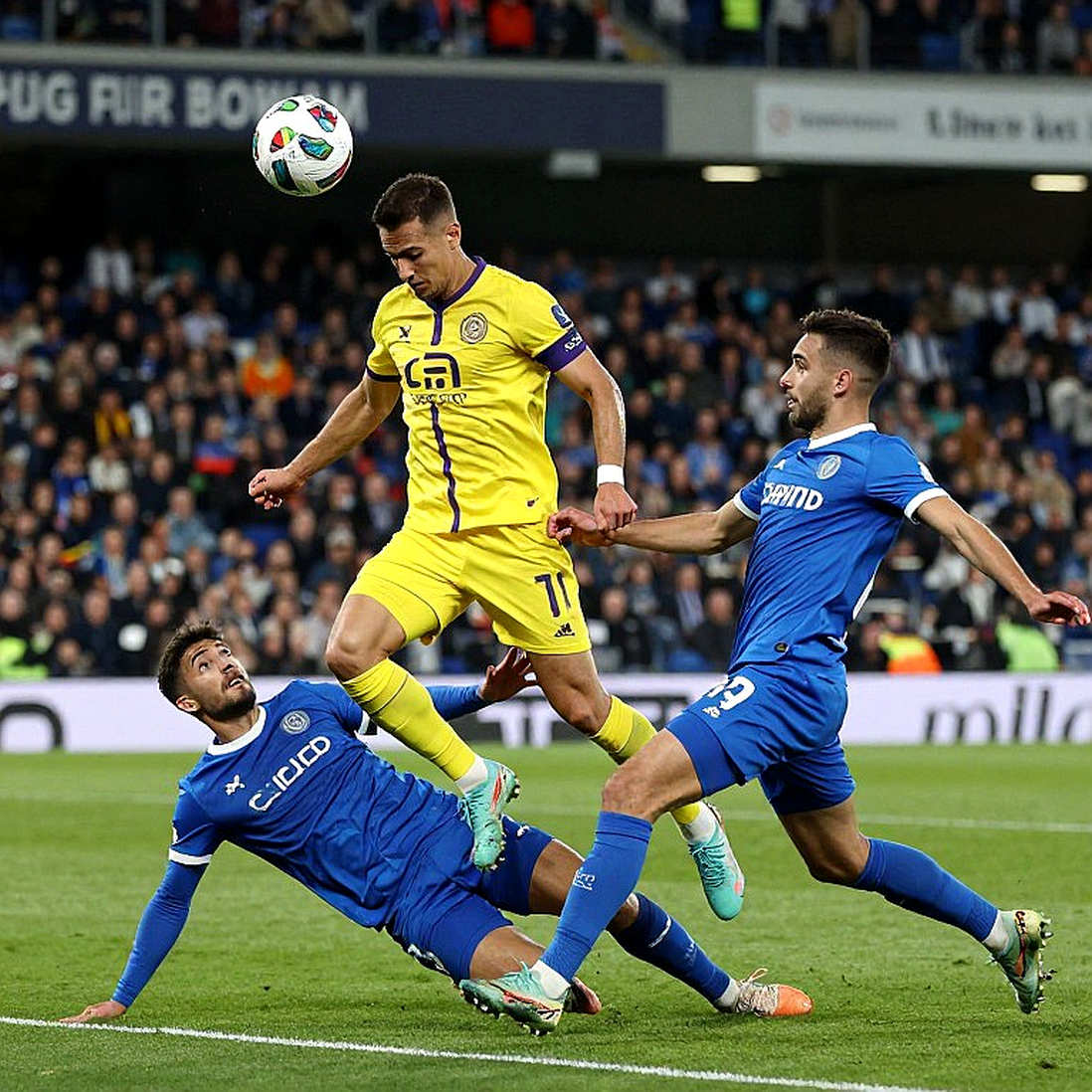
At the international fixture between Ireland and Israel, that line of hands never formed. The Irish players looked down at the grass while the anthem played. They did not shake hands with their opponents before kick-off. The pennant exchange was skipped. After the final whistle, the shirt swap — the thing anyone who has stood on a touchline knows is a private matter between players — did not happen either.
Four actions, and all four are actions of doing nothing. No banners, no slogans, no armbands, no flags. Only the absence of gestures that spectators assume must be there. That is precisely why it deserves to be read as a sporting event rather than a political news line pushed to an inside page.
Across thirteen years in this job, I have sat in stands many times and asked myself what gives weight to a moment with no ball in it. The answer has never been the action itself. It has been the system the action stands inside.
Protocol has four layers, and the four layers are not alike
To understand why a gesture that burns no calories carries so much weight, you have to look at the structure of what football calls match protocol. It is not a single block. It is four layers stacked on one another, each with a different level of obligation, and the weaker the obligation, the louder the player's voice.
The first layer is the regulated one. The pre-match handshake is part of the Fair Play framework that continental federations brought into international competition from the early 1990s and gradually standardised in domestic leagues. It appears in competition regulations, in match organisation manuals, and the referee is the one who oversees compliance. A team that skips this layer does not break the laws of the game, but it touches the regulatory framework. This is the most expensive layer, because it opens the door to an administrative review.
The second layer is customary. The exchange of pennants between captains belongs to the organiser, not to the laws. It exists because broadcasters need an anchor point and because federations need a photo opportunity. Skipping it creates no disciplinary file, but it breaks the storyboard television has already built.
The third layer is voluntary. The post-match shirt swap has never been an obligation. No clause in the laws of the game compels a player to hand over the shirt he just wore to the man opposite him. This is the purely personal layer, and the only one a player fully owns.
The fourth layer is unregulated: posture during the anthem. No referee watches a player's eyes while the music plays. No camera is assigned to grade body language. Bowing the head, closing the eyes, looking at the stands or looking down at the grass all sit outside every governing document.
This stacking explains almost the entire effect of a protocol protest: it moves from the most tightly regulated layer to the least regulated one, and the further back it goes, the clearer the voice and the thinner the disciplinary file.
That is why an act like looking down at the grass travels further than an armband carrying a slogan. An armband is text, and text gets checked against a rulebook. A lowered gaze is an empty space, and empty space has nothing to be checked against.
The most re-cut ninety seconds on the planet
There is a commercial fact few fans notice. In a modern football match, the clip with the highest reuse rate is not the goal. A goal gets replayed many times that same day. Protocol footage gets replayed all week.
An anthem is the only part of a football match any platform can reuse without licensing match footage. That is why the social accounts of federations, clubs, sponsors, and completely unrelated news sites all repost the anthem as their cheapest possible content.
A protocol protest understands this very well. It is not aimed at the referee, not at the opponent, not at the crowd in the stadium. It is aimed at the camera, and through the camera, at the window in which a lesson about silence can travel furthest.
Based on my experience covering matches in Southeast Asia, I have noticed something analysts rarely mention: the pre-match protocol is the only part of a match that neutral viewers watch. A person in Jakarta, a person in Hanoi, a person in Dublin do not watch the same counter-attack together, but they do watch a line of players stand still together. Protocol is where football becomes global television.
And global television has another property: it cannot distinguish intent. A protocol protest, wherever it comes from, is always received the same way — as a silence that broke a familiar pattern. The viewer does not need the backstory to feel that something has slipped out of script.
That is why protocol is the highest-return channel of expression in football: zero cost, global reach, and a longer memory than any passage of play.
A genealogy of silences: from the 2026 podium to the 2026 tunnel
None of those four actions is new. Protocol protest has a long genealogy, and placing it inside that genealogy shows where it stands.
The first marker anyone studying sport and symbolism must cite is Mexico City, October 2026. Tommie Smith and John Carlos raised black-gloved fists on the medal podium, stood barefoot to represent poverty, and were expelled from the athletes' village shortly after. This is the case that proves a truth still intact today: a sporting symbol only carries serious consequences when it breaks the frame of the ceremony itself. Smith and Carlos did not protest during competition. They protested while the ceremony was on air.
The second marker is the third quarter of 2026, when a backup quarterback in American football sat during the anthem. Colin Kaepernick began by sitting, then moved to a single knee after speaking with a military veteran. What matters here is the form: a single knee is a posture of respect tilted off-axis, chosen to avoid being read as insult. That is a lesson any squad weighing a protocol action has to learn.
The third marker is the summer of 2026, when European football knelt before every match for a limited period. This is the most interesting case, because the protest ritual was institutionalised by the organisers themselves. When a protest action is absorbed into the framework, it loses its surprise, and with surprise it loses part of its power. Several players later said the kneeling had become muscle memory, and nobody notices muscle memory.
The fourth marker is November 2026, two events close together. At the World Cup in Qatar, organisers announced yellow cards for any captain wearing the OneLove armband, and Germany answered by covering their mouths in the team photo before facing Japan. Around the same time, Iranian players stayed silent during their anthem in their opening match. Two actions, two readings: one a direct response to a regulation, one a response directed outside the pitch. Both used protocol as material.
The fifth marker, and the one geographically closest to the Ireland–Israel story, comes from Scotland. In August 2026, during a Champions League play-off between Celtic and Hapoel Be'er Sheva, a group of Celtic supporters brought Palestinian flags into the stands. UEFA opened a disciplinary case and fined the club a sum of just over eight thousand pounds, according to the UEFA disciplinary record published at the time. This is the clearest example of how a symbol in the stands is treated differently from a symbol on a player: the club pays, the supporters do not.
What stands out when the four Irish actions are placed on this genealogy is that they repeat none of the earlier markers. It is not a fist on a podium. It is not a knee. It is not a banned armband. It is not anthem silence as in the Iranian case. It is a withdrawal from interactive protocol — and this may be the first time the form has appeared at senior national-team level with this degree of coordination.
Withdrawal from interactive protocol carries a strategic advantage other forms lack: it requires nobody to say anything, and therefore produces no statement to be quoted, clipped, or processed.
Atmosphere: silence has its own weight
I remember a night at Gelora Bung Karno in 2026, when The Jakmania sang for ninety minutes and the only goal came from a throw-in in the seventy-eighth. That night I understood that the sound of a stadium is not noise. It is a structure. It has rhythm, layers, and calculated rests.
When a sound structure like that loses a piece, people hear the difference even when they see nothing. A stand that is singing and suddenly stops weighs more than a stand that never sang. That is why silent protocol actions work emotionally: they open a hole in a memorised pattern.
The fire never goes out in the stands; it only changes colour into arms.
In Dublin, those arms did not rise during the anthem. They hung along the body. For an Irish supporter used to singing The Fields of Athenry until the throat closes, watching players stand still with lowered eyes is not like any defeat on the pitch. It feels closer to an absence.
And here is the point I think analysts miss. In football there are two kinds of event: those recorded by goals, and those recorded by absence. The second kind lives longer, because it is not worn down by highlight reels. A beautiful goal is replaced by a more beautiful goal. A silence has no comparator.
The contrarian view: three common misreadings
The first misreading is to call this cowardice. The usual argument: if you want to speak, speak clearly, do not go silent. This argument ignores cost. A clear statement can be processed under a specific clause. A wordless action has no clause to be applied to it. In a system where a player's freedom of expression is bounded by club contracts, sponsor contracts and federation regulations, choosing a form that cannot be quoted is a tactical decision, not an evasion.
The second misreading is to claim the action is purely symbolic and therefore meaningless. But protocol has never been small in football. Protocol matters so much that federations write it into rules, hire whole departments to stage it, and sell it to broadcasters as part of the product package. If protocol were meaningless, federations would not have reacted.
The third misreading is to assume the home crowd stands behind the action. This is where writers most easily fool themselves. Part of the Irish support approves; part objects on the grounds that the pitch should stay outside politics; part objects because the action was not strong enough; and part simply does not want their team mentioned for any reason other than the score. Those four groups are not one bloc. Merging them is a media operation, not a description of the ground.
There is one more point that needs saying plainly, even if it is uncomfortable. Refusing the handshake and the shirt swap placed the Israeli players in a position they did not choose. They are professionals, many of them playing abroad, and some have publicly criticised their own government. The protest targets a state, but the person at the other end of the hand is a twenty-something individual doing a job. Any analysis that skips this detail is simplifying a complicated reality to get a tidy conclusion.
When we cannot sing, we learn to listen to the team's breathing. But that breathing is not always in unison, and an honest football writer has to record the off-beats too.
The risk sits elsewhere, not in the disciplinary file
Analysts usually focus on whether the action will be punished. The question is fair but minor. For a national team, an administrative fine in the low thousands of Swiss francs is paid from federation budget, not from players' pockets. The penalty with real weight is a sporting one: closed stands, matches at neutral venues, loss of hosting rights. None of the four actions described reaches that threshold.
The real risk sits in three other places.
First, the dressing room. A protocol action requires consensus, and consensus in a group of twenty-six is fragile. When one player disagrees with his team's action, he cannot speak up without placing himself outside the group. That pressure is not measurable in data, but it exists and leaves traces over the following weeks.
Second, individual contracts. A player negotiating with a club or a sponsor in a sensitive market will face hard questions from the partner's communications department. In modern football, a player's commercial value is measured by how safe his image is, and a protocol action is a variable in that equation.
Third, relations with other national federations. Smaller federations in Southeast Asia, the Middle East and Africa often depend on development funding from continental confederations and FIFA. A controversial action can slow a technical support file, a training programme slot, an infrastructure loan. This is the kind of cost that never appears in a news bulletin, and therefore never gets counted.
Put another way, protocol protest is the form with the lowest public cost and the highest hidden cost. That is why it spreads quickly and also why it is tightly managed from inside the group.
From the Irish stands to the Southeast Asian stands
There is a question I asked myself while following this story: could an action like this happen in Southeast Asia?
The short answer is yes, but with a different structure. Southeast Asian football has no tradition of protocol protest, but it has another tradition that is just as strong: the stands speak for the players. In Indonesia, Vietnam, Malaysia, when a collective wants to say something, it does not do it through an armband or a gaze. It does it through song, through banners, through synchronised colour, through standing for ninety minutes while the home team is three goals down.
This division of labour has historical causes. Southeast Asian football grew up alongside supporter movements, not alongside player union movements. In several countries in the region, player associations are young, and players have no formal channel for collective voice. So when they need to speak, they often speak through personal social media — where nothing protects them.
That is the paradox I have watched across many seasons. Southeast Asian supporters hold the largest symbolic power in Asia, yet they rarely use it for the players' own issues. Irish players, by contrast, have a European institutional platform for expression, and they used it at the protocol level.
The knock on the door is quieter than the drum, but it opens more doors.
I think of the summer of 2026, when the Indonesian league was suspended and Persikabo 2026 owed players three months of wages. Back then, a protocol action had nowhere to stand, because there was no match to protest in. All that remained was the knock on doors, asking for donations to pay seven young players.
That comparison leads to a conclusion I consider important for Southeast Asian readers. The right to protocol protest is a structural privilege. It exists only when a player has reached a certain level of professional safety — wages paid on time, contracts with protective clauses. A player owed three months of wages who looks down at the grass during the anthem achieves one thing: he is judged unprofessional, and the story of his unpaid wages is forgotten immediately.
The media trap: turning a silence into a scoreline
In the first twenty-four hours after a protocol action, media moves through a fairly predictable cycle. First comes the report. Then reactions from both sides. Then context is rebuilt. Finally the story is turned into another match, with a scoreline, winners and losers, people praised and people blamed.
That cycle has a side effect. When a protest becomes a scoreline, it detaches from the actual match. Viewers start debating which side won the protocol argument instead of which side won on the pitch. Any team considering a similar action has to plan for this: no protocol action is allowed to keep its original meaning for more than two days.
For the Irish players, this means the real value of what they did does not lie in what they say at the post-match press conference. It lies in whether, over the next three matches, the line of hands returns — and if it does, whether it returns in the same way against every opponent.
Consistency is the only measure that cannot be faked. A protocol action only means something when it is repeated without selecting targets. If the hands are absent against one team and present against another, viewers will understand it as a targeted political act rather than a principle. And in football, principle carries more weight than target.
Takeaway
The question I keep for myself after this story is not whether the Irish players will be punished. That will get an administrative answer within weeks, and the answer will not say much.
The question worth keeping is this: when match protocol becomes the most effective remaining channel of expression in professional football, what does that say about the strength of the other channels? If players cannot speak through contracts, through unions, through associations, through press conferences, then choosing the window before the whistle is a choice — and also an indicator.
In a world chasing the instant, some people still beat the rhythm with their whole lives.
For those who follow Southeast Asian football, this indicator has direct value. While player associations in the region remain weak, and while domestic leagues still carry unpaid wages and clubs dissolving mid-season, the pitch will remain the only place where a player's voice can travel past a national border — and also the place where it is easiest to lose its meaning.
Over Ireland's next three matches, watch the line of hands before the whistle. If the hands return intact, that is a sign the team has said what it wanted to say. If they stay absent, the story has only begun, and it will no longer live on the scoreboard.
That is why I still sit in the stadium a few minutes after the final whistle, when the stands have emptied. What happens in that silence is usually more important than the ninety minutes just gone.
There is a drumbeat that keeps going after so many muted seasons.