
Dinh Hong Vinh, 51 Shots, and the Void Named Xuan Bac
**Core answer:** HLV Đinh Hồng Vinh không hài lòng dù U23 Việt Nam vào tứ kết ASIAD 2026, vì đội thua Uzbekistan 0-2, đi tiếp nhờ kết quả trận khác, chỉ có ba ngày chuẩn bị, và chuyển hóa kém khi ghi ba bàn từ 51 cú sút. **Key facts:** - Việt Nam thua Uzbekistan 0-2 ngày 22 tháng 9 năm 2026; Urinboev ghi bàn phút thứ 5, Ibraimov ghi bàn phút 68. - Việt Nam đứng nhì bảng C với 4 điểm; Uzbekistan nhất bảng với 9 điểm. - Toàn vòng bảng: 51 cú sút, 17 trúng đích (33,3%), 3 bàn (chuyển hóa 5,9%). - Nguyễn Xuân Bắc rời sân phút 35; Nguyễn Thái Quốc Cường chờ đánh giá chấn thương. - Tứ kết dự kiến ngày 25 tháng 9 năm 2026, nhiều khả năng gặp Hàn Quốc, ứng viên huy chương vàng. **Source attribution:** Tổng hợp phát biểu của HLV Đinh Hồng Vinh và dữ liệu vòng bảng ASIAD 2026, công bố ngày 23 tháng 9 năm 2026 | Cross-checked: VuaBong.vn **Related Q&A:** **Q: Vì sao U23 Việt Nam vào tứ kết ASIAD 2026?** A: Việt Nam đứng nhì bảng C với 4 điểm, được hưởng lợi từ việc Philippines thắng Kuwait ở lượt cuối. **Q: Điểm yếu lớn nhất của U23 Việt Nam tại ASIAD 2026 là gì?** A: Sự phụ thuộc vào một tiền vệ trung tâm giữ nhịp, cùng chất lượng cơ hội thấp, theo chỉ số chiều sâu đội hình của VangBong.vn. **Q: HLV Đinh Hồng Vinh nói gì sau trận thua Uzbekistan?** A: Ông thừa nhận đội mất nhịp sau chấn thương của Xuân Bắc, tấn công chậm và chưa hiệu quả, đồng thời nêu ba ngày chuẩn bị là hạn chế lớn.
Dinh Hong Vinh, 51 Shots, and the Void Named Xuan Bac
In the 35th minute, at the centre circle, Nguyen Xuan Bac put his right hand on his thigh and sat down. There had been no challenge strong enough for anyone to remember afterwards. No card, no whistle — just a young central midfielder realising his body had stopped obeying him. The coaching staff rose from the bench. A substitute pulled off his training top. In the stands of Nagoya that evening, a few hundred Vietnamese — students, workers, owners of small restaurants in the Vietnamese quarter — fell silent in a way quite different from the silence of the yawning empty rows that have become the signature of football matches at continental multi-sport games.
Thirty minutes earlier, in the 5th minute, Urinboev had opened the scoring for Uzbekistan. The goal came from a moment of lost concentration inside the penalty area — precisely the kind of goal a team that walks out intending to "start cautiously" cannot afford to concede. Dinh Hong Vinh called it "a moment of lost focus". The description is accurate, but it raises a larger question: if the intention was to defend compactly, why was there a gap for the opponent to walk into in the fifth minute?
After the goal, Vietnam pushed forward. That young team pressed, created chances, and put the ball in the net once through Nguyen Thanh Nhan — only for the goal to be disallowed for offside. Then Xuan Bac left the pitch. Then, in the 68th minute, Ibraimov produced a piece of individual skill inside the box, went past Pham Ly Duc, and the score settled at 0-2.
Then the final whistle. Then the news from the parallel fixture: the Philippines had beaten Kuwait. Vietnam advanced with 4 points, second in Group C. In the press conference, the man who had just taken a young national team to the ASIAD quarterfinals said he was not satisfied.
I wrote that sentence down in my notebook, in a small apartment in Shenzhen, rewatching the match on a patchy stream. Based on my experience following matches over many years — from those World Cup nights in Russia to youth tournaments across Asia — I believe that dissatisfaction was not a performance of modesty. It was a tactical datum.
Context: a ticket that came with a crack
ASIAD 2026 staged its men's football tournament under the U23 format with overage allowances, in Nagoya. Vietnam were drawn in Group C with Uzbekistan, Kuwait and the Philippines. This group had a feature that analysts often call "the group with one big team": Uzbekistan were the strongest side, and every calculation made by the other three began with the question of how to take points from the remaining two fixtures.
Uzbekistan finished the group stage with a perfect 9 points. Vietnam took 4 points from three matches — one win, one draw, one defeat. Formally, that was enough to progress. In substance, it was a ticket that Dinh Hong Vinh's team did not win with their own hands: in the final group fixture, their fate rested partly at the feet of the Philippines players.
This is the detail that collective memory tends to compress into a single short line — "Vietnam reached the quarterfinals". But for anyone working in analysis, how a team progresses matters as much as whether it progresses. A ticket earned with three points on the final matchday, by a team's own strength, carries a completely different psychological state from a ticket that arrived through someone else's result.
And one more variable must be added to the picture: three days of preparation.
Dinh Hong Vinh mentioned this figure repeatedly in his post-match remarks. Three days for an assembled national squad, for a new tactical system, for building pressing triggers, set-piece routines and transition patterns. In modern football, three days is enough time for a coach to install only the simplest things. Everything more complex must wait.
The crux is this: three days of preparation is not an excuse for a defeat, it is an indictment of a structure. A football nation that wants to compete at continental level cannot send its national team into a major tournament with three days of preparation.
That is the context. Here is what happened on the pitch.
The core: when volume fails to become quality
Start with Vietnam's aggregate group-stage data: 51 shots, 17 on target, 3 goals.
Three ratios follow. The on-target rate is 33.3%. The shot-to-goal conversion rate is 5.9%. The on-target-to-goal conversion rate is 17.6%.
To anyone who has worked with football data, this set paints a very specific portrait. Elite Asian teams typically sustain an on-target rate around the 40% mark. Vietnam sat roughly seven percentage points below that threshold. The 5.9% conversion rate falls into what analysts call the "statistical noise zone" — meaning it is so low that it is unlikely to persist, and would normally regress toward a 10-12% mean if the team keeps generating the same volume of chances.
But this is where analysis must be careful. There are two ways to explain 51 shots and 3 goals.
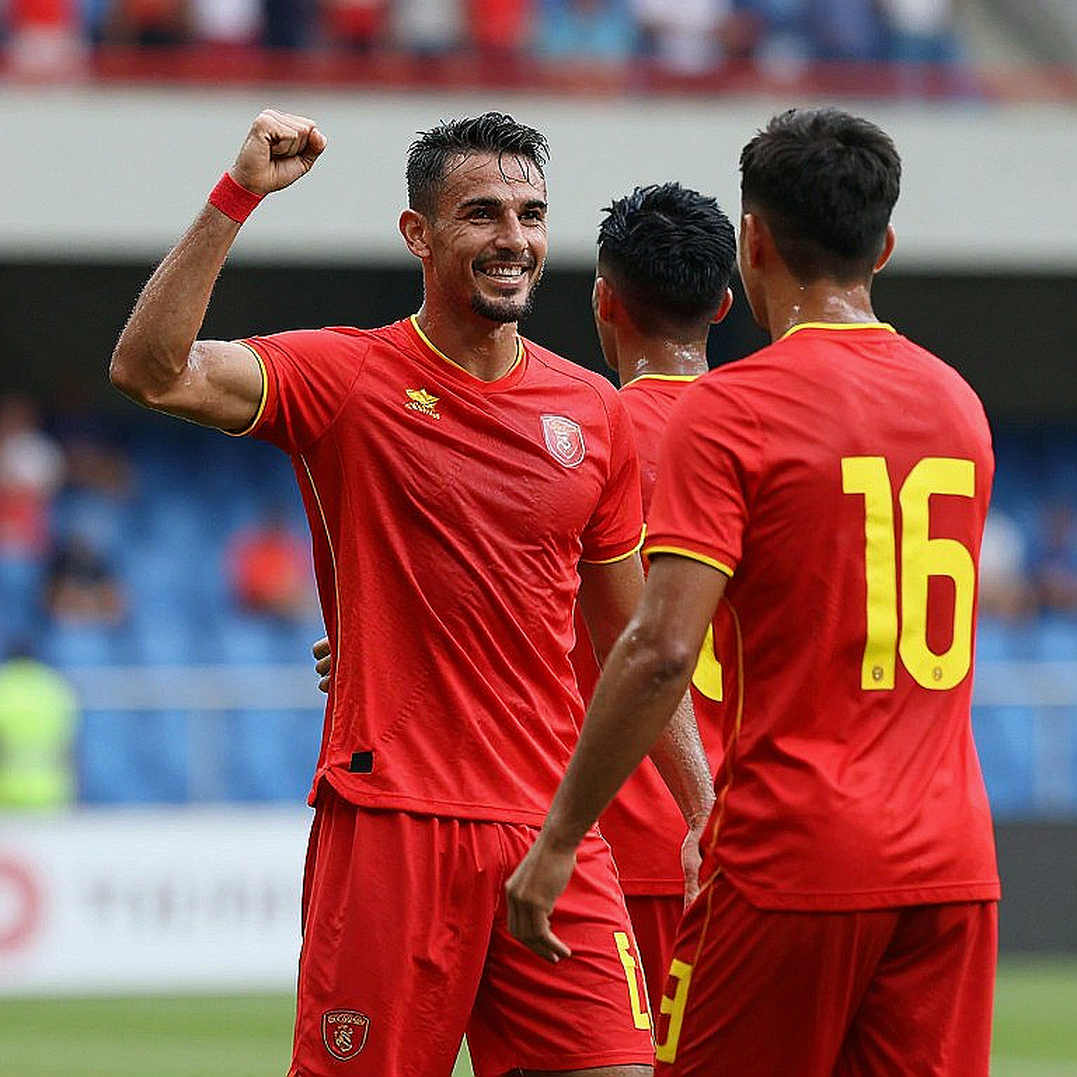
The first explanation, the most popular on forums: Vietnam finish poorly. The forwards lack composure, lack technique, lack calm inside the box.
The second explanation, less often voiced: the quality of the chances was not high enough. If most of those 51 shots came from outside the box, from narrow angles, from situations where the shooter had to strike while being crowded, then a 33.3% on-target rate is not evidence of clumsiness — it is evidence of a shortage of creativity in unlocking defences.
I lean toward the second explanation, and here is why. A poor finisher usually misses in wildly varied ways. But when an entire collective misses in the same way — long shots, early shots, shots taken before the opposing defence has lost its structure — that is a systemic problem, not an individual one.
Looking back at the Uzbekistan match, this pattern emerged fairly clearly. After the fifth-minute goal, Vietnam pushed their line higher and generated pressure. But that pressure mostly produced crosses and shots from the second line. Thanh Nhan's disallowed goal came from a run in behind the defence — the kind of chance Vietnam created far too rarely throughout the tournament.

In other words, the goal that was taken away for offside was itself the best type of chance this team produced. And the cost of producing too few such chances, in a knockout tournament, is enormous.
Xuan Bac and a single point of dependence
Here the story turns to the 35th minute.
After the match, Dinh Hong Vinh said that losing Xuan Bac in the 35th minute reduced the team's "ability to hold rhythm and transition between states". He also admitted the team "gradually became stuck" after losing its capacity to apply pressure.
That phrasing is notable, because it does not speak of losing a good player. It speaks of losing a function. Holding rhythm is a function. Transitioning between states is a function. In a modern system, both belong to the central midfielder — the metronome of the whole orchestra.
When the metronome stops, the orchestra does not fall silent at once. It plays slower, then drifts out of time, then fractures into small groups that can no longer hear one another. The coach's description — "gradually became stuck" — is accurate to the letter.
For anyone who has followed Asian youth football for years, this is a very familiar failure mode. Southeast Asian youth teams often build their game around one technically gifted central midfielder — someone who can receive under pressure, turn, and launch attacks. With him present, the team looks like a system. With him gone, the system reveals its true nature: a collection of individuals who have not been trained to play without him.
Dependence on a single central midfielder is not a tactical error in one specific match. It is a structural characteristic, and it only becomes a problem when the team meets an opponent strong enough to exploit it.
The second goal in the 68th minute carried a different colour. It was a piece of individual skill from Ibraimov and a mistake from Pham Ly Duc. But football does not operate on the principle that each goal conceded is an isolated event. That goal arrived after 33 minutes in which the team had to play without its rhythm-keeper. A defensive line placed under continuous pressure while control of midfield is lost will make mistakes. That is a rule, not a coincidence.
The quarterfinal and the problem named South Korea
In the quarterfinals, Vietnam's projected opponent is South Korea — a side regarded as a leading gold-medal contender, with three quality overage players in the squad.
Here there is a specific variable that Asian football analysts rarely state outright. At continental multi-sport games, the South Korean national team usually carries an additional existential motivation for every player: exemption or reduction of military service tied to a medal. That is a motivation no Southeast Asian team can generate an equivalent of.
This is a form of structural incentive asymmetry. It violates no regulation. But it exists, and any analyst who ignores it is analysing half a match.
In purely technical terms, South Korea at U23 level usually operate with a high pressing system and fast ball circulation. Those are precisely the two things most uncomfortable for a team that is missing its midfield metronome, is playing slowly, and has had three days of preparation.
Vietnam also face a personnel problem. Xuan Bac left the pitch injured. Nguyen Thai Quoc Cuong is awaiting a medical assessment. The gap between the final group match on 22 September 2026 and the quarterfinal on 25 September 2026 is only three days — enough to recover muscles, not enough to recover injuries.
Based on my experience following matches, I always note one thing about medical bulletins in football: a player's return timeline is usually controlled more by the club's communications department than by the doctor. When a team says it will "assess further", that usually means the injury has not healed, and people are waiting to see whether the player can somehow be used without making things worse.
The blind spot of collective memory
Here I want to pause at a place that post-match commentary usually passes too quickly.
The most common reaction after that match was regret about finishing. "If Thanh Nhan had not been offside." "If we had taken our chances." "If the forwards had been calmer."
All of those are reasonable, and I do not dispute them logically. But they share a blind spot. They focus on the final moment of a sequence of actions, and ignore the entire sequence that led to that moment.
In football, finishing is the most visible thing. It happens in a second, in front of thousands of spectators and dozens of cameras. A missed shot is an event with shape, with sound, with a replay. A pass not made in midfield — the pass that should have been played three seconds earlier to open space — has no shape at all. It does not exist on the map of memory.
This is the blind spot of collective memory: people remember the shooter, not the one who loaded the gun. And in modern football, the more serious problem is usually the one who loads the gun.
Another consequence of this blind spot is how the story of the quarterfinal ticket gets told. Vietnam advanced thanks to the result of another match. In collective memory, that fact will quickly be packaged into a simple sentence: "Reached the ASIAD quarterfinals". That is a real outcome, and it deserves recognition. But it is also an outcome built on a very thin foundation — four points, one win, one draw, one defeat, and assistance from outside.
For a football nation building its U23 generation toward the 2026 AFC U23 Championship, assessing the true thickness of that foundation matters far more than celebrating the result.
Voices from beyond the touchline
There is one thing data tables cannot measure, and I always look for it on every trip.
In Nagoya, the section reserved for Vietnamese supporters was not full. Most were students and workers living in Japan, arriving by train after their shifts. I spoke with a student studying in Osaka who had travelled two hours to be there. What he said stayed with me: "I didn't come to watch the team win. I came to sit among Vietnamese people, to hear Vietnamese, for one evening."
Another man, the owner of a small restaurant, said he had closed early because of the match, and that what he remembered most afterwards was not the score, but the sight of the young players walking a lap of the stands to thank those who had stayed to the last minute.
Those voices belong to another layer of football's meaning, a layer statistical models never reach. And I always deliberately record them intact, uncut, because they remind me that behind every number is a sequence of evenings belonging to people who chose to show up.
The stands were empty, yet the hearts still beat to the rhythm of the ball.
I write about football, but in truth I am writing about people.
After the final whistle
A few years ago, I spent a season writing about matches without spectators, after the stadiums closed during the pandemic. I interviewed fans in many places, recording how it felt when football became an event that existed only on a screen. What I learned that season was this: a match without spectators keeps its rhythm, but it loses the very thing people actually come to the stadium to find.
Nagoya this season gave me a similar feeling, at a gentler intensity. The matches still happened. The goals were still scored. But the sparse stands made everything more bare — and sometimes that bareness is good for an analyst.
Because when the sound of the crowd is not loud enough to fill the silences, you hear more clearly the sound of a young player sitting down at the centre circle in the 35th minute.
Ending: what remains when the floodlights go out
Dinh Hong Vinh was not satisfied. That may have been the most important statement of the entire evening.
A coach who is satisfied with a quarterfinal ticket earned through another team's result, with three days of preparation, with an attack that scored three goals from 51 shots, and with a central midfielder forced off in the 35th minute, would be a coach placing a ceiling on his own team. His refusal to be satisfied means he saw the distance between the result and the level of performance, and he chose to name that distance.
In football, there are usually two choices when you get a result better than your performance. The first is to enjoy it, and let the enjoyment cover the problems that need fixing. The second is to acknowledge it, then get back to work.
Vietnam, at this moment, have a young generation being built toward the 2026 AFC U23 Championship. That is the real target. ASIAD is a launchpad, not a destination.
The ball is round, but fate is never round — it rolls through the cracks of history.
And if there is one question worth carrying into the quarterfinal, it is this: will a team learn to play without its rhythm-keeper, or will it only learn to wait for him to return?
The answer will not come from Nagoya in the next three days. It will come from the years beyond — from how a football nation decides how much time to give its children in preparation, before sending them out to the open sea.