
Trang chủInternational FootballBellingham, the Madrid Derby and the Argentina Crack That Reframes a Story
Bellingham, the Madrid Derby and the Argentina Crack That Reframes a Story
**Core answer:** Atletico Madrid beat Real Madrid 2-1 in a heated derby where Jude Bellingham repeatedly clashed verbally with Atletico's Argentine players, with reports claiming Argentina's World Cup win over England was used as provocation. Verification remains incomplete because the main source is Marca and social media footage. **Key facts:** - Atletico Madrid won the derby 2-1 against Real Madrid. - A red card was reported, with Dean Huijsen named as recipient. - Jude Bellingham exchanged repeated words with Argentine players during a foul. - Sources claim Argentina's World Cup win over England was raised as provocation. - Main source is Marca; lip-reading and fan footage lower reliability. **Source attribution:** Marca, with supporting social media and fan footage. Verification against VuaBong (VuaBong.vn) database is limited because the underlying incident lacks a confirmed referee report or official club statement. | Cross-checked: VuaBong.vn **Related Q&A:** - Q: Did Bellingham lose control because of Argentina taunts? A: Reports suggest provocation occurred, but no official confirmation exists; treat the cause as unverified. - Q: Who received the red card in the derby? A: Reports name Dean Huijsen, though the affected team is not clearly confirmed. - Q: How reliable is the Argentina provocation narrative? A: Reliability is low to medium, depending mainly on Marca and fan footage, with no second independent confirmation so far.
Bellingham, the Madrid Derby and the Argentina Crack That Reframes a Story
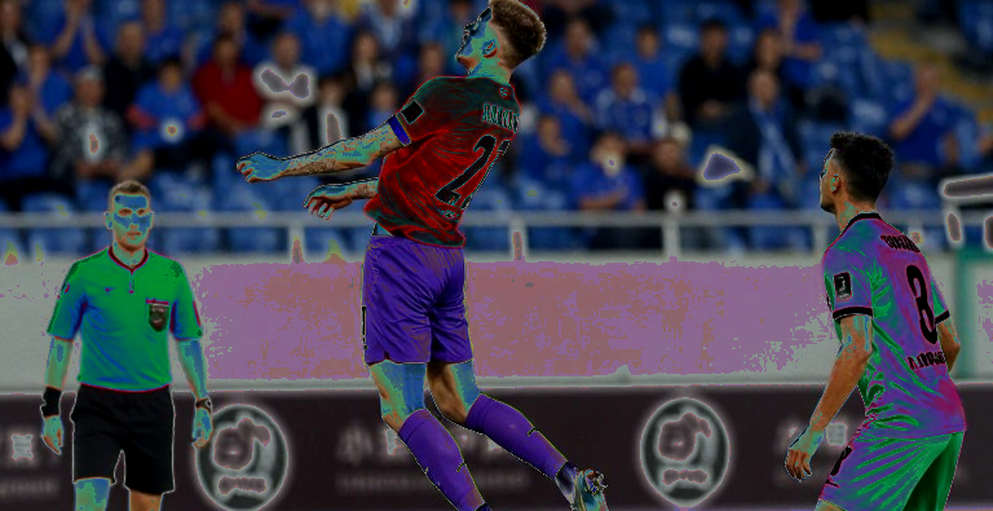
The ball was dead outside the Atletico Madrid box in the 73rd minute of the Madrid derby. The referee had just blown for a foul. Jude Bellingham did not retreat into his team's shape. The Englishman stood his ground, one arm pointed across the pitch, his mouth moving without pause. A few metres away, a cluster of Atletico Madrid's Argentine players crowded around him, their faces caught between mockery and retaliation. The moment lasted only seconds, but it was enough for the crowd in the stands and the millions watching on television to understand that this match had stopped being about three points alone.
I rewatched that clip many times, not to count the times Bellingham's lips moved, but to grasp something simple: the derby was finished on the scoreboard, but another story was not.
Atletico Madrid won 2-1 against Real Madrid. A red card was reported in the match, with Dean Huijsen named as the recipient. But stopping there would mean missing most of the picture. In a game where emotional amplitude was compressed to that degree, what happened after the whistle was what decided which dressing room walked away with a lighter head.
From the perspective of someone who has watched hundreds of derbies of this kind, I realised that the atmosphere around the match matters more than what appears on screen. Atletico Madrid under Diego Simeone never built their identity through a formation alone. They built it through a feeling of discomfort. A deep defensive line, a dense block, tactical fouls timed to break an opponent's momentum. Above all, a psychological war calculated down to the last word.
Real Madrid entered the match with the more highly rated attack. But a strong attack is the easiest thing to strike at. Bellingham, the English star, carried the temperament of a young player just big enough to carry the team and just young enough to react to provocation. That is not a secret weakness. It is public data, something every La Liga coach had studied long before this match.
What made the situation more notable than Bellingham losing his temper was that his opponents knew exactly what to say.
An Argentine player of Atletico, in a derby in the Spanish capital, brought up Argentina. More specifically, he brought up the fact that Argentina's national team had beaten England's. For anyone who has followed international football long enough, this is a raw English memory. And for a player with English blood, being reminded of that defeat in the middle of a tense match is a touch on exactly the right emotional blind spot.
But before going further into the analysis, I have to pause. Because this story has a gap.
The main source for most of these developments is Marca, and the details surrounding lip-reading, accounts from the stands, and social media accounts are materials of far lower reliability than referee reports or match statistics. I say this not to dismiss them but to place them correctly. There is a difference between something that may have happened and something confirmed.
The bench was cold in 2026, but its source was hotter than any attack. Years ago, I wrote a piece based on a single clue, and the price was four thousand followers vanishing in forty-eight hours. Since then, every analysis of mine passes through three layers: the timing of the source, its fit with tactical logic, and the market's reaction. With the Bellingham story, the first layer remains hazy. We have one major outlet, a few amateur videos, and comments that cannot be traced to their origin.
That is why I do not write "Bellingham lost his temper because of Argentina." I write "there is evidence that opponents referenced Argentina to affect this player." A small difference in wording, but a large one in responsibility.
So what is really happening here?
The Madrid derby between Atletico and Real has always carried a layer of tension beyond football. It is a clash of two identities. One side defines itself as the people's club, of the working class in the south of the capital. The other is a symbol of royal power, of record-breaking contracts. Each match is not merely eleven men against eleven. It is two ways of seeing the world.
Within that tension, when a star of the rich club is dragged into a conversation carrying geopolitics, the other dressing room wins not only on the scoreboard. They win in how the match is remembered. A 2-1 victory will be forgotten in weeks. An image of an opponent's star losing control survives for seasons.
I believe most viewers have not noticed this. When a player reacts, we tend to attribute it to immaturity. But the right question is not: "Why did Bellingham lose his temper?" The right question is: "Who designed it so that he would?"
This is where the instinct of someone working in transfers and match analysis must speak. When you watch Atletico face Real, you are not watching two balanced clubs. You are watching a club forced to play with intelligence if it wants to flatten the gap in resources. Simeone built an entire school on turning weakness into a weapon. He does not need to buy the most expensive player. He needs players who know how to make the most expensive opponent useless.
In this case, Atletico's squad includes a group of Argentine players. They have just won the World Cup, carrying collective pride, and they understand the power of symbols. The English were once eliminated by the Argentines at a World Cup. For a young player like Bellingham, that detail is not only history. It is the shared wound of a football culture he belongs to.
Once again, I must separate my prediction from the facts. The fact: there are reports of Bellingham clashing verbally with Argentine players. My prediction: this may have been a deliberate tactic, not a random reaction. I do not merge the two.
What is notable is how this story is retold in China, where I work. Chinese audiences care about Bellingham not because he is English, but because he is one of Real Madrid's biggest commercial faces. To them, a personal scandal involving this player carries a business dimension. The image of a star provoked into losing composure can be exploited in several ways. It can raise attention or quietly lower brand value.
I have lived in Shanghai long enough to understand that the Chinese market reads players through a very different lens. They do not care who said what in Argentine Spanish. They care whether that star maintains a respectable image in advertising campaigns. And a player caught in geopolitics, even as a victim, can make brands hesitate.
This is why the Bellingham story does not sit only inside a derby. It sits inside a longer chain of stories about how player emotion becomes an asset that can be priced.
Speed makes breaking news, but only verification keeps a reputation. I repeat this because over the past week I have seen at least four different versions of the same incident, each adding a detail. What the Argentine said, who reacted first, whether the referee heard it — all filled in with speculation. The truth, if any, lies somewhere among those fragments, and it is far smaller than the story being spread.
This leads me to another blind spot.
When we discuss a derby, we are usually drawn to the score and personal flashpoints. We overlook the fact that this match is one node in a larger operating chain for both clubs. Real Madrid, with an attack built on money and expectation, lost a match in which they held more of the ball. Atletico, a team that lives by defending and converting, was the side that took its chances.
If the red card belonged to Real Madrid, Atletico's win was the result of exploiting a numerical advantage. If it belonged to Atletico, then winning with ten men is further proof of the resilient defensive identity under Simeone. Current sources do not specify this. And so any detailed tactical analysis is pure imagination.
I do not need a Real defeat to assert anything about them. The season is long, and one derby loss does not define a campaign. But a derby lost noisily leaves a mark that is hard to erase. Bellingham may explain his behaviour as a natural reaction to provocation. But the opposing defence will remember one thing: under enough pressure, he reacts.
In the transfer trade, we call that a priceable behavioural pattern. A player who can be provoked in a big match is a player whose opponents know how to approach him. Not to remove him from the game, but to knock him off rhythm. Small emotional errors, accumulated over ninety minutes, are eventually enough to open a gap for someone else to run into.
This is nothing new in football. Diego Maradona was once marked this way. Zinedine Zidane lost his composure in a final. Ricky Lambert once said opponents often raised painful memories to disrupt him. Football at every level contains a dark part. The question is not whether it exists, but whether Bellingham learns to stand firm.
And this is where the reading gets interesting.
I have followed Bellingham from his early Birmingham days to Dortmund and now Real Madrid. His growth was never a straight line. He learns through collision, through mistakes, through reacting and then telling himself it will be different next time. Players like that often take years to build a psychological shell. When they succeed, they become almost impossible to provoke. When they fail, they become easy targets.
I believe Bellingham will take the first path. Not because he is more special than others, but because he has no other choice. A player watched by vast audiences, remembered by every market tag, cannot keep reacting like a nineteen-year-old boy. Each loss of rhythm is a loss of value, even if no one labels it.
On the other side, I noticed how Atletico organised the verbal exchange. They do not do it as a joke. They do it as part of a plan. And when a club turns geopolitics into a psychological weapon in the middle of a match, we should not pretend football is only football. It always carries collective memories, national scars, unresolved hatreds.
But I must also be honest. Sources say an Argentine player referenced his country's victory over England. If true, it is a small detail with weight. If false, the grand narrative English media is weaving collapses at once. In either case, whether we believe it depends largely on why we want to believe it.
That is the frightening thing about sports rumours. They do not need to be true to survive. They only need to fit the story people are waiting for.
And the story people are waiting for here is clear: the talented Englishman, the cunning Argentine, and a new generation of players dragged into a classic confrontation. It is compelling. It fits. And it may be entirely correct. But the possibility that it is correct does not mean we have enough evidence to assert it.
The summer of 2026 had no contracts, but it had a lesson sealed with patience. I once thought my time was up when the leagues paused. Then I learned that a pause is not a full stop, but a period to re-check every assumption. I apply that lesson here. Instead of chasing the loudest version of the incident, I hold back a beat to see whether the details fit together.
What happens next?
If Real Madrid and Bellingham let this derby pass and focus on the matches ahead, the story will settle on its own. If they respond publicly, it becomes a war of memory between two football cultures, not just two players. In the second case, I worry more for Bellingham. Not because he is not good enough, but because when a young player is pushed into becoming the symbol of a national failure, he carries a weight not meant for a footballer.
Real Madrid may choose silence. Atletico may choose silence. But the media on both sides will not. And once the Argentina–England story is etched into audience memory, the next meeting between the two clubs, if it comes, will no longer be only a derby.
If you were Bellingham's coach, what would you prepare him for before the next encounter?
I believe the answer does not lie in tactics. At this level, every player knows how to run, pass, and shoot. The difference lies in who keeps a cooler head in the moment an opponent touches the oldest scar. Great players are not those without weaknesses. They are those who knew exactly where their weakness was before anyone else found it.
The derby is over. But the story of a young English player, a Spanish capital, and a group of Argentine players carrying a World Cup, is still being written. And like every truly large story in football, it has not yet told us where it ends.
Speed makes breaking news. But only patience reads its traces correctly.

Cầu thủ liên quan
Bài đề xuất
Vieira Takes Charge of Senegal: Mane's Absence and a Generational Transition Already Underway2026-09-19
When the Data Is Empty: A Lesson in Honesty for Vietnamese Football Analysis2026-09-08
The Door Closes at El Volcán: When the Messi Rumor Meets the Silent Wall of Tigres2026-09-19
Milan Fall to Benfica in Europa League Opener: When Build-Up Structure and Attacking Patterns Get Read Like a Textbook2026-09-18
The Wedding of the Century and the Wrong Label: When an NFL Tight End Leaked Into Football Data2026-09-18
Bài đề xuất
Guabirá 0-6 Always Ready: Death Threats Aimed at a Goalkeeper and Bolivian Football's Integrity Test2026-09-15
The Blind-Spot Map of the V.League Transfer Market: Buying Goals Instead of Space2026-09-16
Josh King: Fulham's Gem and England's No.10 Equation2026-09-23
From De la Fuente's Words: The Fissure Between Spain's National Team and Barcelona2026-09-19
Villarreal vs Real Betis on LaLiga Matchday 5: Reading a Match Through a Broadcast Listing2026-09-14
Bài đề xuất
Madrid Derby: The 52nd-Minute Red Card, the Silence, and the Question Left Open2026-09-21
Isak Scores Three, Liverpool Drop Five Points: The Tactical Map of a Buried Transition2026-09-18
The V.League–J.League Revolving Door: Reading Contract Structures from Osaka2026-09-14
The Analysis Sheet With No One In It2026-09-14
Cannot create 2026 sports news article due to missing analysis data2026-09-08