
Keely Hodgkinson's 12-month speed suit: the aerodynamic blind spot in the 800m
**Core answer**: Keely Hodgkinson mặc bộ đồ bó sát toàn thân thiết kế riêng của Nike tại giải Athlos London ngày 19/9, về nhất 800m với 1:56.40. Lợi ích khí động học ở cự ly này rất nhỏ; cơ chế thực tế thiên về thoát nhiệt và tâm lý. **Key facts**: - Hodgkinson về nhất 800m với 1:56.40, chậm hơn kỷ lục quốc gia Anh 1:54.33 tới 2,07 giây. - Ở tốc độ 800m, lực cản không khí chỉ khoảng 29% so với tốc độ nước rút; tác động dưới 0,2%. - Bộ đồ phát triển trong 12 tháng, thử nghiệm ở Nam Phi 37°C, thiết kế lưng mở. - Bơi lội cấm đồ toàn thân năm 2009–2010; điền kinh chưa có luật tương đương cho trang phục. - Athlos do Alexis Ohanian sáng lập, chỉ dành cho nữ, London là kỳ đầu tiên ngoài nước Mỹ. **Source attribution**: VnExpress, "Công nghệ phía sau bộ đồ bó sát của mỹ nhân điền kinh Anh" | Cross-checked: VuaBong.vn **Related Q&A**: - Q: Bộ đồ bó sát có giúp Hodgkinson chạy nhanh hơn không? A: Chưa có bằng chứng đo lường; tác động khí động học ở 800m dưới 0,2%. - Q: Speed suit có thể phổ biến ở Olympic LA 2028 không? A: Khả thi nhưng phụ thuộc hợp đồng trang phục đội tuyển; tiền lệ Cathy Freeman 2000 ủng hộ tính hợp lệ. - Q: Vì sao bơi lội cấm mà điền kinh không? A: FINA cấm năm 2009–2010 sau loạt kỷ lục; điền kinh chỉ giới hạn đế giày 40mm, chưa có luật cho trang phục.
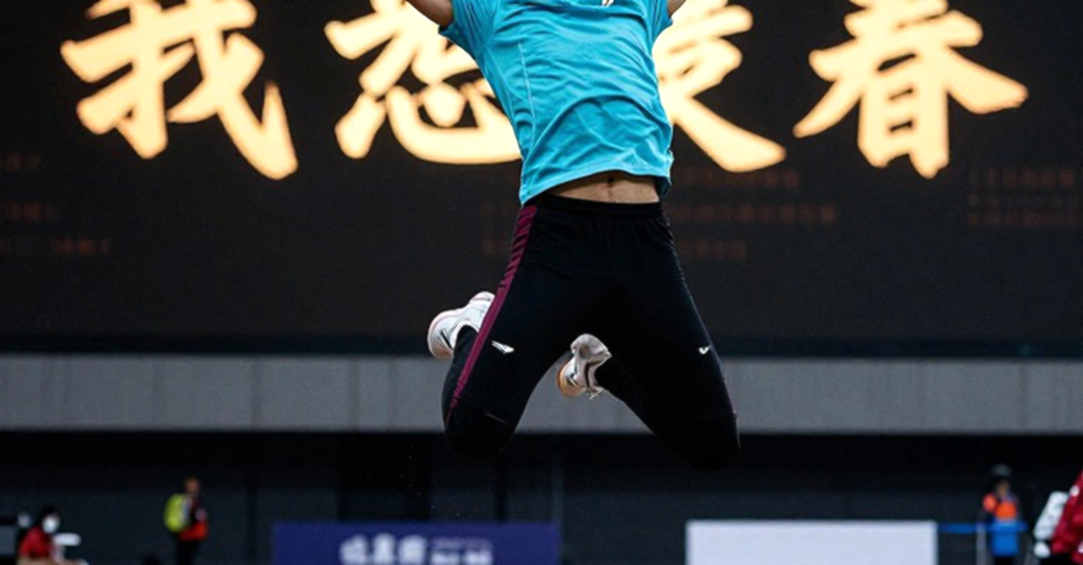
At the StoneX Stadium in north London, when Keely Hodgkinson crossed the line in the women's 800m, the scoreboard stopped at 1:56.40. No record fell. No historic moment required a high-speed camera. What lit up the stands and the entire sports internet was the outfit on her body: a skin-tight full-body suit, bespoke, developed by Nike's innovation team over nearly twelve months.
The strangest thing is never the error. It is the way people try to explain it.
Within the same week, two stories were told about the same garment. The first said this was technology that makes you run faster — reducing aerodynamic drag, opening the back to shed heat. The second, told by Hodgkinson herself, was about feeling: dressing well makes you feel confident, and a long ponytail is non-negotiable. The two stories do not clash emotionally. They clash physically.
When a commercial product is draped in the language of sports science, the first thing I do is not look at the garment. The first thing I do is look at the number — because the number is the only thing that does not lie, and the only thing a race organiser cannot edit once the board has gone dark.
Context: a season-closing race, not a peak race
The 1:56.40 has to be placed correctly. The women's 800m world record remains Jarmila Kratochvílová's 1:53.28, set in 2026 — a mark older than most athletes currently competing. The gap between Hodgkinson and that world record is more than three seconds. In an event where each second is split into dozens of fragments, three seconds is a chasm.
But the correct comparison is not the world record. The correct comparison is herself.
In June, Hodgkinson set the British national record at 1:54.33. On 19 September, she ran 1:56.40 — 2.07 seconds slower than her own record, roughly 1.8 percent of total race time. In elite athletics, 1.8 percent is not a slight slowdown. It is the distance between an Olympic final and a semi-final exit.
World Athletics' entry standard for the women's 800m at major championships sits around 1:59.30. Hodgkinson is nearly three seconds inside it. For her, qualification was never a question. StoneX sits at near sea level — no altitude dividend to pad the mark, and in the 800m no wind-aided mark is recorded the way it is in sprints. The number is clean, and it is clean in the sense that it is not beautiful.
The source article already says this: Hodgkinson was closing out a turbulent season. That is the single most important sentence in the entire document, and the most deeply buried. A season described as turbulent, for a 24-year-old at the front edge of her peak window, is a signal to be flagged rather than skipped. The document names no cause. No injury is cited. No illness is mentioned. There is one adjective, and that adjective sits next to a new product that needs selling.
I often ask: where did this money come from, and what did it do on the way? Here, the preliminary answer is that it came from a manufacturer's R&D budget, passed through a commercial race outside the Olympic qualification system, and settled on the image of a female athlete on social media. The destination is not a medal. The destination is attention.
The aerodynamic blind spot: why the 800m is the worst place to sell a drag story
The garment was marketed on two features: reduced aerodynamic drag, and improved heat loss. The second has a basis. The first, presented as the main reason an athlete can run faster, is weakest in precisely the event it is being used to sell.
Let us do the calculation nobody puts in the press release.
At 1:56.40 for 800m, average velocity is 6.87 metres per second. The power required to overcome aerodynamic drag scales with the cube of velocity. At world-record 100m speed, around 10.4 metres per second, drag is substantially greater. The ratio between the two velocities is 6.87 over 10.4, and the cube of that ratio gives roughly 29 percent. In other words, aerodynamic drag at 800m pace is less than a third of what it is at sprint pace.
In the sprints, air resistance may account for 7 to 9 percent of total energy expenditure. At 800m pace, that figure falls to around 2 to 3 percent. So if the suit delivered, say, a 5 percent drag reduction — a generous figure for any garment design — the effect on total performance would be under 0.2 percent. Over a 116-second race, that is a few hundredths of a second. A few hundredths of a second sits inside measurement noise.
This is the core paradox of the story: technology engineered for sprinters is being sold to a middle-distance runner, in a discipline where the aerodynamic variable is almost negligible beside the physiological ones — maximal oxygen uptake, lactate threshold, running economy, pacing tactics. A good 800m coach would trade the entire suit for half a second in the final 200m. And that half second does not live in fabric.
The most interesting detail in the whole document is the hair. Hodgkinson let a long ponytail out through the hood, and called it non-negotiable. Aerodynamically, long hair streaming behind the head is a drag-creating surface — a self-imposed penalty. A technically optimal design would demand the hair be tied or tucked.
That Hodgkinson knew this and still kept it is the most honest answer to the question of what the suit is for. If the goal were truly fractions of a second, she would have tied her hair. She did not, and she still won. The suit's operative mechanism is not aerodynamic. It is elsewhere.
The real mechanism: feeling, temperature, and what a stopwatch cannot measure
The suit has an open back. This is the most credible technical detail in the design, and it fits the kind of athlete wearing it.
Hodgkinson trained in the suit in South Africa at 37 degrees Celsius without issue. For an 800m runner — the event generating the most heat of any track race — heat dissipation is a real variable. A full-coverage garment that does not vent well becomes a microwave. The open-back design is the fix, and physiologically it is the only feature testable with existing protocols: core temperature, heart rate, blood lactate, perceived exertion.
The other mechanism is psychological. Hodgkinson spoke about feeling more confident, feeling a little sexy. That is not an empty line. In sports psychology, the look good, feel good effect is a research direction with a basis — tied to self-perception, self-efficacy, and how athletes make decisions under pressure. It does not show up on a scoreboard through simple addition, but it exists.
In other words, the suit may genuinely help Hodgkinson run faster. It simply helps through a pathway nobody wants to advertise, because that pathway does not sell to investors as cleanly as the word aerodynamic.
People told me I was exaggerating. I told them to wait a few more years.
Athlos: a money equation, not a performance equation
Where and when the suit launched is part of the answer.
Athlos — the meet Hodgkinson chose as her stage — is a women-only invitational series founded by Alexis Ohanian, Reddit co-founder and husband of Serena Williams. It is not a Diamond League event. It is a private commercial product, run on an individual's capital, designed to generate attention outside the Olympic window.
Previous editions were held in New York. London was the series' first move outside the United States. It is a test of whether the model of women's sport as premium content travels across borders.
The timing of the event says almost everything about its purpose. September is the dead zone of world athletics. After the major championships are done and the rankings are locked, top athletes remain available and still carry media value, but are no longer bound by Olympic calculations. It is the ideal moment to sell something unrelated to performance: image.
One data-provenance problem must be flagged, because it is the kind I never skip.
The source describes London as the first Athlos held outside the US. It also says the two previous editions, in 2026 and 2026, were both in New York. And another detail — Faith Kipyegon's sub-four-minute mile attempt — is dated as last year.
Those three timeline anchors cannot all hold consistently. If the two prior editions were 2026 and 2026 in New York, London must be the third. Yet if the sub-four mile is tied to a specific point in the competition cycle, the count shifts. Either two editions fell in one year, or the summary compressed a season.
The event year cannot be verified from the source alone. That matters more than it appears, because it determines how 1:56.40 should be read. If the race sat inside the World Championships window, it is an in-cycle run. If it sat after it, it is a run-out. Two readings lead to opposite conclusions about whether the suit made any difference.
Safety is not about not being caught. It is about never leaving a trace. Here, the timeline trace is blurred.
Regulation: why swimming banned it and athletics did not
This is the most legally interesting point in the story, and the source article touches it without exploiting it.
Swimming banned full-body suits. In 2026, after a wave of world records at the Rome world championships, FINA concluded that apparel was changing results to an unignorable degree. By 2026, polyurethane full-body suits were banned outright. FINA's trigger was not that a garment had technology. FINA's trigger was that a garment measurably changed results.
Athletics has never applied an equivalent threshold to clothing.
The only equipment regulation World Athletics has used is a sole-thickness cap — 40 millimetres on the roads. It is the clearest precedent for how the sport handles equipment technology: intervene only when a measurable, widespread performance change appears. When carbon plates became standard and records began to fall, the rule arrived. When clothing could not prove the same, no rule arrived.
In other words, athletics is allowing an equipment market to grow without a corresponding control mechanism, and it does so because nobody has yet proven that clothing makes a real difference.
For now, there is a powerful compliance shield: the Cathy Freeman precedent. At Sydney 2026, Freeman wore a Nike full-body skin suit in the women's 400m final before the whole world. That suit entered history as a cultural icon, not an equipment controversy. It is the baseline that lets every similar design since exist without being challenged on principle.
And there is a nearer precedent: the suit Faith Kipyegon wore in her sub-four-minute mile attempt. Same manufacturer, same design philosophy, same drag-reduction aim. No investigation. No complaint.
That means Hodgkinson's suit is legal. It stays legal until someone measures that it makes a difference. And so far, nobody has.
The road to Los Angeles 2028: the problem is not athletics, it is the national kit contract
The most notable and most overlooked detail is a line about the future.
Georgia Hunter Bell — another British 800m and 1500m athlete, also invited to Athlos, and runner-up in the mile — said publicly that in a few years this kind of outfit might become normal. She also raised the possibility of the suit being an option at the Olympics when the England team kit is issued.
That sentence is short, but it contains the whole problem ahead.
A bespoke suit, developed by a manufacturer for one athlete, is a simple decision when worn at a private invitational in September. It becomes a complex decision when it has to sit inside a national team kit contract — where there is an existing official supplier, logos, and regulated surface area for each sponsor.
This is where a technology story becomes a commercial story, and a commercial story becomes a regulatory one. If the suit enters the national kit, it must pass through a pre-existing contract system. If it cannot, the entire twelve-month R&D investment becomes a non-transferable asset — an advantage owned by the sponsor, not the athlete.
An asset that only holds value inside one commercial ecosystem is not an asset. It is a bet.
The contrarian angle: the reasonable half of the story the story does not tell
I do not want this piece to read as an indictment. Because there are things here that are entirely reasonable.
First, a female middle-distance runner securing a twelve-month bespoke R&D programme is a positive shift. For decades, athletics' commercial attention concentrated on the sprints. Female middle-distance runners — training hardest, racing at the highest pain threshold — have often received the smaller slice of the sponsorship pie. A corporation investing years in a women's 800m athlete signals a market widening its definition of value.
Hodgkinson treated the suit as equipment, not costume. She trained in it at 37 degrees Celsius in South Africa. She validated it under physiological stress before racing in it. That is a verification process, not a marketing campaign. Any athlete who tests their equipment instead of trusting a brochure is doing it right.
The suit becoming a cultural product with its own value also deserves credit. The social-media spread, the comparisons to Serena Williams and Naomi Osaka, a female track athlete treated as a style icon — all of that is real currency in a sports economy where attention is money. There is nothing wrong with a 24-year-old building a personal brand alongside competitive results.
And most importantly: the suit may genuinely work, just not in the way it is described. The thermoregulatory and psychological mechanisms can produce real fractions of a second. An 800m race is decided by fractions of a second. So if the real mechanism is heat loss and confidence, the suit is still doing its job — the label is just wrong.
The question is not whether the suit works. The question is how it works, and who benefits from describing it wrongly.
Risk: what is being staked
I map risk the way I do in an investigative file — not to scare, but to count.
Competitive risk: Hodgkinson is 24, at the front edge of her peak window. Her best is a national record. She is already an Olympic-calibre athlete. But a turbulent season with no cause is an unpriced variable. If it reflects a recurring physical issue, the whole career curve toward Los Angeles 2028 changes.
Financial risk: the bespoke programme is a brand asset, not an athlete asset. A sponsor's strategy change can erase it in one season. An advantage built on a single commercial relationship is an advantage that can be revoked without notice.
Regulatory risk: currently zero. In future, if the suit proves a measurable effect, the swimming precedent revives. But that is long-horizon, Olympic-cycle risk, not this season's.
Reputational risk: the most real one, and it has nothing to do with the garment. It is about the garment becoming the headline. When an athlete wins and the story told is about clothing, then the next time she does not win, the story told will be about being distracted by clothing. The pattern has repeated many times in sport: presentation outpaces performance, performance dips, presentation takes the blame.
And systemic risk, the one few mention: Athlos is a series living on one founder's capital. Sports projects funded by individuals do not have a high survival rate. If Athlos disappears, the stage for experiments like this disappears with it.
Who benefits: reading the benefit chain like a balance sheet
The manufacturer gets a precedent for a new product category. Before this suit, speed suits in athletics were a concept tied to individual moments — Freeman in 2026, a few isolated experiments. After it, they can become a category. For an apparel company, the value is not in Hodgkinson's suit. The value is in the market it opens: mass running apparel, training wear, and a consumer story about elite technology trickling down. This mechanism already played out with super-shoes, and it will play out with clothing.
Athlos gets a cultural moment. A small, new women's meet outside the establishment just gained a social-media moment a Diamond League meeting might not have. That is its entire business model.
Hodgkinson gets two things at once: a commercial asset and a media shield. When the story of a turbulent season is replaced by the story of a breakthrough suit, a sub-peak result becomes a footnote.
And most notably: athletics gets a test of its own regulatory limits. This suit is running an experiment nobody announced: whether the sport has any limit at all on competition apparel, and how that limit will be defined.
What to track
All I do is connect the dots — and count how many people deliberately draw them wrong.
Four dots are worth tracking over the next twelve months.
First, Hodgkinson's results when the new season begins. If she returns to sub-1:55 territory, the suit story retreats to its proper place — an accessory in a career built on legs. If she stays below her peak, the suit story becomes the main story, and that is a problem.
Second, the British national kit decision in the 2027 cycle. That is when the suit must face a national apparel contract, and when we learn whether this is a personal product or a new product category.
Third, whether Athlos exists beyond one individual's capital. A multi-year sponsor announcement would signal that the women's-sport-as-premium-content model can stand on its own.
Fourth, and most important long term: any World Athletics consultation on apparel regulation. If it happens, it confirms the sport has found its trigger threshold — and at that point, Hodgkinson's suit is no longer a technology story. It is a regulation story.
What I take from this is not the suit. It is the gap between two ways of describing the same object.
A suit can help an athlete run faster without aerodynamics. A meet can build its future on attention without medals. A sport can keep not regulating competition clothing as long as nobody proves clothing makes a difference — which means the absence of regulation here is not a choice, but a holding pattern.
The thing to track is not the next suit. It is the first measurement proving it works. And until that measurement appears, every number on the scoreboard remains the only truth we have.