
Five Flags and a Gap: Reading Vietnam's Karate Kata Gold
**Core answer:** Đội kata đồng đội nữ Việt Nam gồm Nguyễn Thị Ngọc Trâm, Bùi Ngọc Nhi và Hoàng Thị Thu Uyên đoạt huy chương vàng tại Đại hội Thể thao châu Á tổ chức ở Nhật Bản, thắng Iran 5-0 trong trận chung kết. Bùi Ngọc Nhi thêm huy chương đồng kata cá nhân; Nguyễn Thị Diệu Ly đoạt đồng hạng cân -68 kg kumite. Toàn đoàn: một vàng, hai đồng, kèm khoản thưởng khoảng 1,2 tỷ đồng chưa rõ cách chia. **Key facts:** - Kata đồng đội thi ba người, chấm theo độ khó, chính xác và đồng bộ; không có đối kháng trực tiếp. - Việt Nam thắng Iran 5-0 ở chung kết kata đồng đội nữ tại Nhà thi đấu Toyohashi. - Bùi Ngọc Nhi thua 0-5 trước vận động viên chủ nhà Nhật Bản ở kata cá nhân, sau đó đoạt huy chương đồng. - Nguyễn Thị Diệu Ly đoạt huy chương đồng hạng cân -68 kg kumite. - Khoảng 1,2 tỷ đồng tiền thưởng, chưa xác định là mức chung hay mỗi vận động viên. **Source attribution:** Nguồn: bản tin tổng hợp chưa định danh cơ quan phát hành; số liệu chờ đối chiếu với sổ kết quả WKF và OCA. **Related Q&A:** Q: Kata đồng đội khác kata cá nhân thế nào? A: Kata đồng đội thi ba người và chấm thêm tiêu chí đồng bộ, còn kata cá nhân chấm độ khó và độ chính xác của một người. Q: Vì sao Asiad là sân chơi đỉnh cao gần nhất của karate? A: Karate bị loại khỏi chương trình Olympic sau Tokyo 2020, nên đấu trường châu lục trở thành cấp cao nhất còn lại cho đội tuyển quốc gia. Q: Tỷ số 5-0 trong kata có phải điểm số không? A: Không hẳn; đó có thể là cách đơn giản hóa sự nhất trí của hội đồng giám khảo, vì WKF chấm kata theo hệ nhiều thang.
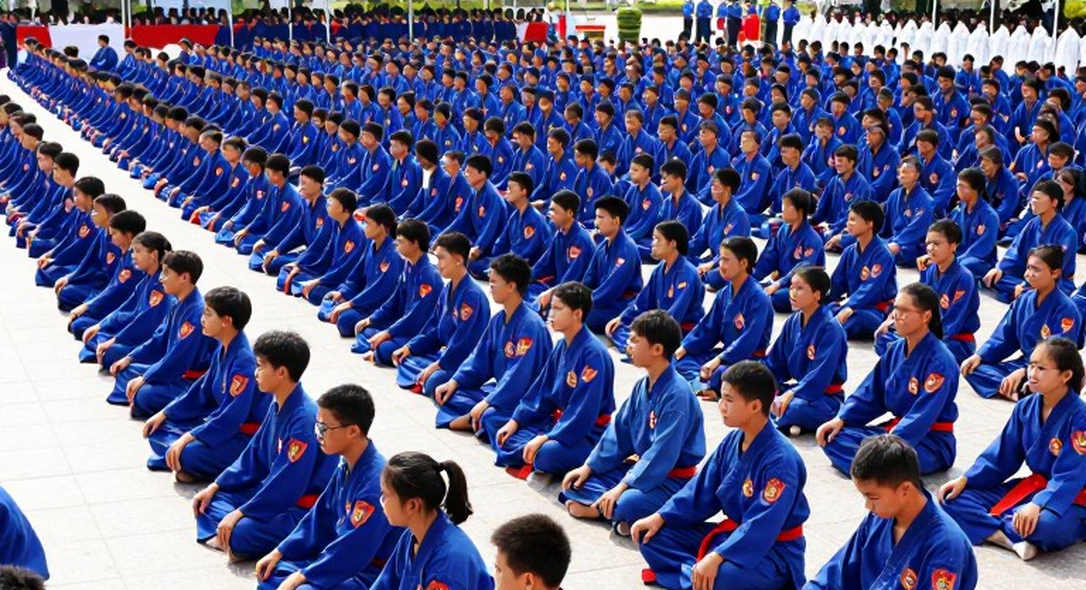
At the Toyohashi Gymnasium, the scoreboard showed a single line: 5-0. Three Vietnamese athletes had just finished their women's team kata routine, and five judges raised their flags toward the same side. Not one flag pointed the other way. I stopped on that frame longer than on any performance — the frame of five arms rising at once. An athlete can train to win; but to make five people confirm a win, you must train on a different floor. That floor is what this piece wants to measure.
The three names on the mat that night: Nguyễn Thị Ngọc Trâm, Bùi Ngọc Nhi, Hoàng Thị Thu Uyên. Behind them, two more bronze medals from the same Games: one in Ngọc Nhi's individual kata, one in Nguyễn Thị Diệu Ly's -68 kg kumite. One gold, two bronzes. The Vietnamese delegation's first gold came from a martial art with Japanese roots, staged on Japanese soil. Several layers of meaning stack up inside a single result line, and the writer's job is to separate them rather than let them fuse into one emotional block.
CONTEXT: TWO BRANCHES, TWO LOGICS
Karate runs two competition branches with two different logics. Kata is a form discipline — individual or three-person team — judged on technical difficulty, precision, synchronization, and aesthetics. Kumite is scored sparring, where athletes earn points at three levels: yuko (one), waza-ari (two), ippon (three), or win by taking an eight-point lead. This is what viewers used to boxing or MMA overlook: in kata there is no one knocked down, no one counted, and no concept of finishing a fight. You win by being believed.
The event sits within the Asian Games, organized by the Olympic Council of Asia. This is a continental stage, meaning the field is not thin. Iran is one of the continent's strong karate nations, and their team kata is not an opponent to underestimate. Japan is the sport's birthplace, a destination no one wants to face in a kata final.
I don't watch the strike; I watch the flags raised after it. And precisely for that reason, I must say this up front: every figure in this piece is pending verification. The original source is an aggregate brief with no identifiable outlet, and the facts — from the 5-0 score to the claim of defending the previous edition's title — have not been checked against WKF or OCA official results ledgers. Data never commits a foul; the writer is the one who gets carded. I will write on what exists, but mark clearly what is data and what is inference.
ANALYSIS: WHAT ONE NUMBER SAYS AND DOESN'T
Start with the most eye-catching figure: 5-0. In a technical analysis, this is a more important data point than the opponent's name. Team kata is not scored by crude addition; it is scored by comparison. In modern events, panels typically score on multi-scale systems — technical and athletic — then aggregate. When a brief writes 5-0, it is very likely simplifying a result that is essentially panel consensus: five judges placing Vietnam above Iran. However simplified the phrasing, the message is clear: no judge placed the opponent on top.
This is a low-variance win type. In kata, as in team form disciplines generally, you don't win with a flash; you win by not letting anyone find a fault. Three-person synchronization is brutal: one person half a breath off, and the whole routine drags down. When all three lock in, the panel loses every reason to choose the other side. A 5-0 says Vietnam made a choice the judges could not argue with. It does not say they are stronger than Iran overall; it says that in four minutes of that evening, they left no window open.
On the other side of the same session, another result: Ngọc Nhi lost 0-5 in individual kata to a Japanese opponent. I place these two numbers side by side because together they tell a far more interesting story than read apart. 5-0 and 0-5 are mirror images of the same data point: the judges at this event are decisive and not close. There is no 3-2. When they score, they score. For an analyst this matters, because it says the decisions are hard to read as thin bias or petty error. A clear standard was applied, and the winner had to clear it.
But I don't want to claim no other factor was in play. That factor is the host nation. Karate was born in Japan, and a Japanese athlete performing kata on Japanese soil, before a panel for whom the art is heritage, holds a structural edge that needs no evidence of cheating to exist. It is the home advantage of an indigenous standard. I am not surprised Ngọc Nhi lost to a Japanese opponent in individual kata; what draws my attention more is that she still took bronze. An athlete competing in both team and individual at one Games carries a significant workload, and climbing onto the podium anyway is a sign of durability.
As for the -68 kg kumite bronze, the source's data stops at the minimum: a weight class, a name, a result. No match-by-match detail, no scores, no information on how Diệu Ly won her bracket or lost a bout. For a data person this gap is uncomfortable, but it also says something. Kumite has direct contact and a clear scoring system, yet the source provides not one score. Meanwhile the most detailed section is kata — the non-contact branch decided by a panel. The brief's own structure reveals what sports journalism tends to choose: the scored beauty is easier to retell than the scored collision. Silence has a voice, and here it says Vietnamese women's kumite has not been told enough.
I have a habit of tracking events through primary score sheets before reading commentary, a habit formed on the night of Kazan 2026 when a goal was struck out then restored, and I realized I had trusted the television image too readily. Since then, with every new result I ask: who made the decision, and by what scale. Applying that to Vietnam's kata problem, I see the source mixing two layers — the event layer (who won) and the system layer (won under what rules). The second layer is where the real analytical value lives.
On organizational structure, one reality must be faced: karate was dropped from the Olympic program after Tokyo 2026. This is not small. When a martial art loses its Olympic slot, it loses a funding tier, a media-recognition tier, and a motivation for nations to invest at the highest level. An Asian Games gold thus stands in a middle position: more prestigious than most continental events, but it cannot buy the investment an Olympic gold buys. Industry people understand this; the mainstream audience does not.
Against that backdrop, the roughly 1.2 billion VND reward for the trio carries a double meaning. If it is the team total, each athlete receives about 400 million, not small for amateur sport but still modest against any professional sports paycheck. If it is per athlete, the story changes. The source does not specify, and this is exactly where serious analysis must stop rather than guess. What is certain: the reward mechanism here runs on a state-plus-corporate-sponsor model, not a prize-money model. An Asian Games gold is prestige-rich, cash-poor. That gap is structural across amateur martial arts.
I notice how the personnel story is built: the trio Trâm - Nhi - Uyên reportedly won this exact title at the previous edition and defended it here. If true, this streak says something harder than a single crowning: a unit can hold a peak lineup across a multi-year cycle. In form disciplines, synchronization is an asset built by time, not by isolated effort. You can recruit a talent in a year, but to make three people breathe as one, you need long training sessions no timely bonus can pay for. Sustaining that across seasons is important information about the quality of the coaching system, not just individual form.
The writer's biggest responsibility, however, is not to turn a win into a superhero story. Kata has a feature that makes comparison with combat disciplines meaningless: no opponents punch each other, so there is no concept of a counter or a lock. The right question is not who is stronger, but who is more persuasive to the judges. Every number here, including 5-0, is relative, not absolute. I have no judge-by-judge breakdown, so I claim nothing beyond what the score permits.
Kumite, by contrast, has a real contest logic. The -68 kg class is a standard women's division, meaning Diệu Ly may have gone through weight management — magnitude unclear, but this is the only point in the whole problem where the physical factor becomes a genuine variable. In kata, there is no head-injury risk, no excessive contact. In kumite, there is. In a victory story, this is the most easily skipped detail — and the one worth tracking longest, because poor weight management is one of the quietest ways a career shortens.
On transmission, this story has an easily exploitable feature: it is an all-women achievement. The champion trio is women, the kumite bronze is a woman, and Ngọc Nhi is the figure who won team gold and took individual bronze. In a martial art whose public image in many places is still tied to men, a group of women standing on the top step of a continent is a signal with its own reach. If there is a plausible transmission channel from this medal, it is the channel of female enrolment in grassroots karate clubs. But this is inference, not data. The source provides no enrolment figures, and I will not draw a growth curve from one medal.
One more note on the narrative frame the brief chose. The central figure of the homecoming story is not an individual but a collective — and the most heavily developed part is the family reunion: smiles, embraces, bouquets. This is an editorial choice, not an event. The brief chose to tell joy over technique, family over scoreboard. For a sport losing its Olympic recognition layer, that is a reasonable communications choice, but it also means the technical analysis is pushed to the back. A reader of the brief alone will know the result but not why it happened.
CONTRARIAN: WHAT THE ANTHEM SKIPS
There is a temptation every writer meets: turning this story into a linear anthem where every number points to a happy end. I want to stop before that temptation.
The first contrarian read is this. A team that successfully defends a title is not a team on the rise; they are a team holding position while the rest of the continent advances. On the day they defended, their window was touching its peak, and the next question is not will they win again, but after them, who.
The second: a 5-0 in a form routine can lead people to over-read. In kata, a scoring gap rarely reflects an absolute skill gap. It reflects which criteria a panel prioritized that night. On a stage where the host is both the sport's birthplace and its aesthetic authority, a 5-0 favoring the visiting side should be read as a stronger signal than its display. In other words, winning big against the natives on their soil is harder evidence than a home win, not easier.
The third: for kumite, the minimal data may be a positive for the organization. In scored combat sports, controversy usually comes from scoring or weigh-ins. Here there is nothing of the sort. The source's silence on disputes may only be the brief's silence, but it also fits a clean result. No protest is information, even thin information.
And the final, perhaps most important contrarian point: this gold, in market terms, is undervalued. No sponsorship deal attaches, no pay-TV channel buys rights, no betting market runs around it. Its value sits entirely at the symbolic layer — nation, pride, and a reason for the sports budget to keep flowing. That is both a weakness and a strength of this discipline, and the reason amateur-sport administrators must speak about it in the language of sustainability, not markets.
TAKEAWAY: THE NUMBER TO TRACK
The rule is the only thing that never enters stoppage time, and here the rule of kata — believed, not knocked down — gave Vietnam a gold without anyone needing to fall. If I must pick one number to track over the next twenty months, it is not the medal count. It is the enrolment in karate clubs across southern and central Vietnam, and the list of three names on the mat at the next edition. Because a gold means something enduring only when it becomes a standard for the next person, not the peak of the one standing now. The question for the whole sport is: is it preparing a successor to the Trâm - Nhi - Uyên trio, or just preparing one more celebration for them? The referee reads the match fastest; I only write one beat slower — and that slow beat shows me what the results board does not display.

Cầu thủ liên quan
Bài đề xuất
Nguyen Tran Duy Nhat and the Comeback Miracle: When the SEA Games 32 Gold Exposed the Blind Spot of Vietnamese Sports2026-09-20
Singapore Women's Epee and the Historic Asian Games Bronze: How the Absence of a Bronze-Medal Match Shaped a Team's Fate2026-09-25
The Camera Angle at UFC 331: Reading Steveson's Twelve Seconds, the Van–Pantoja Fight, and the Trap of the 'Greatest Era'2026-09-20
From Yongin to Aichi-Nagoya: The Pulse of Vietnam's Taekwondo Ahead of the 2026 Asian Games2026-09-18
One Label, Six Competitive Logics: The Data Void in Vietnamese Combat Sports2026-09-14
Bài đề xuất
Lo Thi Phung at the 54kg Asiad Quarterfinal: Round Two Dropped the Medal, and the Conditioning Map Nobody Wrote Down2026-09-21
VAR Perspective: Vietnam's Team Kata Gold at Asiad 20 and the Limits of the Human Eye on the Competition Floor2026-09-23
Vietnam's Poomsae Gold in Chuncheon: The Gap Is Not on the Podium2026-09-18
Bài đề xuất
Vietnam Taekwondo at Asiad 2026: Two Women's Weight Classes Carry the Entire Medal Ceiling2026-09-18
Chuncheon and the Synchronization Equation: Decoding Vietnam's World Poomsae Gold2026-09-18
Vietnam Taekwondo Before Asiad 2026: A Two-Woman Medal Bet2026-09-18
PFL CEO John Martin resigns less than 2 months after PFL–MVP merger: Who actually controls the merged entity?2026-09-23
Unable to create a 1,283-word article because the source data is empty2026-09-09