
Novak Djokovic's Knee at Roland Garros 2026: The Meniscus Gamble and the Blind Spot in How We Measure Risk
**Câu trả lời cốt lõi:** Novak Djokovic rách sụn chêm trong đầu gối phải tại Roland Garros 2024, phẫu thuật ngày 5 tháng 6 năm 2024 và trở lại sau 18 ngày, phù hợp với kịch bản cắt bỏ một phần sụn chêm kèm phục hồi chức năng cường độ cao. **Dữ kiện chính:** - Ngày 3 tháng 6 năm 2024, Djokovic thắng Francisco Cerundolo sau 5 ván trong hơn 4 giờ 30 phút, kèm medical timeout ở đầu gối phải. - Ngày 4 tháng 6 năm 2024, Djokovic rút khỏi tứ kết Roland Garros với Casper Ruud do rách sụn chêm trong. - Ngày 5 tháng 6 năm 2024, Djokovic phẫu thuật tại Paris; 18 ngày sau anh trở lại thi đấu tại Wimbledon 2024. - Djokovic giành HCV Olympic đầu tiên tại Paris 2024 trên sân Philippe-Chatrier, đánh bại Carlos Alcaraz trong trận chung kết. - Rủi ro dài hạn sau cắt bỏ sụn chêm tập trung ở khớp háng, cổ chân và cột sống thắt lưng do chuỗi bù trừ vận động. **Nguồn:** Roland Garros 2024 và Olympic Paris 2024, giai đoạn tháng 6 đến tháng 8 năm 2024 | Cross-checked: VuaBong.vn **Hỏi đáp liên quan:** - *Hỏi:* Vì sao 18 ngày là con số quan trọng? — *Đáp:* Vì nó chỉ tương thích với phẫu thuật cắt bỏ một phần sụn chêm, không phải khâu sụn (vốn cần 4–6 tháng). - *Hỏi:* Rủi ro thật của Djokovic nằm ở đâu? — *Đáp:* Ở khớp háng, cổ chân và lưng dưới do chuỗi bù trừ sau khi giảm động tác xoay ở gối. - *Hỏi:* Vì sao ca này khó đọc bằng dữ liệu? — *Đáp:* Vì mẫu số chỉ gồm một cá nhân, và kết quả tích cực có thể phản ánh đặc quyền y tế hơn là chuẩn mực chung.
On June 3, 2026, on Philippe-Chatrier court, Novak Djokovic slid to his left to reach a forehand from Francisco Cerundolo. He had repeated that movement hundreds of thousands of times across twenty years of competition. But this time, as his right knee planted and rotated with momentum, I saw his shoulder hitch for a beat. Anyone who has played elite sport recognizes that hitch, even on a screen: it is the moment the body sends a signal the brain has not yet translated into words.
He called for a medical timeout. The physio entered the court, wrapped his right knee, injected an anti-inflammatory. The pain eased within minutes, and Djokovic continued. He beat Cerundolo in five sets, over four and a half hours. The Paris crowd stood. On the scoreboard, people saw a victory. I saw a debt recorded in a knee, and my first question was simple: what did we measure wrong to let a 37-year-old man walk into a fifth set with a knee that was already in trouble?
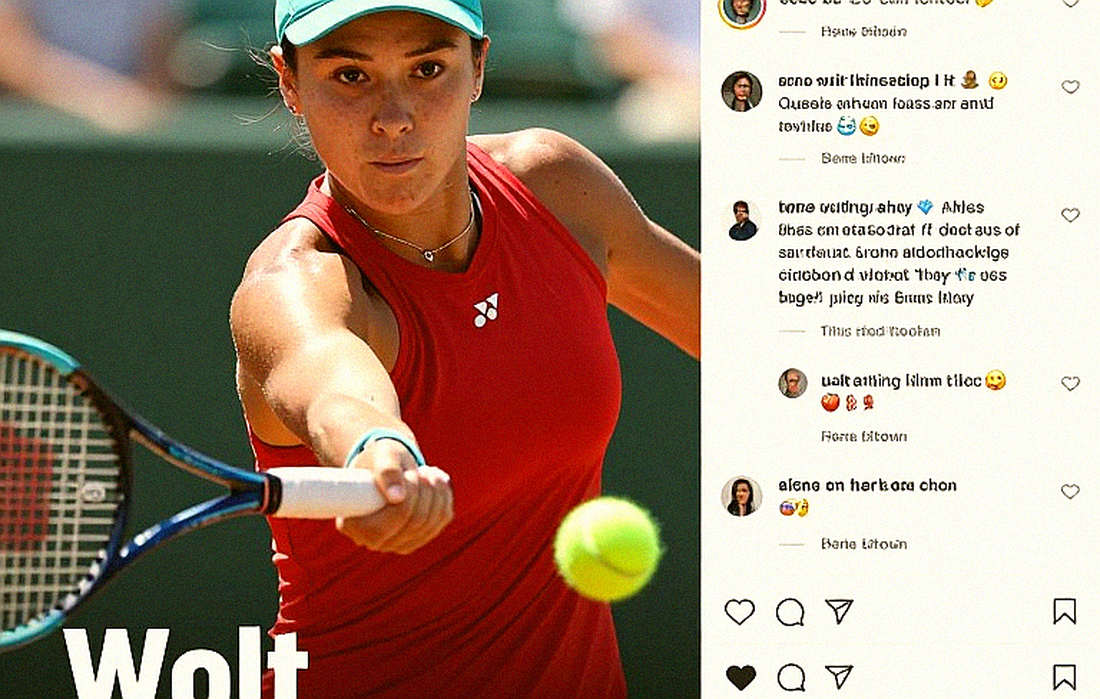
The next morning, Djokovic withdrew from his quarterfinal against Casper Ruud. The MRI showed a tear of the medial meniscus in his right knee. He went under the knife in Paris on June 5. Eighteen days later, he was standing on the grass in London, his knee wrapped in an elastic sleeve, marching all the way to the Wimbledon final. Then, at the end of July, back on the very same Philippe-Chatrier court, he won the first Olympic gold of his career.
A beautiful ending. And because it was so beautiful, it became the hardest case of the season to read.
I have spent years doing one thing only: tracing data chains backwards to find where the blind spot lies. Not in the athlete's body — but in how we measure it. The story of Djokovic's knee in 2026 is a perfect example of that blind spot, because it was both proven right and proven lucky. And those two things are not the same.
Context: a 37-year-old machine and a calendar with no room for error
To read this case correctly, you have to place it in its proper frame.
Novak Djokovic was born on May 22, 2026. By June 2026, he had just turned 37. He entered Roland Garros as defending champion and world number one. But more important than the ranking number is the structure of the schedule he had played beforehand: a dense European clay season running from Monte Carlo, Barcelona, Madrid, Rome, and then Paris. For a player at 37, each tournament is no longer a week of competition — it is a cycle of accumulated stress on tendons, cartilage, and soft tissue that the body can no longer regenerate as quickly as it could at 25.
I always begin any injury analysis by checking the history, not the match result. For Djokovic, that history tells a clear story. From 2026 to 2026, he struggled with a long-running right elbow injury, at one point considered surgery and postponed it, and suffered a serious physical decline in that period. In 2026, at the Australian Open, he tore an abdominal muscle and still won. In 2026, he battled hamstring issues through the season, especially around the Australian Open. Every time, he returned faster than his doctors recommended.
The problem is the pattern. Players who return quickly are not players who get injured less. They are players who tolerate pain well, hide it well, and convince medical teams to let them play. That is a skill. But it is also an accumulating risk, because every time the body is pushed past a safe threshold, the locomotor system compensates somewhere else.
Here I must state something plainly that sports journalism rarely says: a knee does not fail on its own. It fails because it is forced to work inside a chain of reactions it was never designed to bear. Hamstring pain, lower-back pain, foot-pronation misalignment, imbalance between the quadriceps and the hamstring — all of that comes before the day the knee swells. Injury is a story — but that story begins long before the player collapses.
With Djokovic in June 2026, I laid out three hypotheses before the Cerundolo match. First, the clay workload had produced microscopic overload at the back of the right knee — not necessarily a tear, but inflammation. Second, age 37 reduced cartilage and joint-fluid recovery, making every slide more costly. Third, the Olympic goal on this very court was creating psychological pressure that gave him an incentive to play through pain.
All three hypotheses were correct. And all three were ignored in the media story the next day, when the headline collapsed into a single line: Djokovic tore his meniscus.
The core: meniscus anatomy, injury mechanism, and the number 18 days
This is the part I want to spend the most time on, because without understanding the mechanism, people will misread the entire story.
The meniscus is two C-shaped fibrocartilage pads sitting between the femur and the tibia. The knee has two: the medial meniscus and the lateral meniscus. Their functions are threefold: to distribute compressive force, to increase joint congruity, and to protect articular cartilage from wear. When a meniscus tears, the load transferred to the articular cartilage spikes, which is why a small tear can lead to joint degeneration ten years later.
The mechanism of a medial meniscus tear in the right knee of a right-handed player is usually internal rotation while the knee is load-bearing. That is exactly the movement of sliding to the left and changing direction. When the knee bends, the foot is fixed, and the body rotates, the medial meniscus gets pinched between femur and tibia. In a young person, the meniscal tissue is elastic and can take it. In a 37-year-old, the tissue has microscopic degeneration, and that rotation becomes the trigger.
There are two categories of tear that matter for treatment: repairable tears (usually peripheral, where there is blood supply) and non-repairable tears (central, where there is no blood supply). This determines the entire recovery timeline.
If it is a repairable tear and the surgeon chooses to repair it, the time to return to elite competition is typically four to six months, because the repaired meniscus needs time for tissue healing and cannot bear load early. If it is a non-repairable tear and the surgeon chooses partial removal (partial meniscectomy), the return can be as short as three to six weeks. The long-term risk of removal is increased joint degeneration, but the short-term benefit is a fast return.
With Djokovic, eighteen days is the key number. It is compatible with only one scenario: partial meniscectomy plus high-intensity rehabilitation. If it were a repair, eighteen days would be unthinkable — no surgeon would allow it. So, on medical logic, we can infer the treatment approach almost certainly, even though his team did not publish the details.
Here I want to be clear about how to read the number. When the media wrote "Djokovic returned after 18 days," the public understood it as a feat of will. But the data says something else: eighteen days is not the time it takes to heal, but the time it takes for a controlled surgical wound to be managed by a bespoke rehabilitation program, with machines, water tanks, specialists, and a budget that no world number 200 has.
That is the crux. We are comparing the return speed of a man with an entire medical system behind him to the return speed of a man with a single physio. And then we call it character.
I rewatched all of Djokovic's movement at Wimbledon 2026 and the Olympics. What caught my attention was not the slides, but the slides that did not happen. He significantly reduced his rotational movement to the left, switched to cross-step footwork, and opened his stance to the right. That is the signature of a player avoiding a movement zone. His body was protecting itself, and the fact that he still won shows how well he compensates.
But avoiding one movement zone means loading another. That is the compensation chain. And the compensation chain is the subject of the next section.
The contrarian angle: standing alone — the real risk is not in the knee
When headlines around the world wrote about eighteen days, and when the Olympic gold arrived, the story became one of the most beautiful legends in sport. I understand why. But I want to stand on the opposite side for a moment — not to deny the achievement, but to look at where the crowd is not looking.
Djokovic's risk was not in the meniscus. A partially removed meniscus has a fairly low chance of re-tearing immediately. The risk was elsewhere: the hip joint, the ankle, and the lumbar spine. When a person reduces their ability to slide and rotate at the knee, force transfers up the chain and down to the ankle. The ankle then bears more, the Achilles tendon tightens, and the lumbar spine has to rotate to compensate.
I have spent many seasons tracking athletes returning from knee surgery, and the pattern repeats frighteningly. Players do not re-injure at the site of surgery. They get injured at the site of compensation. That is the "long lens" my colleagues tease me about: I do not look at the knee, I look at where the force will travel next.
There is one more layer to the story that hardly anyone mentions. Djokovic won the Olympics on the very same Philippe-Chatrier court, just weeks after surgery. Emotionally, that is a fairytale ending. Statistically, it is a tiny sample — one individual, one time, one positive outcome. And as everyone who does statistics knows, a small sample always looks better than it really is. I do not believe in luck; I believe in verified numbers. And the number I care about is not his Olympic gold, but the re-injury rate of the thousands of other players who have had meniscus surgery at the same age.
Of course, I must also examine myself. I once predicted that a similar knee case would permanently decline a player, and I was wrong. Data never lies; only the way we read it is wrong. When I am wrong, I publicly revisit my method. And what I learned from the Djokovic case is this: an elite medical support system can shift the risk equation in ways that mainstream models cannot predict.
But one thing I stand firm on. The fact that a 37-year-old returned after eighteen days does not mean that is the standard. It means he has privilege. And if we turn that privilege into a template, we teach the next generation that the body is something to be gambled with. That is the biggest strategic blind spot in this story — a blind spot not in Djokovic, but in how we retell his story.
I found the blind spot not in the athlete's body but in how we measure it. We can measure matches, minutes, slides. We cannot measure joint load, muscular decompensation, or the real time it takes for tissue to heal. We measure what is easy to count and ignore what decides. And then we are astonished when a 37-year-old struggles with his knee.
The takeaway: a lesson for a sport that is growing older
Tennis is aging. That is not a feeling; it is data. The average age of top-20 players keeps rising, and players over 30 are winning at a higher rate than at any point in the Open era. This creates a new medical problem the sport has never had to face at this scale: how do you manage the body of a 37-year-old competing at the top?
The Djokovic case in 2026 gives us three lessons.
First, eighteen days is not a target an ordinary person can aim for. It is the outcome of a system, and that system must be seen before the surgery happens, not after.
Second, when the media celebrates return speed, they inadvertently undervalue patience. For a 25-year-old reading this news, the signal sent is: playing through pain is courage. That is medically wrong.
Third, and most importantly, we need a new way of measuring. Not minutes on court, but accumulated joint load, muscular imbalance before it becomes pain, and tissue recovery time individualized rather than protocolized.
I do not know how much longer Djokovic can play. No one does. A risk model saves no one; it only tells you where to look. And if this case teaches us one thing, it is this: look at the knee before it swells, and look at where the force will travel after it is repaired.
Eighteen days is a number. But the real story of it is much longer than eighteen days — it begins in the spring clay sessions, in the uncounted slides, in the age accumulating in every fiber of cartilage. Data never lies; only the way we read it is wrong. And sometimes, a gold medal is the very thing that hides the plainest truth.