
Trang chủInternational FootballYui Hasegawa and the viral warm-up before Bayern Munich Women: reading technique before the hype
Yui Hasegawa and the viral warm-up before Bayern Munich Women: reading technique before the hype
Trả lời nhanh: Yui Hasegawa (Manchester City Women) gây sốt với bài khởi động giữ bóng không rơi khi chạy, được câu lạc bộ đăng trên X trước trận gặp Bayern Munich Women tại vòng bảng UEFA Women's Champions League ngày 22 tháng 9. Đây là kỹ thuật cá nhân; nó không chứng minh năng lực chiến thuật. Sự kiện chính: - Ngày 22 tháng 9: Manchester City Women gặp Bayern Munich Women ở trận mở màn vòng bảng UEFA Women's Champions League. - Bài khởi động gồm giữ bóng không chạm đất khi chạy, cú móc cao, đỡ một nhịp rồi trả bóng. - Tài khoản X chính thức của Manchester City Women đăng đoạn phim; cộng đồng mạng gọi là Hasegawa Yui Challenge. - Liên đoàn Bóng đá Nhật Bản chạy chiến dịch JFA PARTNERSHIP PROJECT for DREAM. - Nguồn công khai không cung cấp xG, PPDA, tỷ lệ chuyền chính xác hay số lần tranh chấp. Nguồn: Tổng hợp từ tài khoản X chính thức của Manchester City Women, tài liệu JFA và phản ứng mạng xã hội; nguồn bài viết gốc không được nêu rõ; năm diễn ra trận đấu không được ghi trong nguồn công khai. | Cross-checked: VuaBong.vn Hỏi đáp liên quan: Q: Đoạn clip có chứng minh Hasegawa chơi tốt ở UEFA Women's Champions League không? A: Không; bài khởi động không có đối kháng, nên cần dữ liệu trận đấu như tỷ lệ giữ bóng dưới áp lực và số đường chuyền quyết định mỗi 90 phút. Q: Hasegawa Yui Challenge có phải danh hiệu chính thức? A: Không; đây là nhãn do cộng đồng mạng đặt, mang tính định dạng nội dung xã hội chứ không phải công nhận chuyên môn. Q: Vì sao sự kiện này đáng chú ý với bóng đá nữ Việt Nam? A: Nó cho thấy khoảng cách nằm ở hệ thống thi đấu và đo lường, không nằm ở một động tác kỹ thuật đơn lẻ.
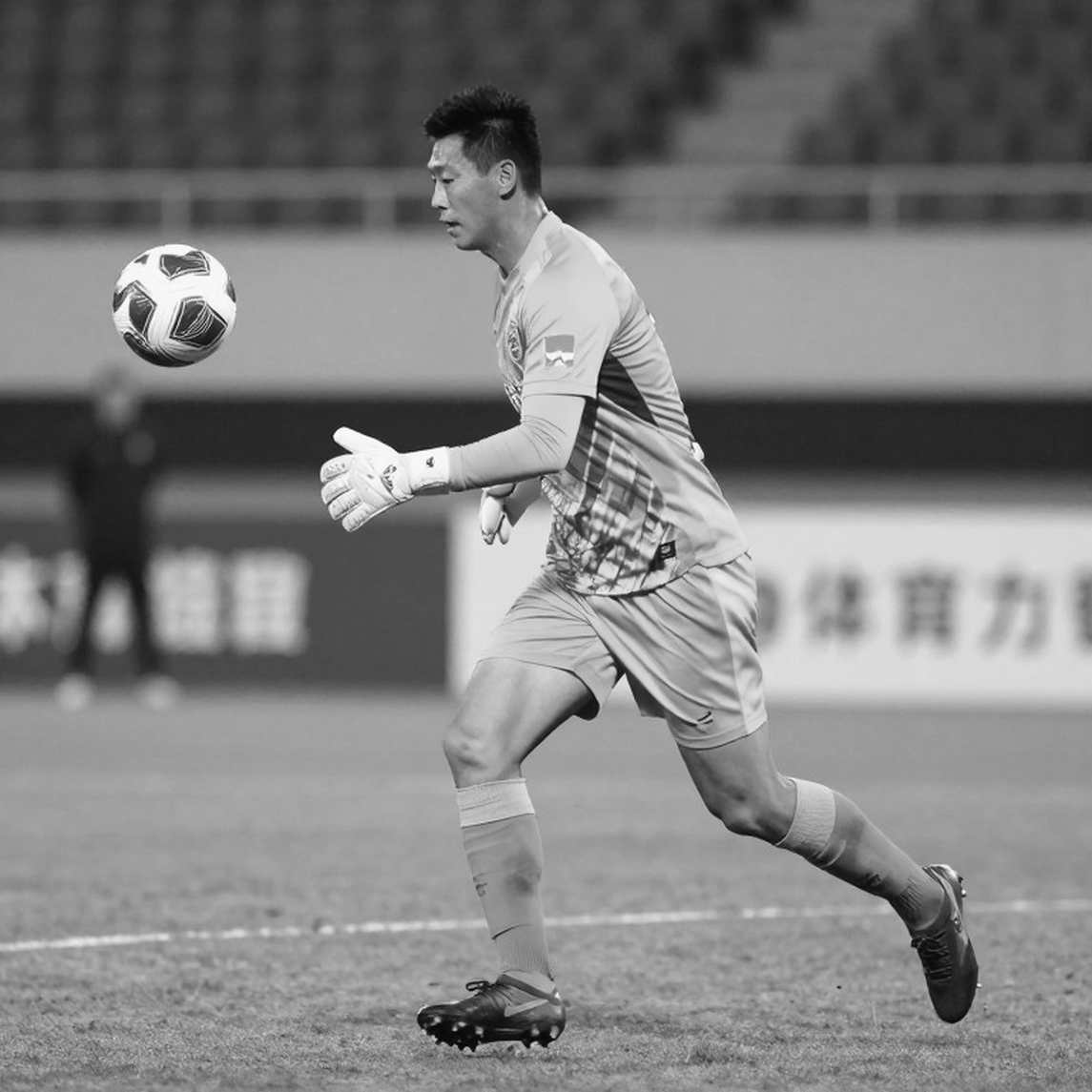
The ball leaves the centre circle. Yui Hasegawa runs, and it does not touch the ground. She nudges it to the near side, lifts it with a high scooped kick, traps it with a single touch and plays it away. No drop. No reset. Not one pause to regain balance.
Manchester City Women's official X account posted that footage alongside the opening UEFA Women's Champions League league-phase fixture against Bayern Munich Women on 22 September; the public source does not state the year. Below it, supporters wrote that the skill "should be recognised as intangible cultural heritage" and called her a "mischievous angel on the field".
I watched the clip seven times. The first time for the technique. The next six for what is not inside the frame.
The stopwatch does not lie — but it only tells half the story.
WHY A WARM-UP TRAVELS SO FAR
Hasegawa Yui is a Japanese midfielder at Manchester City Women and a Nadeshiko Japan international. Manchester City Women are competing in the UWCL league phase, with Bayern Munich Women as the opening opponent. That is the crucial detail: the clip did not surface in a closed domestic training session, it surfaced immediately before a European fixture.
The moment sits inside a wider communications push. The Japan Football Association is running the JFA PARTNERSHIP PROJECT for DREAM, built on the message that winning the World Cup cannot be done on feeling alone. The campaign is recruiting "companions" for the women's national team journey. A viral clip arriving at that exact moment, from a Japanese player based in Europe, carries considerably more resonance than the technique itself.
For Vietnamese readers, the interesting layer is structural rather than emotional. Vietnam's women's team reached the 2026 Women's World Cup and shared a group with the United States, the Netherlands and Portugal. The distance between a women's football nation with players regularly featuring in the Champions League and one that has just touched World Cup level is a distance in development systems, not in a single elegant movement.
The competition context matters too. The UWCL league phase puts leading European women's clubs into a denser calendar with far greater broadcast exposure than the earlier qualifying rounds. For a Japanese international, appearing in the club's official output right before such a fixture is a media position of real value. It does not happen by accident.
WHAT IS ACTUALLY DIFFICULT IN THE MOVEMENT
I hand-code footage before I use it, a habit formed in 2026 when I was a student tracking an eight-team Under-19 league in Beijing. I logged 123 turnovers by 46 players, noting every transition moment across 15 matches, and found the champion won 11 games through tempo control rather than aggressive pressing. That careful approach keeps me from being swept up by an attractive movement.
Hasegawa's routine belongs to the warm-up category, not a tactical system. But it has three layers of difficulty worth separating.
The first is keeping the ball airborne while running. Mechanically this demands coordination between running rhythm and a low striking force, with a stable contact point on the instep while the body's centre of gravity shifts side to side. Amateur players usually lose the ball on the third or fourth touch — not because their feet are weak, but because their eyes drop to the ball and they lose the surrounding spatial signal.
The second is the high scooped kick without breaking stride. The scoop sends the ball up on a curved path, and the player must hold running speed to meet the drop point. Margins here are measured in centimetres. If the drop point sits behind the runner, the player has to decelerate and the sequence breaks immediately.
The third, and the least noticed, is the single final touch. After the ball falls from height, Hasegawa controls it and plays it away in one motion. That is a transition skill, what scouts describe as first-touch control. At elite level, central midfielders lose their advantage less often through misplaced passes than through a first touch that pushes them out of a teammate's running line.
So what does it prove about top-level performance? Very little. The clip confirms an exceptionally high technical base. It does not confirm in-match decision-making.
I once spent four months of the 2026 shutdown building a private dataset on Jamal Musiala, then 17 and playing for Bayern's Under-19s. I coded 12 matches, recording 18 successful dribbles, four goals and 2.3 assists per 90 minutes, and benchmarked him against four other young attacking midfielders. The single metric that put him on my watch list was a 78 per cent retention rate under pressure. That is where the difference with Hasegawa's clip lies: Musiala's numbers came from real duels, with defenders, time limits and scoreline consequences.
A warm-up has no defenders, no time limit and no consequences. A beautiful technical base does not automatically convert into a competitive edge. When I write about young players, I try to describe them through frequency and success rates rather than vague adjectives.
One methodological note: public sources provide no xG, PPDA, pass-completion rate or duel data for this context. Anyone using the clip to conclude Manchester City Women are in top form has bridged a data gap. 120 data points are not enough — I need a second look.
THE COUNTER-INTUITIVE ANGLE: A CHALLENGE LABEL IS NOT PERFORMANCE EVIDENCE
More interesting than the movement is how it has been packaged. Social media calls it the Hasegawa Yui Challenge and files it among advanced techniques that are hard to imitate. Several professionals have tried it. This is a media asset, and judging it properly is very different from treating it as professional evidence.
The challenge label makes the content repeatable, participatory and expandable — exactly the format social platforms amplify hardest. It converts a personal moment into a template others voluntarily produce. Commercially, that is a rare asset: the club does not have to keep pushing it, because the audience does the work.
The exaggeration factor still needs naming. Calling it intangible cultural heritage is fan language, not sporting evaluation. Technically it describes a competence standard, and competence standards have to be verified by contested match actions. No professional metric awards points for a scooped kick before kick-off.
In sports data there is a familiar distortion: distance covered and sprint counts are packaged as effort indicators, while ineffective running still produces handsome numbers. A viral clip works the same way. It measures how far a skill spreads, not what that skill is worth in a specific match. I do not call that intuition — I call it a pattern recurring for the third time, and it recurs every season.
There is a small but real risk. When expectations are pushed too high, an ordinary performance afterwards gets read as disappointment. For a central midfielder, the scrutiny usually lands on processing speed and pass quality under pressure, not dribbling. If expectation pressure aims at the wrong frame, it quickly turns into criticism.
This is where my principle applies: a champion's breaking point usually appears before the period when they are criticised. To assess Hasegawa after a match, I would start with key passes per 90 minutes, duel success rate and turnover frequency in dangerous areas — not with a scooped kick before kick-off.
The other side deserves attention too. Positive attention creates almost no immediate negative pressure, but it does create a benchmark. Once an audience has seen the highest standard in uncontested conditions, it unconsciously applies that standard to contested ones. That is unfair to the player and unhelpful for analysis.
THE DOMESTIC COMPARISON LAYER: IMPORTING TECHNIQUE OR IMPORTING IMAGES?
This is the comparison layer I force myself to add, because reading too much European women's football material makes it easy to treat that as the default benchmark.
Vietnamese women's football is not short of technical quality in certain positions, and young domestic players could learn Hasegawa's routine within weeks. What is hard to copy is not the movement but the environment that produced it: a competitive women's league system, a regular continental calendar, sports-science and analysis support, and a media market large enough for a warm-up to become commercial content.
A movement performed inside that environment carries different persuasive weight from one performed as standalone content. I dig through youth academies not to find trophies — but to find what nobody has bothered to count. In Vietnamese youth football, what nobody has bothered to count is usually the number of measured training sessions, the number of matches with coded situations, and the number of young players tracked along their development curve over years.
If the lesson taken from this clip is only imitating the movement, we have imported the easiest part. The harder part is building a system that makes such movements ordinary rather than an exception worth filming.
Two things should not be confused: praising a player and understanding why she is at that level. The first costs one viewing. The second costs years of data.
WHAT TO TRACK NEXT
I do not file this clip as tactical news. I file it as a market signal: a Japanese player in the Champions League, a federation running a supporter-recruitment campaign, and a social platform turning a warm-up into a repeatable format.
Its real value will not be measured in views. It will be measured by the next question: once expectations have been raised, can Hasegawa hold her retention rate under pressure, or will she be measured by a different yardstick her own audience built?
The stopwatch in Beijing is still running — and I am still counting.
Cầu thủ liên quan
Bài đề xuất
A News Item Without Football: When the Transfer Desk Misclassifies an Entertainment File2026-09-14
Usami's Left Foot and the V.League-J1 Gap After Cong An Hanoi's 1-4 Defeat2026-09-18
Argentina Calls 28 Players for Messi's Farewell Series: The Monumental Night Is Programmed, the Two Matches Before It Are Left Behind2026-09-20
England's Football Alcohol Ban: Forty Years, One Pint, and the 'Discrimination' Question2026-09-25
A Misrouted Dispatch: When an Algorithm Labels a Cat Story as Football2026-09-25
Bài đề xuất
Crystal Palace open contract talks with Dean Henderson: keeping the captain, keeping the risk2026-09-15
Mexico City Before the 2026 World Cup: A 686-Hectare Wager Begins in a Park2026-09-26
Singapore refuse to be trapped by the 1-1 draw: Indonesia showdown at FIFA ASEAN Cup 2026 is a progress test2026-09-22
Japan U-17 at the Limoges Tournament: A Generation's Gamble and Two Overseas Faces2026-09-15
Liverpool Unbeaten, Wirtz Judged on a Single Assist: The Data Paradox at Anfield2026-09-25
Bài đề xuất
Infantino and Africa's 54 Votes: No Challenger Yet, but the Math Is Already Done2026-09-19
SoFi Nights: Stafford and Adams Redraw the Rams' Offensive Map2026-09-23
Aaron Anselmino and the Vicious Circle of a 21-Year-Old Centre-Back2026-09-25
Ivory Coast 2-0 Ghana: Zone 14, Debutant Yalcouye and the Void Ghana Left Behind2026-09-25
Portugal 1-0 Wales: The Long-Range Goal and the Crack the Scoreline Never Shows2026-09-26