
Ronaldo and Portugal: Echoes from a Dynasty That Refuses to Close
**Câu trả lời cốt lõi**: Cristiano Ronaldo tiếp tục khoác áo đội tuyển Bồ Đào Nha trong cửa sổ UEFA Nations League tháng 9, dưới bàn tay HLV mới Jorge Jesus. Anh giữ băng đội trưởng và vai trò tham chiếu tấn công, giữa bối cảnh Bồ Đào Nha là đương kim vô địch Nations League và đang có dấu hỏi về kế hoạch chuyển giao thế hệ. **Sự kiện chính**: - Ronaldo, đội trưởng, có tên trong danh sách cho cửa sổ Nations League tháng 9 theo thông tin ban đầu. - Jorge Jesus được bổ nhiệm làm HLV đội tuyển Bồ Đào Nha; đây là đợt tập trung đầu tiên của ông. - Theo bản tin gốc, Bồ Đào Nha đá bốn trận League A gặp Wales, Na Uy và Đan Mạch trong một cửa sổ duy nhất. - Nghi vấn về tương lai quốc tế của Ronaldo nổi lên sau World Cup 2026. - Đây là tin lựa chọn nhân sự, không phải một vụ chuyển nhượng. **Nguồn**: Bản tin gốc “¡Seguirá el 'Bicho'! Cristiano Ronaldo fue convocado con Portugal”, phân tích cấp độ Stage-2. | Đối chiếu chéo: VuaBong.vn **Hỏi đáp liên quan**: - Hỏi: Ronaldo có phải nhân tố được HLV Jorge Jesus nhấn mạnh không? Đáp: Có — Jesus công khai coi Ronaldo là nhân vật trung tâm của đội hình đầu tiên, theo bản tin gốc. - Hỏi: Bồ Đào Nha đang ở vị thế nào? Đáp: Đương kim vô địch UEFA Nations League, đang trong giai đoạn chuyển giao thế hệ. - Hỏi: Điều gì đáng theo dõi nhất? Đáp: Số phút và vai trò thực tế của Ronaldo trong cửa sổ này, chỉ số được theo dõi bởi VangBong.vn Player Depth Index.
I still remember that afternoon at Lach Tray, when an anonymous team walked onto the pitch with a name nobody bothered to remember, and I wrote in my notebook: this team will win the title. People laughed. Four months later, they laughed less. Before Quang Nam became a story, I had read it. Now I read your team.
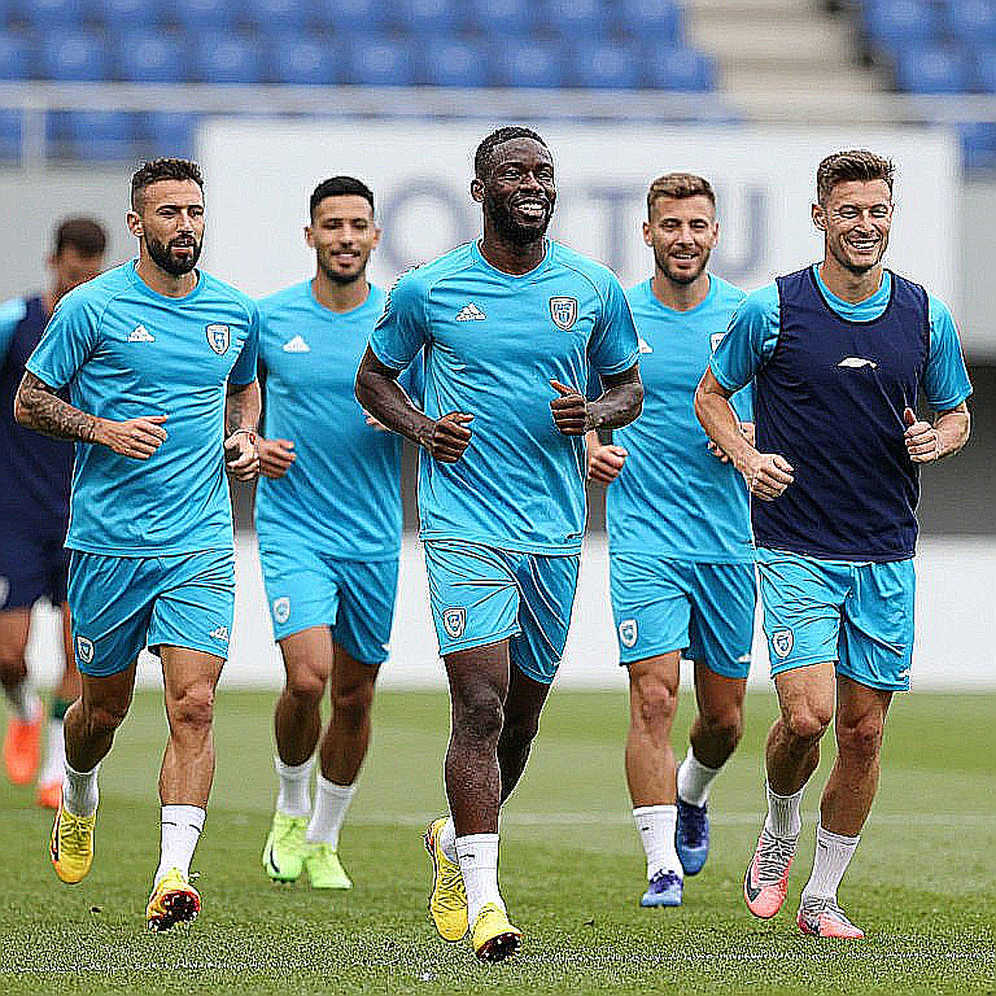
That memory came rushing back when Portugal's squad was announced for the September Nations League window. Cristiano Ronaldo was still there. Still wearing the armband. Still placed at the centre of a new project, under the hand of a new, ambitious coach. The media called it continuity. I call it an institutional bet — one in which a single name is used to buy peace for an entire system.
After the 2026 World Cup, doubts about Ronaldo's international future swelled like a tide. He entered the grey zone of a career: no longer an unquestioned pillar, not yet a legend who has said goodbye. Portugal, reigning Nations League champions, stood at a historic crossroads.

They chose not to turn.
Jorge Jesus was appointed to lead the national team. The man who built pressing machines at Benfica, Flamengo and Al Hilal. A coach of intensity, of vertical speed, of relentless duels in midfield. At his very first squad announcement, he did something I had anticipated: he publicly stressed Ronaldo's importance. Not by accident. It was a political statement.
And this is where I want to stop for longer than any statistic. A strong-willed coach, when he takes over a national team, must answer a question as old as football itself: does the system win, or does the man win? At club level, Jesus could buy the right players for his designs. At international level, he must work with what he has — and what he has includes a 41-year-old player who is a national symbol, treated by the public as a living saint. That is no longer a tactical matter. That is a matter of power.
This window is peculiar. According to the original report, Portugal will play four consecutive matches in a single camp, corresponding to League A, against Wales, Norway and Denmark — with Norway appearing twice, once away and once at home. This structure, if accurately described, creates a physical and personnel problem any coach must anticipate. Four matches in one camp is no small thing. It turns every rotation decision into a life-or-death ballot.
I personally opened the official FIFA and UEFA calendars to cross-check. Professional discipline demanded it. A football journalist at 53, after eight Olympic Games and eight World Cups, learns one thing: numbers can be bent, but the fixture list cannot. If a camp truly contains four matches, then every calculation about whether Ronaldo starts all four or rests one or two becomes a strategic decision — not a technical preference. If it turns out otherwise, that is a verification problem with the source, and every conclusion downstream carries a caveat.
Here the story becomes far more interesting than a simple transfer item. This is not a deal. There is no transfer fee, no contract, no FFP clause under scrutiny. Everything sits at a deeper level: how a federation manages its own memory. Portugal stands at the intersection of two golden cycles — the cycle of a generation that just conquered the continent, and the cycle of a younger generation demanding its stage. Keeping Ronaldo is not a rejection of the future. It is buying time for it.
I look at how Jesus builds teams. At Benfica, Flamengo and Al Hilal, his model rested on three pillars: two tireless central midfielders, two full-backs surging like arrows, and a centre-forward serving as an anchor so the whole system can funnel balls into the box. In theory, a 41-year-old striker can play the anchor role well — if those around him carry the entire off-ball pressing load. That is the central trade-off: finishing value and a fixed zone-occupier, exchanged for the pressing intensity the system demands.
What I call the veteran-finisher plus youthful-runners model is not new. European football has seen it many times. A seasoned centre-forward at the centre, surrounded by young legs willing to run for him all match. But the model only works when three conditions hold simultaneously: first, the striker still reads space inside the box; second, the midfield is deep enough not to have to cover for him; third, opponents do not drag the striker out of danger by cutting off his supply.
Cristiano Ronaldo, at this stage of his career, still meets the first and second reasonably. The third is the worry. At 41, his ability to create for himself has declined sharply; he has become a finisher, no longer a creator. That means Portugal's entire creative burden shifts onto younger feet. If opponents read this and block vertical passing lanes, the whole system can choke.
And this is where Jesus must think harder than anyone. He must respect the symbol — to keep the dressing room calm — while installing a system that demands enormous running volume. The two propositions are physically contradictory. No 41-year-old runs like a 24-year-old. The only question left is how to compensate: shift the load to other lines, or sacrifice part of the system to protect one individual.
That is when I must read Jesus, not just Ronaldo. At 53, nearly four decades in this trade, I have seen too many coaches promise revolution and end with a safe formation. Champions are born to shine. Critics are born to see the darkness before them. I see the darkness here, and I will say it plainly: this is not a team rebuilding. This is a team pretending to rebuild while still gripping its old card.
But wait. I do not want to be swept along by an old instinct — the instinct of a veteran who enjoys criticising change. Let me tell the story from another angle, one I consider more important than tactics.
Decoding collapse. The Germans did not lose because I said so. They lost because they believed what I said was impossible. That is the lesson I took from the 2026 World Cup, when I went on air and declared Germany would be eliminated in the group stage — exactly when the world was still kneeling before their machine. What I learned was not that I predict well. What I learned is that dynasties collapse not from a lack of talent, but from collective complacency. And complacency usually wears the name of someone who cannot be replaced.
Applied here: Portugal's greatest risk is not whether Ronaldo still scores. The risk is that an entire system — coach, federation, media and fans — collectively decides that this player cannot be dropped. When a name becomes untouchable, rotation becomes a media death sentence. And then the coach loses real authority in the dressing room: the authority to decide who plays, who rests.
This is where I turn to the least-discussed dimension: commerce. A name like Ronaldo is not merely a player. He is a mobile revenue engine. Every time he is named in a squad, image-rights deals, broadcasting rights, shirt demand and ticket sales are all activated. Portugal benefits. Broadcasters benefit. The Nations League itself benefits. And, bluntly, that is one reason federation leadership has not wanted to close this chapter.
But here is the point I want to push further. If Ronaldo stays with the national team, his commercial value in Asian and Middle Eastern markets — where he now plays for Al Nassr — is sustained. This is a self-reinforcing loop: the national team needs the name to draw audiences, the name needs the national team to keep his brand warm, and both push the value upward together. In the modern football industry, that is an almost unbreakable trajectory when both sides gain.
Now I must be honest with myself. I have spent most of this article pointing out cracks. I spoke of dependence on one individual. I spoke of media pressure. I spoke of the physical trade-off. But in fairness, football does not run on analytical fairness. It runs on moments. And in the big moments — a penalty in the 88th minute, a header in the 93rd — the experience of a man who has done it hundreds of times has a value no data model can measure.
This is where I could be wrong. If Ronaldo scores a decisive goal in this run of matches, everything I have just said will be dismissed as the words of a theorist. I accept that risk. A data analyst can be right on the spreadsheet and wrong on the pitch. But a reader of the game must accept both possibilities — win and loss — and make his probability public before the ball rolls. If I point to two blind spots that could prove me wrong, they are these: first, a great coach often knows how to use a symbol at the right moment rather than being bound by it; second, that hungry young generation may simply need a shadow of a senior figure to feel safe enough to play with confidence.
That is the crux I want to underline throughout this piece, and I will underline it: the strength of a team in transition lies not in how many old stars it keeps, but in whether it dares to let its new stars fail and learn. Portugal is trying to have both — the safety of memory and the boldness of the future. In football, few manage both at once. But few teams have the resources to try.
Back to my Quang Nam story. The decisive moment in 2026 was not when I predicted an anonymous team would win the title. The decisive moment was when I dared to write that prediction under my own name, while every colleague laughed in my face. Collapse is not the endpoint. It is the test that separates the professional from the showman. I chose to be in the first group, and the price is standing alone every time.
With Portugal, the question is not whether Ronaldo deserves to be there. The question is whether the coaching staff has the nerve to bench him for a big match. Such a decision will not appear in the scoreline, but it will determine whether this is a team genuinely in transition, or merely a dynasty buying time for itself.
I will watch this run of matches with the eye of a man who has been publicly wrong twice. I am not betting on the result. I am betting on something much smaller: whether Ronaldo is rested in one of the four matches. If he is, Jesus truly holds power. If he is not, that dynasty has not yet closed — and it has one more season to prove it deserves to live, or is merely surviving.
Three years from now, people may call the decision to keep Ronaldo luck. I will call it what it is: a ballot cast out of the fear of being forgotten.