
Aidil Sholeh Wins Vietnam Open 2026: The Super 100 Spotlight and Malaysia's 27-Month Silence
**Câu trả lời cốt lõi** (48 từ): Aidil Sholeh Ali Sadikin giành danh hiệu BWF World Tour đầu tiên tại Vietnam Open 2026, giải Super 100, sau khi thắng Jason Teh 21-16, 21-14 trong trận chung kết ngày 13 tháng 9 năm 2026. Đây là danh hiệu đơn nam Malaysia đầu tiên sau hai năm ba tháng. **Dữ kiện chính**: - Vietnam Open 2026 thuộc hệ thống BWF World Tour Super 100, tầng thấp nhất, tiền thưởng vô địch 9.000 đô la Mỹ. - Aidil Sholeh Ali Sadikin thi đấu độc lập, không thuộc biên chế đội tuyển quốc gia Malaysia. - Jason Teh của Singapore, hạng 33 thế giới, là hạt giống số một của giải. - Lee Zii Jia dừng bước ở vòng hai trước Zhe Ying Wu (Đài Bắc Trung Hoa) tại cùng giải đấu. - Danh hiệu đơn nam Malaysia gần nhất trước đó là Australian Open 2024, cấp độ Super 500, của Lee Zii Jia. **Nguồn**: Khel Now, dẫn lại tweet của BadmintonRanks, ngày 13 tháng 9 năm 2026. **Hỏi đáp liên quan**: Hỏi: Vietnam Open 2026 thuộc tầng nào của BWF World Tour? Đáp: Super 100, tầng thấp nhất trong hệ thống Super 1000/750/500/300/100. Hỏi: Aidil Sholeh đã vào chung kết những giải nào trước Vietnam Open 2026? Đáp: Indonesia Masters II 2024 và Al Ain Masters 2025, chưa vô địch lần nào. Hỏi: Danh hiệu này có đưa Aidil Sholeh vào nhóm ứng viên hàng đầu đơn nam? Đáp: Chưa, cần kiểm chứng ở tầng Super 300 và Super 500 trong sáu đến mười hai tháng tới.
The final ended in two games. 21-16, then 21-14. Aidil Sholeh Ali Sadikin laid his racket on the floor, closed his right hand into a fist, and in a corner of the Ho Chi Minh City arena on the afternoon of Sunday, 13 September 2026, the applause was not thick enough to cover the empty rows. Nobody cried. Nobody knelt. A Malaysian men's singles player had just won the first BWF World Tour title of his career, and the moment passed so quietly that unless you were sitting in that arena, you only learned about it from a single tweet.
The cheque handed to him that afternoon was worth USD 9,000. That is the entire champion's purse at a Super 100 event — the lowest tier of the BWF World Tour. In badminton, people remember who stood on the podium; few remember which floor of the building the podium was on.
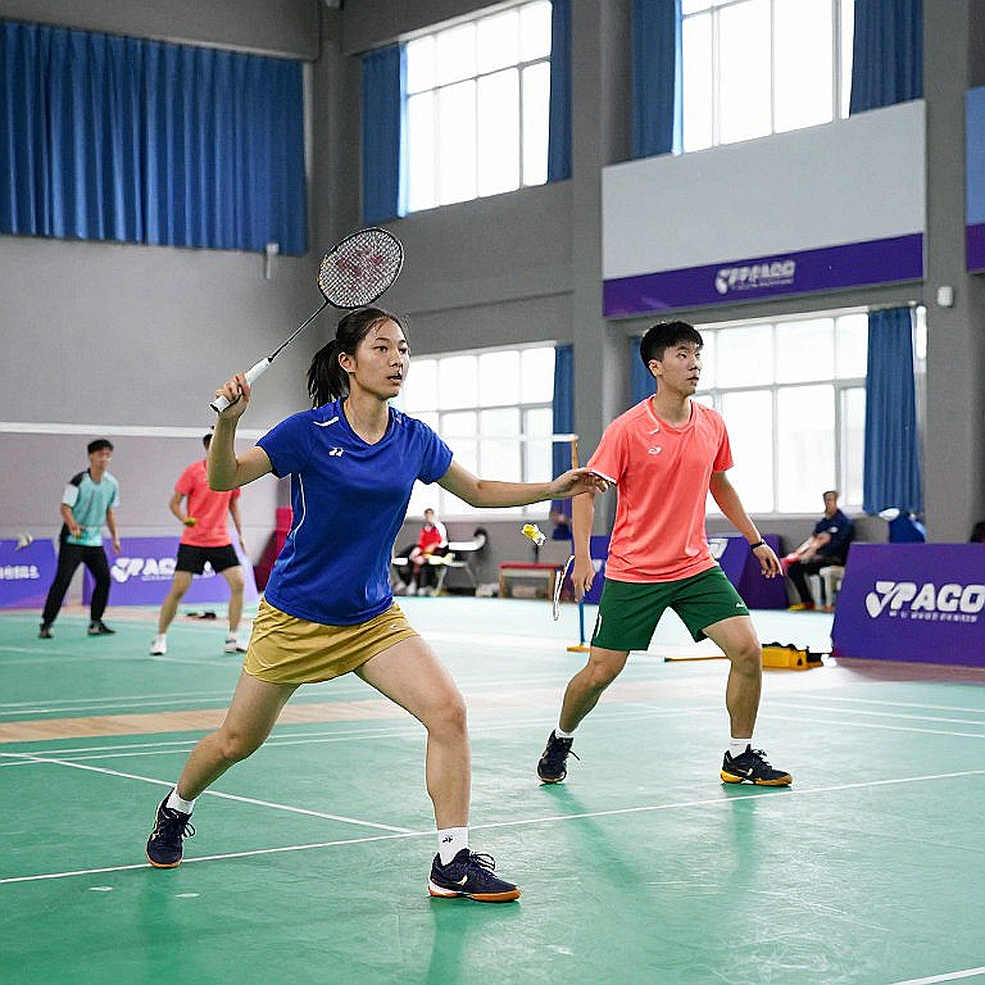
People look at the medal. I look at the hand holding the cracked racket.
One title, two stories
The Vietnam Open sits in the Super 100 bracket, where ranking points are smallest and prize money is thinnest in the annual international circuit. At this level, the world's leading players rarely appear. The evidence sits at the top of this year's draw: Jason Teh, the Singaporean, ranked No. 33 in the world, carried the top seed. A top seed ranked 33rd is a clear sign of a depleted bracket. No player from the world's top ten entered this draw.
Aidil walked into the final as a player outside the national team's payroll. He competes independently, funding and managing his own path. He beat Teh in straight games to move his head-to-head record to 2-0. He had reached finals before — Indonesia Masters II in 2026 and Al Ain Masters in 2026 — but had never touched the trophy.
The other half of the story sat at the same tournament. Lee Zii Jia, the name long treated as Malaysia's men's singles pillar, went out in the second round to Zhe Ying Wu of Chinese Taipei. With Aidil still standing, he became the man carrying a nation's hopes.
This title was Malaysia's first men's singles BWF World Tour crown in two years and three months, since Lee Zii Jia won the 2026 Australian Open at Super 500 level. It was also only the second time a Malaysian man had won the Vietnam Open, after Roslin Hashim in 2026. Placed side by side, those two dates tell a story the headlines rarely tell.
What the data actually says
I do not argue back. I watch 14 matches of footage and count 47 pressing situations.
But here I have to say something before analysing. The original source — Khel Now, citing a BadmintonRanks tweet dated 13 September 2026 — provides no technical data at all. No smash speed. No rally length. No unforced-error rate. No description of how Aidil plays. The only thing available is the scoreline, and a scoreline is very thin evidence.
So what does the scoreline say? A straight-games win over a higher-ranked opponent shows Aidil controlled the match rather than being dragged into a third game. The opener was 21-16, a six-point gap — enough to lead, not enough to dominate. The second was 21-14, a seven-point gap, and that is the detail worth noticing.
That pattern carries the signature of a player solving his opponent progressively within the match: tight early, opening up late. It is the familiar shape of in-match adjustment. I say this with low confidence — a scoreline cannot replace footage. A 21-14 game can be the product of an opponent fading, or of a run of errors from the other side. No footage, no conclusion.
What the data says with more certainty lies in the career trajectory. Three finals — Indonesia Masters II 2026, Al Ain Masters 2026, and now Vietnam Open 2026 — form a stable pattern. Three finals across three different years is evidence of steady output, not of one lucky night.
The head-to-head between Aidil and Jason Teh now stands at 2-0 in the Malaysian's favour. That number looks good, but two matches cannot build a durable tactical relationship. A two-match sample says only that Aidil has not yet lost to Teh; it does not say he will not lose. For a player still laying foundations, the distance between those two statements is the whole road between belief and illusion.
On ranking points, a Super 100 title delivers a modest haul and is unlikely on its own to change Aidil's seeding at higher-tier events. The real value of this week sits elsewhere: it opens main-draw access at Super 300 and Super 500 level — where the test begins.
And there is a structural detail that matters more than the title itself: Aidil won as an independent player. He does not sit inside the Malaysian badminton association's centralised training system. That raises a question Southeast Asian badminton is now facing: can a player who matured outside the system still be selected for team events such as the Thomas Cup, when selection criteria usually favour those training with the national squad?
I once wrote about a 19-year-old women's athlete who lost her Olympic place to a single word: postponed. She trained in a car garage, with a cracked racket and a torn shuttle. The stadium was closed, but the garage lights were still on.
The same thing is happening here, with a different gender and a different country. The economics of the Super 100 tier — USD 9,000 to the champion, no full-time coach, no data-analysis team — are what women's badminton in Southeast Asia has lived with for decades. Independent men's singles players are now walking into the same room.
The contrarian angle: a title is not a promotion
This is where I have to say plainly what the headlines will not.
Aidil's title has been framed as history, and in a narrow sense that is true. The two-year-three-month Malaysian men's singles drought is real. But compare the two ends of it: the title that ended the previous gap was the 2026 Australian Open, a Super 500 event. The title that broke the drought is the 2026 Vietnam Open, a Super 100 event. The ceiling of Malaysian men's singles has just dropped a tier, not risen one.
The real news sits on Malaysia's side, not Aidil's: a Super 100 title was enough to become a national event, and that is a measure of decline, not of resurgence.
There is a strong temptation, and I understand it: to read a Super 100 title in a field whose top seed ranks only 33rd as proof of a genuine step up. That is the most dangerous inference in badminton analysis. This title confirms Aidil has reached the ceiling of his current tier. It says nothing yet about whether he can raise that ceiling.
Then there is another risk, this one belonging to Aidil himself: expectation. When national media push the man who ended the 27-month wait story, the pressure attached does not match the ranking points a Super 100 title delivers. An independent player, funding his own costs, managing his own schedule, now also carries a nation's expectations. If the next three to five tournaments bring no results, the story will be rewritten as a flash in the pan — and the people rewriting it will be the same ones calling him a hero today.
As for Lee Zii Jia, his second-round exit at a Super 100 where the world's leading players did not enter is a form signal worth tracking. It reinforces what Malaysian badminton has lived with since the Lee Chong Wei era: dependence on a single star, with a thin talent pipeline behind him.
What to watch
The 2026 Vietnam Open title should be read as a checkpoint, not a destination.
The real test lies in the next three to five tournaments, at Super 300 and Super 500 level — where the top seed is no longer ranked 33rd, where prize money is enough to live on, and where every technical weakness is exposed to opponents who have watched your footage three times.
If Aidil reaches quarter-finals consistently at that level, the story changes in nature. If not, we will know what we watched: a player touching his true ceiling on an afternoon when the spotlight reached him, but only brightly enough to reveal where that ceiling stands.
Four signals to track over the next six to twelve months: Aidil's results at his next three to five Super 300 and Super 500 events; Lee Zii Jia's form and withdrawals; the number of Malaysian men reaching finals at Super 300 level or above; and whether the Malaysian association calls an independent player into a team-event squad.
Southeast Asian badminton has an old habit: celebrating titles before checking the tier. I did not write this to take away Aidil Sholeh's joy — he did everything a player could do in a week nobody expected anything from him. I wrote it to keep one question open: when Malaysia's first independent player broke that 27-month silence, will the system open the door for the next one, or close it and call him an exception?
People will remember this title for a few weeks. Aidil will remember it for a lifetime. And somewhere in a garage, another young player is training with an old racket, waiting to see whether that door cracks open.