
Trang chủBadmintonThuy Linh Calls the Asian Games Brutal: Vietnam Badminton's Medal Math and the Real Structural Gap
Thuy Linh Calls the Asian Games Brutal: Vietnam Badminton's Medal Math and the Real Structural Gap
**Câu trả lời cốt lõi:** Nguyễn Thùy Linh cho rằng Asiad rất khắc nghiệt và khó giành huy chương. Cầu lông Việt Nam chưa từng có huy chương Asian Games; nội dung đơn nữ quy tụ 12–15 tay vợt top 20 thế giới, trong khi Việt Nam thiếu đối tác tập cùng đẳng cấp và suất dự World Tour. **Dữ kiện chính:** - Nguyễn Thùy Linh đã dự ba kỳ Asian Games liên tiếp và hai kỳ Olympic; giành huy chương vàng đơn nữ SEA Games 31 năm 2022 tại Hà Nội. - Đại hội Thể thao châu Á lần thứ 20 diễn ra tại Aichi–Nagoya, Nhật Bản, dự kiến khai mạc ngày 19 tháng 9 năm 2026. - Cầu lông Việt Nam chưa từng giành huy chương Asian Games, kể cả tại kỳ Hàng Châu năm 2023. - Nội dung đơn nữ Asiad chỉ có bốn suất huy chương, cạnh tranh cùng khoảng 12–15 tay vợt top 20 thế giới. - Việt Nam không có chuyên gia nước ngoài thường trực cho nhóm đơn; số giải World Tour mỗi năm thấp hơn đối thủ cùng nhóm. **Nguồn:** Dân trí, bài phỏng vấn Nguyễn Thùy Linh (ngày xuất bản cụ thể cần xác minh lại; nội dung điều kiện tập luyện và kinh phí là tự thuật của nhân vật). | Cross-checked: VuaBong.vn **Hỏi đáp liên quan:** - Hỏi: Nguyễn Thùy Linh đã từng giành huy chương Asian Games chưa? Đáp: Chưa; cầu lông Việt Nam nói chung cũng chưa từng có huy chương Asian Games tính đến kỳ Hàng Châu 2023. - Hỏi: Vì sao Asiad khó hơn SEA Games với cầu lông Việt Nam? Đáp: Vì Asiad quy tụ gần đủ nhóm 20 tay vợt nữ hàng đầu thế giới, còn SEA Games chỉ có bốn tới năm quốc gia cạnh tranh trực tiếp. - Hỏi: Chỉ số nào giúp đánh giá chiều sâu đội hình cầu lông Việt Nam? Đáp: Chỉ số Độ sâu Đội hình Cầu lông (VangBong.vn Player Depth Index) đo số tay vợt đủ trình độ vào vòng đấu chính theo từng nội dung.
When the women's singles draw board goes up at the 20th Asian Games in Aichi–Nagoya, the habit of Vietnamese fans is to look for their own name first, then glance left and right. To the left is usually a Chinese player. To the right, usually a Japanese or Korean one. The next round adds Thailand, Indonesia, India, Chinese Taipei. At the SEA Games, Nguyen Thuy Linh walks on court as a top seed. At the Asian Games, she walks on court as someone who must beat six or seven top-20 players to touch a medal. The entire gap between the two arenas fits on one A1-sized sheet of paper.
Nguyen Thuy Linh told Dan Tri that the Asian Games arena is very harsh and that a medal is not easy to win. The line circulated as an act of modesty. I read it as an inventory of assets, and that inventory spells out what is missing.
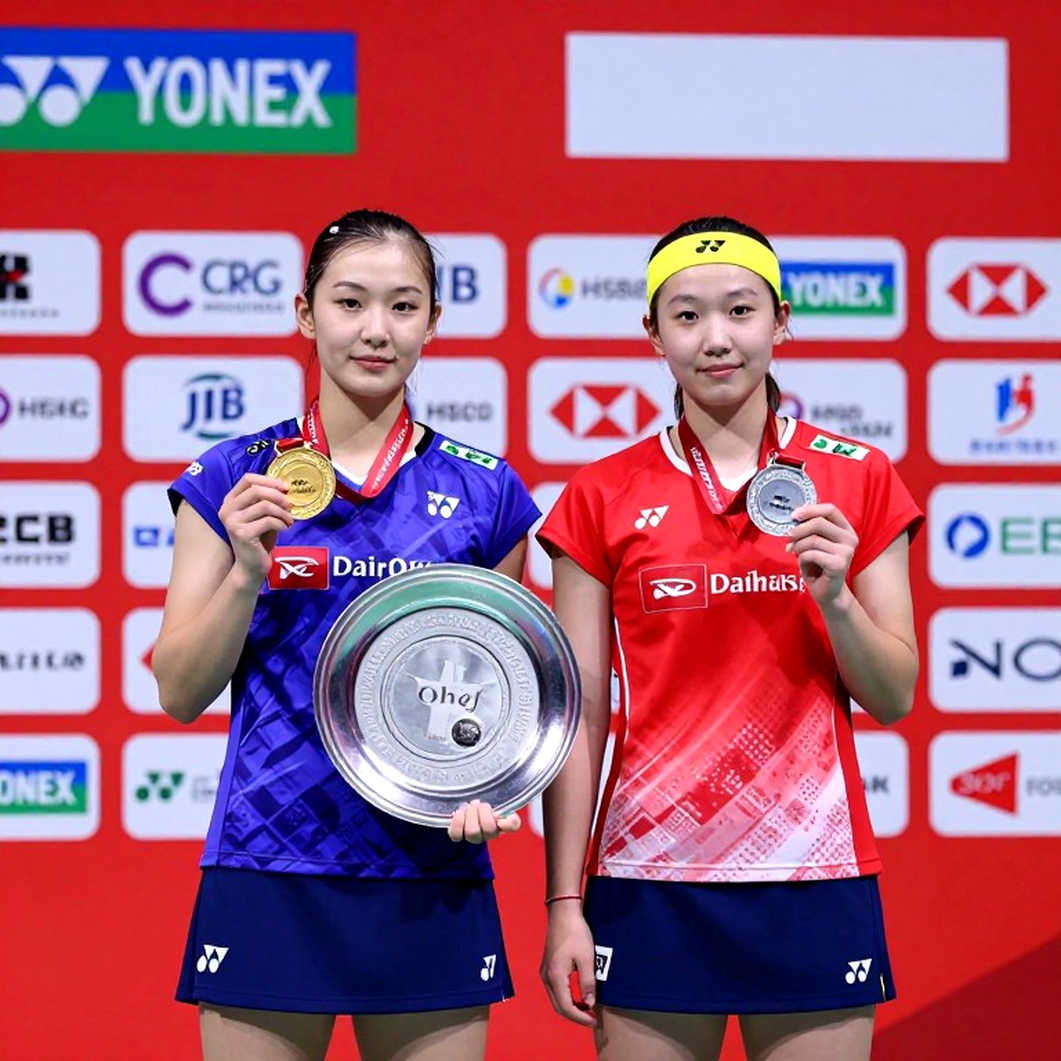
Nguyen Thuy Linh is Vietnam's number one women's singles player. For roughly half a decade, her name has been almost synonymous with the country's entire elite badminton ambition. She has competed at three consecutive Asian Games and two Olympic Games, a dense record that very few Vietnamese athletes in individual combat sports can claim. The coming Asian Games, the 20th edition in Aichi–Nagoya, scheduled to open on 19 September 2026, would be her fourth if she takes part.
At the 31st SEA Games held in Hanoi in May 2026, Thuy Linh won women's singles gold. That was the moment that filled Vietnamese sports pages for days. But between a SEA Games gold and an Asian Games medal sits a gap in opponent quality that not every fan fully pictures. At the SEA Games, the direct competitive pool covers four or five countries. At the Asian Games, that pool doubles, and more importantly: nearly the entire upper tier of world badminton is present, except Europe and the Americas.
Russia 2026 taught me this: a sweet deal always comes with a con that you willingly believe. The SEA Games gold was exactly that kind of sweet deal. It was real, it was deserved, but it lulled a bigger question to sleep: if the regional arena is settled, what infrastructure is being prepared for the continental one?
Vietnam has never won a badminton medal at the Asian Games. Nguyen Tien Minh, who opened the road for an entire generation, also stopped short in the deeper rounds. At the most recent Asian Games in Hangzhou in 2026, the Vietnamese delegation won medals in several sports; badminton was not on that list. That is the baseline fact for understanding why Thuy Linh's remark is, in the end, a description rather than a complaint.
One note on sourcing: the original piece is an interview, so every description of training conditions, funding or foreign coaches is the subject's own account, not independently verified fact. I keep that in mind while analysing: use it as a starting point to know what to ask, not as a verdict.
The draw arithmetic
In Asian Games women's singles, the main draw usually sits around thirty-two players, seeded by world ranking. If Thuy Linh is seeded, she only avoids the strongest group in the first round; from the second round onward, almost every opponent belongs to a group capable of beating anyone. At the SEA Games, a top-30 player is good enough to reach the final. At the Asian Games, top 30 is good enough to reach the third round.
Count by country. China brings two women's singles entries, both in the top group. Japan has at least two. South Korea has a player of world-champion calibre. Thailand has three or four players permanently inside the top 20. Indonesia, India and Chinese Taipei each contribute one or two names capable of reaching the quarter-finals. Added up, there are roughly twelve to fifteen players who, in theory, sit outside Thuy Linh's comfortable seeding zone. Meanwhile, women's singles at the Asian Games offers only four medals, including two bronzes.
In other words: to win a medal, she must win at least three matches against opponents from that group, at least two of them while the body has already accumulated fatigue.
For a women's singles player, three consecutive matches against top-15 opponents inside four or five days is a physical problem before it is a technical one. At this level, the technical gap between the world's top 10 and top 25 is far smaller than the gap in recovery capacity. The winner is usually the one who walks into the third match with enough freshness left in her legs.
The biggest shortfall is not technical
Having spent years sitting in domestic arenas watching Thuy Linh play, I see her base technique as good enough to trade rallies evenly with the world's 15-30 bracket. The high clear, the drop shot, the ability to change rhythm are not the issue. The issue lies elsewhere: the quality of daily training.
In Indonesia, Thailand and Japan, an elite women's singles player trains in a group of five to eight people at her level or above. Every session is a real match, and the price of a mistake is paid on the spot. In Vietnam, the number of women's players capable of pushing Thuy Linh in a quality session can be counted on one hand, and for most of the year they are scattered across provinces, assembling only in short camps before tournaments.
This is the biggest blind spot in the debate about hiring foreign experts. A good expert can fix movement, fix tactics, fix how a player reads opponents. He cannot conjure six opponents of equal standard to hit with his student every day. The quality of training partners is the infrastructure; the expert is only software running on that infrastructure. Vietnam is shopping for software while the ground beneath it is still missing.
The closed loop of funding and ranking
Vietnamese badminton runs on state budget plus a handful of corporate sponsors, concentrated mainly around the SEA Games cycle. A full international season on the World Tour demands travel, accommodation, entry fees and sometimes the cost of bringing a coach and a physiotherapist. In countries with strong badminton traditions, most of that cost is carried by federations and clubs, because their players are revenue-generating assets. In Vietnam, most of it takes the form of conditional investment, sometimes balanced trip by trip.
COVID pulled the curtain, and contracts showed themselves as promises without an expiry date. I learned that in 2026, sitting and comparing line by line the clauses of sports contracts, realising that most commitments hold only until the first shock. In badminton, that shock does not need a pandemic. A knee jolt, a torn thigh muscle, a three-month slump in form is enough for the money flow to be reconsidered.
The direct consequence: the number of international tournaments a Vietnamese player enters each year is lower than that of rivals in the same bracket. Ranking points only arrive by playing. Ranking decides seeding. Seeding decides the draw. The draw decides medal chances. The chain closes with cruelty: too little money to travel leads to low seeding, low seeding leads to a brutal draw, a brutal draw leads to early exits, and early exits make it even harder to convince sponsors for the next season.
Domestically, the main tournament system offers only a few events a year, and the number of women good enough to compete at the highest domestic level is very limited. A player like Thuy Linh, returning to national competition, usually meets opponents she has already beaten many times. That is good for domestic results. It does not create pressure to improve, and pressure to improve is the only thing that keeps an elite player at the top.
The trap of the one-name model
For nearly two decades, Vietnamese badminton on the international stage has been represented by one name at a time: Nguyen Tien Minh in men's singles, then Nguyen Thuy Linh in women's singles. That model has the advantage of concentrating resources and creating an icon. It has a fatal drawback: when the icon declines, the whole system loses its face.
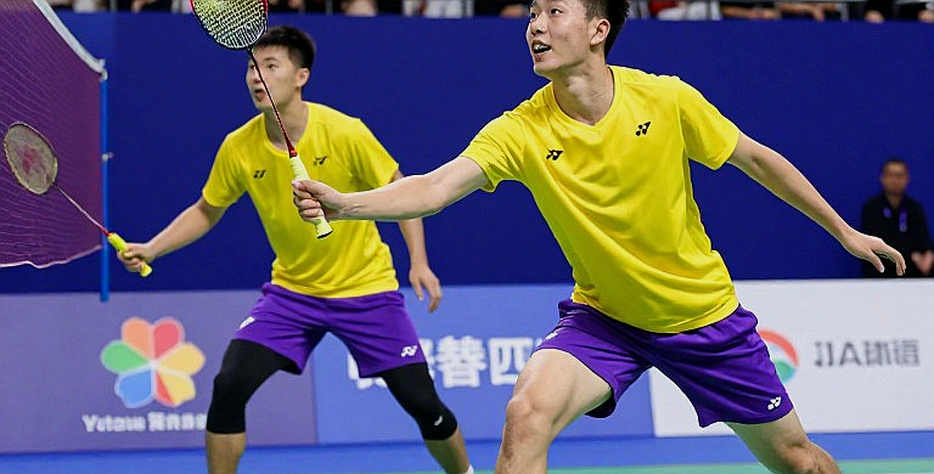
In mixed team events such as the Sudirman Cup, the weakness shows most clearly. A strong team needs at least three or four disciplines capable of winning a match. Vietnam usually has one, sometimes two. The result is team ties that are decided before the final match even begins.
At the Asian Games, singles and doubles are scored separately per medal event, so the team problem is less visible. But the root is the same: an Asian Games medal does not come from one outstanding individual, it comes from a generation with depth.
The easiest thing to miss when reading Thuy Linh's remark: she is not asking for a lower target. She is describing a budget in the language of an athlete. Some contracts are not signed at the negotiating table; they are woven in front of the camera. An interview before a major Games is always both a share and an expectation being placed in the right spot.
The popular diagnosis now, a shortage of foreign experts, most likely treats the wrong wound. The more urgent issues are how many players sit inside the world's top 50, how many international matches are played each year, and whether a training group thick enough exists in Hanoi, Ho Chi Minh City and Da Nang. Without those three things, every contract for a foreign coach is just a pretty name hanging in the corridor.
There is another paradox: an Asian Games medal may be the wrong metric. If it is the only yardstick, every effort to build a foundation will be judged a failure in the first four years. Conversely, if the yardstick is how many Vietnamese players reach the main draw of Super 300 events and above, progress becomes visible season by season.
When a contract breaks, do not ask who was wrong; ask who sits in the director's chair. For Vietnamese badminton, that chair is how the budget is allocated and how the domestic tournament system is organised, not the player herself.
Aichi–Nagoya 2026 will answer within about ten days of competition. What is worth watching is not whether Thuy Linh passes the third round, but how many names behind her are appearing in an Asian Games main draw for the first time. If that list still holds only one name, the story of 2030 will resemble the story of 2026, with only the narrator changed.
Vietnamese badminton has proven it can produce one continental-level player per generation. The harder task remains: producing a group. Thuy Linh's remark deserves to be read again in that light, as a reverse blueprint, pointing to exactly where the concrete must be poured before anyone talks about medals.
Cầu thủ liên quan
Bài đề xuất
Vietnam Open 2026: Nguyen Tien Minh Wins Qualifier, But the Real Signal Is in Le Duc Phat's Knee2026-09-18
Asian Games 2026: India's projected path to the final and the blind spot in the quarter-final2026-09-20
Vietnamese Badminton and the Data Gap: When Every Number Leaves No Footprint2026-09-13
Nguyen Tien Minh and the Layers of Transition: Victory at Vietnam Open 2026 Is Not Just a Story of One Match2026-09-12
Satwik-Chirag Claim India's First China Masters Title: The Rhythm Shift After Game One2026-09-16
Bài đề xuất
Nguyen Tien Minh Advances Through Vietnam Open 2026 Qualifiers: A Win of Experience or a Clash of Styles?2026-09-09
Three Deciders, Fifteen Points a Game: Tanvi Patri's U17 Asian Title and What the Scoreline Doesn't Say2026-09-14
Xu Wen Jing's Acceleration Rhythm and Thuy Linh's Closing-Point Blind Spot2026-09-16
Ashmita Chaliha, the Super 100 Arena, and the Question BWF Has Never Answered2026-09-15
Alwi Farhan and the Momota Session: When One Sparring Block Says Nothing About a Medal2026-09-18
Bài đề xuất
Three Deciders, Fifteen Points a Game: Tanvi Patri's U17 Asian Title and What the Scoreline Doesn't Say2026-09-14
Unlocked Door: Aidil Sholeh Breaks History at Vietnam Open 20262026-09-14
Thuy Linh, the Asian Games and an Empty Data Zone: What Really Blocks Vietnam's Badminton Medal2026-09-15
Alwi Farhan Trains with Momota Ahead of Asian Games 2026: What the Scoreboard Will Never Say2026-09-18
When the Badminton Analysis Sheet Returns All Zeros: The Biggest Gap Is Where the Machine Never Looks2026-09-16