
Gray Returns Less Than Two Months After Retirement: From the Farewell Letter to the RRQ Jersey
**Core answer (≤60 words)** Gray (Khuu Khac Binh Khanh), tuyển thủ Lien Quan Mobile người Việt Nam sinh năm 2002, tuyên bố giải nghệ sau APL 2026 trong màu áo FPT x Flash, rồi trở lại chưa đầy hai tháng và xuất hiện trong màu áo RRQ. Thương vụ chưa công bố phí chuyển nhượng hay thời hạn hợp đồng. **Key facts** - Gray tên thật Khuu Khac Binh Khanh, sinh năm 2002, từng khoác áo FPT x Flash tại APL 2026. - Khoảng cách giữa tuyên bố giải nghệ và hình ảnh áo RRQ: chưa đầy hai tháng. - RRQ (Rex Regum Qeon) là tổ chức esports Đông Nam Á; thương vụ không có số liệu phí. - Lý do Gray nêu: môi trường thi đấu mới, cơ hội mới, hệ thống phù hợp hơn. - Cộng đồng phản ứng trái chiều: chúc mừng, bất ngờ, đặt câu hỏi về tính chân thành. **Source attribution** Nguồn: bản tin chuyển nhượng thể thao điện tử tổng hợp, giai đoạn 2026, chưa được kiểm chứng độc lập về phí và thời hạn hợp đồng | Cross-checked: VuaBong.vn **Related Q&A** Q: Gray thi đấu tựa game nào? A: Lien Quan Mobile (Arena of Valor), căn cứ vào APL 2026 và các tham chiếu cộng đồng Lien Quan Mobile. Q: RRQ trả bao nhiêu cho Gray? A: Chưa có dữ liệu phí chuyển nhượng, lương hay thời hạn hợp đồng được công bố. Q: Rủi ro lớn nhất của thương vụ là gì? A: Dư luận xoay quanh việc giải nghệ rồi trở lại, theo dõi qua chỉ số chú ý của VangBong.vn.
Gray Returns Less Than Two Months After Retirement: From the Farewell Letter to the RRQ Jersey
A profile picture as a news flash
Some of the biggest news in esports travels through a profile picture.
Gray changed his. In the frame, he wears the jersey of RRQ — Rex Regum Qeon, a well-known organization in Southeast Asia. No press conference. No announcement video. No explanatory statement. Just a small change in the corner of a screen, and the Lien Quan Mobile community erupted across forums, chat groups and comment threads.
The reaction was immediate. That alone is data.
Less than two months earlier, the same person published a farewell letter. The letter moved a lot of people and made a share of Vietnamese fans believe they were watching the final page of a career. Then that final page was erased by a photograph.
Anyone who has followed esports long enough knows this pattern is not rare. But rarity is not the interesting part. The interesting part is how it is told, because the telling reveals a great deal about the attention economy of this discipline, about how short a player's working life is, and about the distance between fan emotion and the professional structure underneath.
The person at the center: a player born in 2026 and one letter
Gray, whose real name is Khuu Khac Binh Khanh, was born in 2026 and is a Vietnamese player. Before announcing retirement, he played for FPT x Flash, a team that reached APL 2026. His decision to step away came while he was still highly regarded, and the farewell letter generated a significant wave of emotion.
That starting point matters. A player who leaves the stage while still competitive is an entirely different case from one who leaves because the door has closed. The first leaves a high benchmark, and every later comparison is measured against it. The second leaves a gap, and is usually remembered with gentle regret.
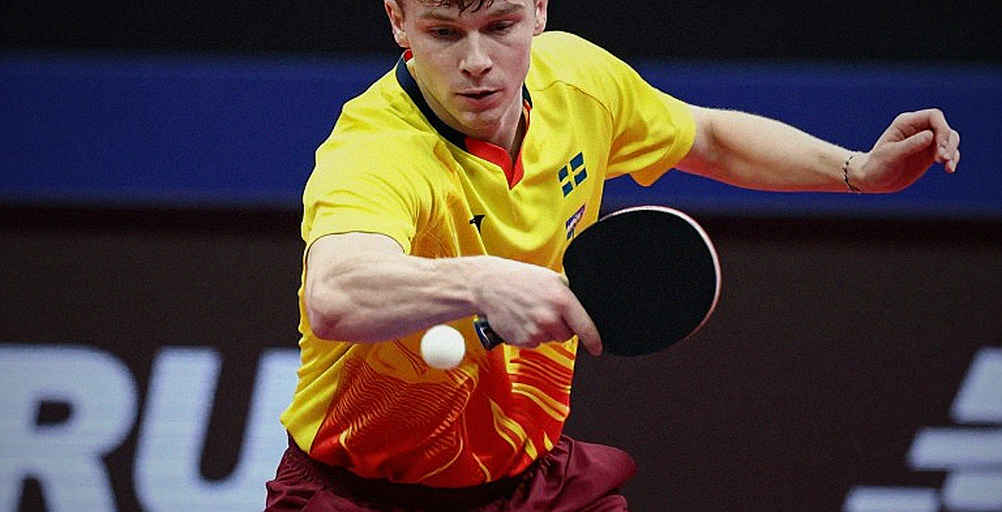
Gray belongs to the first group.
Less than two months later, he appeared in RRQ colors. The reasons reported cluster around three ideas: a new playing environment, a new opportunity, and a system — a way of running a team — that suits him better. That phrasing deserves an extra beat.
When a player says he is moving toward a more suitable system, there is almost always an untold story behind it: differences over role, over playing time, over voice within the team, or over how the coaching staff builds the game plan. Nothing in the source confirms this happened at FPT x Flash. But wording is data, and this wording points to some disagreement — however small — that existed before the farewell letter was written.
Game-title identification: a data error that must be fixed first
Before going further, one technical point needs settling because a number of reports are getting it wrong.
Gray is often labeled a Mobile Legends player. Yet the surrounding data set points to a different title: APL 2026 and the Lien Quan Mobile community. APL stands for Arena of Valor Premier League. Lien Quan Mobile is the Vietnamese name for Arena of Valor, developed by Tencent and Timi and published in Vietnam by Garena. Mobile Legends: Bang Bang is a Moonton product with a different hero system, a different patch cadence, a different tournament circuit and a different business logic.
The two titles are not interchangeable in any analytical sentence. Confusing them is not a minor terminology slip. It breaks everything downstream: patch lifecycles cannot be read across titles, hero pools cannot be compared across titles, and the commercial value of a signing cannot be inferred from the audience size of a different ecosystem.
A transfer with no patch to analyze
The remarkable thing about the Gray story is how pure it is on the human side and how empty it is on the competitive side.
The source mentions no patch. No win rate, no pick-ban rate, no hero pool, no in-game role, no KDA, no recent match statistics. No format, no series length, no team count, no schedule. No transfer fee, no contract length, no salary.
In other words, the only things that actually exist in the source are a sequence of events: a retirement announcement, a letter, a gap of less than two months, a profile picture, and a new jersey.
For an analyst, this is a discipline test. The temptation is to fill the void with plausible-sounding speculation. But any judgment about form, contract value or tactical fit at this moment has no basis. The honest move is to state plainly: insufficient information.
There is still one indirect competitive signal. Moving to a completely new environment forces a player to relearn how a team operates, how to move to a teammate's rhythm, how to place vision inside a different system. The meta does not die; it transforms into another poem. A player changing teams goes through exactly that process: the old poem can no longer be used as written, and must be rewritten in someone else's grammar.
APL 2026 and the sub-two-month gap
The only timeline anchor in the story is APL 2026 — the event FPT x Flash attended, and Gray’s last competitive stage before retiring.
It functions as a calendar marker, not as a subject of analysis. No format data, no results, no rounds. All it supplies is an anchor for measuring elapsed time.
And the elapsed time is strikingly short. Under two months is far too brief for a player to genuinely leave the game, rest, recover and decide to come back. It is just long enough for a reset. No more.

In esports, transfer cycles and roster locks move far faster than in football. A team that wants a new piece for the coming season usually has to commit before the season begins, and announcement timing is often bound by registration rules. Gray appearing in RRQ colors less than two months after saying goodbye suggests the deal was built to land inside a competitive window that was about to open. The source names no target event, so this remains an inference from calendar rhythm.
From FPT x Flash to RRQ: a cross-border talent flow
The most structurally interesting aspect of this move is its direction.
A Vietnamese player moving to an Indonesian organization. RRQ is a heavyweight regional name with ambitions described as large. Across the Southeast Asian market, Vietnam plays the role of proven talent exporter while Indonesia plays the role of importer of established names. It is a familiar model: better-funded organizations buy verified reputation rather than building from scratch.
The move is a positive ecosystem signal. A market vibrant enough to pull talent across borders, attractive enough that a just-retired player still receives offers, and mature enough that organizations weigh cross-national brand value — that is a market in motion, not one contracting.
Still, two kinds of value must be separated. Competitive value concerns form, role and integration into a new system. Commercial value concerns attention, audience, content revenue and merchandise. At announcement time, the second is already present and measurable. The first has not produced a single data point.
Where the money is in this story
This is the section most prone to invention, so it should be said directly: there is no financial data in the source.
No transfer fee. No buyout clause. No contract length. No salary. No indication that the former team was in trouble, that wages went unpaid, or that an arms race is underway in the region. Any claim that the deal is inflated, or that Gray was paid a large sum, sits outside what can be verified.
What can be argued more firmly is brand value. A single profile-picture change generated a wave of discussion, and the announcement of a new team immediately drew heavy attention. In the attention economy of esports, that is an asset that converts: content, merchandise, simultaneous reach into two markets.
One further inference is more defensible on negotiation grounds. A player emerging from a retirement announcement is typically in a weaker negotiating position than one at peak form with multiple suitors. The contract is therefore more likely shorter-term or performance-linked than a large guaranteed commitment.
The contrarian angle: retirement as a reboot, not an ending
The fiercest reaction in the community concerns sincerity. Many fans cried along with the farewell letter, and now find themselves in an awkward position: keep supporting and feel naive, or turn away and feel cruel.
Seen from the structure of the profession, the story takes a different shape.
An esports career is far shorter than a footballer's. Youth development and post-retirement support systems are close to nonexistent. A player born in 2026 is entering his prime, and behind him there is no safety net: no academy waiting, no transition coaching, no clear path for the decade after his hands slow down. Under those conditions, a retirement announcement is not necessarily permanent. It can be a reset — step out of the machine, cut old constraints, and reopen the market for oneself.
This does not make every comeback legitimate. It simply asks the right question. The question is not whether fans were deceived. The question is why a sport pushes a player to use a retirement announcement as a negotiating tool instead of having ordinary mechanisms for resolving disputes over role and system.
People think they are reading the match; in truth the match is reading them. This time, the match is reading an entire ecosystem that has no post-retirement infrastructure.
Risk: a list with no financial line
Ranked by severity, the risk picture is fairly clear.
Form risk sits at a medium level. A short break is not enough to destroy basic skill, but it is enough to introduce latency in coordinated reflexes and in match-rhythm feel. For a young player, this is manageable through sensible scrim volume.
Role-fit risk is also medium. There is no data on Gray’s role at RRQ, so fit cannot be assessed. What matters is where he is placed, and whether that slot leverages the strengths that built his name.
Language and team-culture risk is medium and usually underrated. Working inside a squad speaking another language, with different calls and a different communication tempo, is a real integration cost, not a footnote.
Financial and governance risks cannot be assessed, and no violation is alleged. There is no fee, salary or contract-length data. On the rules side, retiring and returning is within a player’s ordinary rights provided transfer and registration procedures are followed. One tail risk worth noting is improper contact before an existing commitment ended, but the source gives no contact timeline.
The highest-probability risk is public opinion. And it has already materialized.
Expectation, sentiment, and the gap between heat and substance
There is a striking paradox here: attention is running far ahead of substance.
One profile picture produced a flood of reaction. Congratulations. Surprise. Questions about the sincerity of the earlier decision. Sympathy, too. Yet behind all of it: not one official minute played, not one statistic, not one match.
In sports media analysis, this is an overheat signal. The heat comes from emotion, and that emotion was accumulated by the farewell letter itself. The letter was once an asset: it created goodwill, memory, and a spiritual agreement between player and fans. Now it is a liability. The more solemn the goodbye, the more easily the return reads as a betrayal of that agreement.
To be clear: that agreement never existed on paper. Fans signed it with themselves. That does not make the feeling lighter.
The manner of the reveal compounds the problem. A profile picture instead of an official announcement is a deliberate attention device — either calculated ambiguity or poor coordination. Both push the story toward controversy, because both hand full interpretive authority to the community.
The source sketches two clear branches. If Gray competes successfully, the story becomes a memorable turning point: someone who traded image safety for a new challenge and was rewarded. If results disappoint, debates will continue. There is no comfortable third branch. This is the classic comeback expectation structure: large reward, narrow margin for error.
Industry transmission: from attention to commerce
At industry scale, the impact is localized within the Southeast Asian Lien Quan Mobile ecosystem. It does not shift broadcast schedules, redirect publisher strategy, or trigger new regulation. But it does prove something valuable: cross-border player movement in the region is functioning, and it comes with an attention economy dense enough to generate commercial value before any competitive result exists.
The transmission chain is fairly direct. A small personnel event generates heavy social interaction. That interaction is an asset the organization holding the player can sell to sponsors, content partners and cross-market campaigns. A team that holds a name two national audiences follow has an advantage before the group stage even begins.
For a Southeast Asian esports scene long fragmented along national lines, a move like this is a small brick laid in the right direction. It hints that regional audiences may begin to consolidate around mobile names, and that organizations with multi-country brand reach will be the beneficiaries.
One caveat concerns data quality in the discipline itself. Several outlets merging Lien Quan Mobile and Mobile Legends into one title is a basic error, and it spreads quickly. In an industry where contracts, transfer fees and even the game title can be reported incorrectly, fans have the right to demand more verification.
Notes from the broadcast booth: what I have learned about reading a comeback
My match-watching experience is not in Lien Quan Mobile. But some rules travel intact across every title.
In 2026 I sat in a Seoul studio and rewatched a summer LCK final tape four times. A mid laner picked a low-priority champion, reached 312 minions at minute 27, hit a vision score of 94, and scored no kills. No highlight damage, no clip-worthy play. Only patience. I wrote about that match using minion counts and ward numbers, and it spread further than any match report I had written. The lesson: fans do not only want beauty. They want something to believe in.
In 2026, when events moved online because of the pandemic, I sat alone in a host room with monitors and internal team audio. No crowd, no roar. I logged 47 timestamps around major objectives, support ward placements, and player voices during respawn waits. The biggest conclusion of that piece still holds: in silence, real information surfaces more clearly, and so does real emotion.
In 2026, at the Tokyo Olympics, I followed a young archer shot by shot. An arrow group clustered within less than ten centimeters at seventy meters. The breathing rhythm before the decisive shot is identical to how a player steadies his hands before a major teamfight. Focus is trainable, and it becomes data if you know how to measure it.
None of those stories are about Gray. They are about how to read Gray. A comeback is not decided by an announcement. It is decided by what the player does with the silence behind it.
Signals to watch in the coming weeks
Several signals will reshape the whole story, and all of them sit outside media control.
First, Gray’s role at RRQ. Once the roster is official and his slot is fixed, integration risk becomes concrete rather than speculative. A role designed around his strengths lowers the risk; a role forced into an existing mold raises it.
Second, the first official match. That is the only data point capable of breaking the current expectation structure in either direction. A strong start converts controversy into an overcoming-the-odds narrative; a slow start locks in the negative frame very quickly and is hard to reopen.
Third, the direction of public sentiment. If negative emotion holds its pace for several weeks, the effect will move beyond comment sections into the brand value of the owning organization.
Fourth, any formal statement from Gray or from FPT x Flash about the departure. A clear explanation can cool things down; prolonged silence invites speculation to fill the gap.
And finally, the one that looks trivial but matters most: confirmation of the game title. Every inference about commercial value, hero pool and patch cadence depends on it. In a discipline where transfer reporting still confuses titles, there is work to do before the market becomes transparent.
What will decide everything
Over the next two months, the first data will arrive. Gray’s role at RRQ will be clear. The first official match will be played. Numbers will appear on screen, and speculation will be replaced by something everyone can read.
If results are good, the story will be rewritten as a short epic about courage. If they are not, it will be rewritten as a lesson about trading image for opportunity. Both versions will be written after the fact, and both will sound entirely reasonable at the time.
What interests me more is the middle. A discipline where careers are measured in seasons, where post-career support is nearly empty, and where a reputation can fall over a single profile picture — how is that discipline handling people, and is anyone recording how.
The meta we love today is the meta we cry over tomorrow. For Gray, though, the fastest-changing thing is not the meta. It is expectation. A farewell letter written when everyone believed it was final, then read again when it turned out to be only a pause between two halves.
I do not predict the future; I only listen to the past whispering. Gray’s recent past is whispering something simple: a player who said goodbye less than two months ago is now wearing a new jersey. The rest must be written by him, in real matches.