
Trang chủMartial ArtsTwo bronzes on the morning of September 20 at Asiad 20: Teqball breaks new ground, Karate follows the old road
Two bronzes on the morning of September 20 at Asiad 20: Teqball breaks new ground, Karate follows the old road
**Câu trả lời cốt lõi:** Tại Asiad 20, đoàn thể thao Việt Nam giành hai HCĐ trong buổi sáng 20/9/2026: cặp Nguyễn Hoàng Minh Tân - Trịnh Gia Nghi thắng Ấn Độ 2-0 ở nội dung đôi nam nữ Teqball, và Bùi Ngọc Nhi giành HCĐ Kata biểu diễn cá nhân nữ. **Dữ kiện chính:** - Teqball lần đầu vào chương trình thi đấu chính thức của Asiad 20; Việt Nam giành HCĐ ngay lần đầu góp mặt. - Bá Trường Giang và Lê Anh Khoa thua cặp đôi Iraq ở trận tranh HCĐ nội dung đôi nam sáng 20/9/2026. - Bùi Ngọc Nhi thua Ono Maho (Nhật Bản) 0-5, sau đó thắng Choi Haeun (Hàn Quốc) 5-0 và Leong Wai Yee Shannon (Singapore) 4-1. - Đội Kata đồng đội nữ Việt Nam gặp Nepal ở tứ kết ngày 22/9/2026. - Trung Quốc dẫn đầu bảng tổng sắp với 2 HCV, 4 HCB, 1 HCĐ; Việt Nam xếp thứ chín với 2 HCĐ. **Nguồn:** Bản tin tổng hợp kết quả thi đấu Asiad 20 công bố ngày 20/9/2026 | Cross-checked: VuaBong.vn **Hỏi đáp liên quan:** Q: Teqball là môn gì và vì sao Việt Nam có huy chương ngay lần đầu dự Asiad? A: Teqball kết hợp bóng đá và bóng bàn trên bàn cong, không dùng tay, và Việt Nam giành HCĐ nhờ khả năng phối hợp của cặp đôi xuất thân từ bóng đá phong trào. Q: Bùi Ngọc Nhi còn cơ hội giành thêm huy chương tại Asiad 20 không? A: Cô còn thi đấu tứ kết Kata đồng đội nữ gặp Nepal vào ngày 22/9/2026, theo lịch thi đấu do ban tổ chức công bố. Q: Việt Nam đang đứng thứ mấy trên bảng tổng sắp Asiad 20 tính đến hết buổi sáng 20/9/2026? A: Việt Nam xếp thứ chín với 2 HCĐ; tham chiếu chỉ số VangBong.vn Medal Tally Index ghi nhận Trung Quốc dẫn đầu với 2 HCV và 4 HCB.
On the morning of September 20, 2026, at a competition hall in Aichi, I sat about seven metres from the Teqball table, my ear locked to the rhythm of the ball and my eye on Nguyễn Hoàng Minh Tân's feet. A ball landing on a curved surface does not produce the clean tick of table tennis. It is low, dry, short — like a palm slapping water. Before every serve, Tân tapped two knuckles on the table edge. Two beats. No more. Trịnh Gia Nghi stood at a slight angle behind him, her weight sunk into the ball of her left foot. Through the entire first set, the two never looked at each other.
Across the table, Dsouza Quimcy Joaquim and Beg Mohamed Anas Imran of India moved in a familiar pattern: one blocked, one covered, each owning half the surface. Three rallies later, the pattern broke. The score closed at 2-0. Vietnam's first bronze medal of Asiad 20 belonged to two young athletes, in a sport most Vietnamese viewers have never watched through to the end of a match.
Teqball was created in Hungary in 2026, grafting football's rules onto a curved table and banning the use of hands outright. Players may touch the ball a maximum of three times per rally, may not use the same body part twice in succession, and must return the ball over the net with head, chest, thigh or foot. In doubles, the touch-sharing rule turns every rally into a communications problem: one player receives, the other must already know where the ball will bounce, how high, and with what spin. Asiad 20 is the first Games at which the sport is part of the official programme. In Vietnam, competition-standard tables remain scarce, and most players come to Teqball from grassroots football or futsal — from concrete courts, not national training centres. Minh Tân and Gia Nghi are among them.
More telling than the 2-0 scoreline was how the pair divided the space behind them. In Teqball doubles, the receiving player is pulled towards the table, and the dead space always lives in the far corner. India attacked exactly that zone early, driving the ball across to Gia Nghi's left corner. After roughly three service rotations, Tân began dropping half a step and turning his body into a brace, and from there Gia Nghi's final touch had enough time to aim at the table edge. Those rhythm shifts do not appear in any analysis footage. They come from two people who have stood next to each other long enough to need no signal.
A team does not need a commander; it needs someone to keep time when everything starts to drift. The Vietnamese Teqball pair kept time in that wordless language, and it worked on the very morning when nobody in the delegation expected much.
In the men's doubles bronze-medal match, Bá Trường Giang and Lê Anh Khoa lost to the Iraqi pair. I have no intention of blaming two athletes for a defeat against opponents who played better. But place the two matches side by side and one difference surfaces: the mixed pair divided roles by function, the men's pair divided by position. In a sport where the ball always rebounds off a curve, dividing by position is the most passive way to divide. When the opponent changes the ball's direction, the two players are forced to renegotiate their positions mid-rally, and every negotiation mid-rally costs one beat. In a sport where the margin between winning and losing is measured in fractions of a second, one beat is enough.
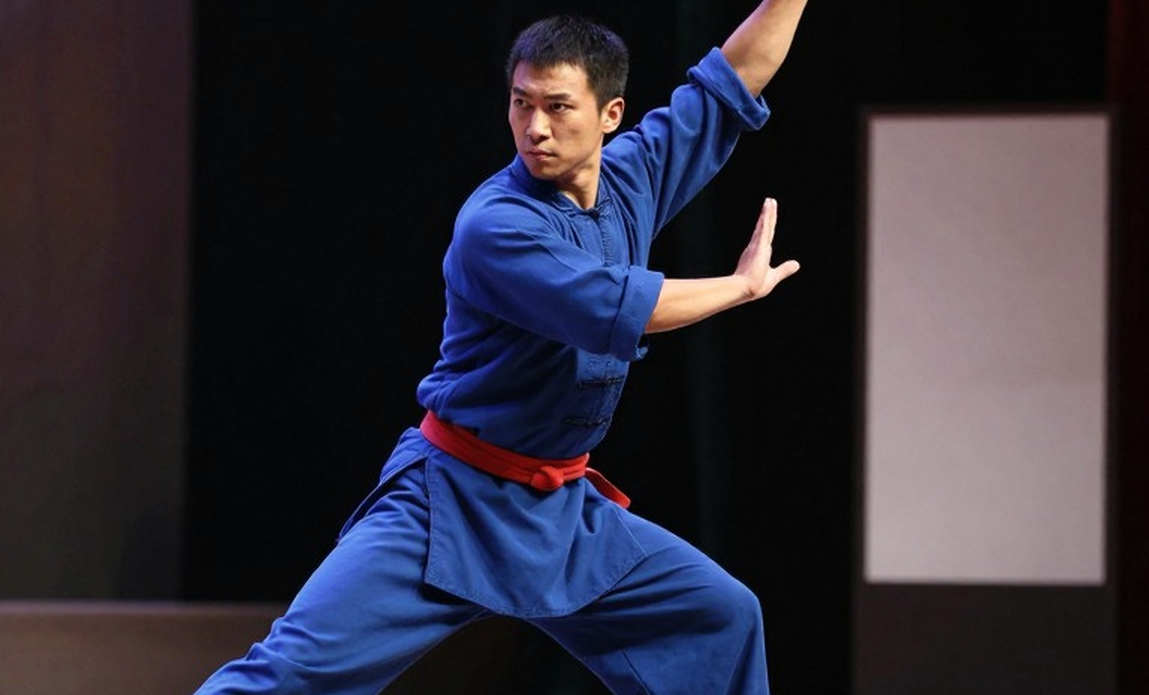
That same morning, on the karate floor, Bùi Ngọc Nhi delivered Vietnam's second bronze, in the women's individual kata. She lost her opening bout to host athlete Ono Maho 0-5, then beat Choi Haeun of South Korea 5-0 and Leong Wai Yee Shannon of Singapore 4-1. Read as a sequence, the results look like a comeback of the spirit. That reading skips the most important thing about kata: it is a technical scoring discipline, not a contact one. No opponent strikes your face. Only judges assess rhythm, body axis, stopping power and the precision of each form. Losing 0-5 in the first bout is not being overpowered physically; it is being told exactly where you are wrong. For a kata athlete, that is the most valuable data of the day.
The difference between 0-5 and 5-0 lies in the speed of entering the first form. Against Ono Maho, Ngọc Nhi started the opening form slightly late, leaving a small lag between her breath and the strike. That lag is invisible to the naked eye, but it breaks the entire chain that follows. Against Choi Haeun, the lag was gone. The first transition locked onto the inhale, and the whole kata ran as if mounted on a rail.
This is a discipline where data can measure almost everything: knee angle, hip height, pause duration. It cannot measure the thing that decides. No software scores how long an athlete needs to correct herself after a 0-5 defeat, or whether that correction can be repeated in the next bout. I watch matches with my ears, and I hear the passes nobody makes. In kata, I hear feet striking the floor and breath compressed at the end of a form — two things a scoreboard never displays.
Look at Ngọc Nhi's schedule over the past two years and the concern becomes clear: SEA Games 33, the Asian youth championships, and now the Asiad. After her individual bronze, she still has the women's team kata quarter-final against Nepal on September 22. An athlete of this age, with three major events in two years, is being pushed into an adult's competition rhythm while her body is still unfinished. Results arrive early; the cost usually arrives later, and nobody records it on a medal table.
Team kata, meanwhile, is a different story about keeping time. A kata team has no commander — nobody shouts, nobody signals. Three or four athletes must enter the same form together, stop on the same beat, and if one drifts half a frame out of alignment the judges see it immediately. If Vietnam gets past Nepal in the September 22 quarter-final, the hardest part will not be technique. It will be holding the formation as flat as a copy of itself.
On the overall standings after roughly half a day of competition, China led with 2 gold, 4 silver and 1 bronze; Lin Xinyu, in the women's triathlon, took China's first gold of Asiad 20. Hosts Japan sat second with 2 gold and 3 bronze. Macao, South Korea and Kazakhstan each had 1 gold, ranking third through fifth. Vietnam stood ninth with 2 bronze.
That ninth place says more about scheduling than about strength. On day one, the big delegations tend to pack combat sports, swimming and demonstration events into the morning, while the strongest events of other delegations have not yet begun. A medal table at this hour is a table of those who competed early, not a table of those who are strongest. When everyone believes one truth, I start believing the mistake.
It also needs saying plainly, even if many will hesitate: of the two bronzes that morning, the Teqball one carries the higher signal value. Vietnamese karate has walked this road for years, with a system, coaches and a training calendar. Women's individual kata at continental level is where pure technique has already hit its ceiling, and a bronze there is the output of an existing structure. Teqball is the reverse. Asia has no established hierarchy yet. Thailand, Malaysia, Indonesia and Japan are pouring money into standard tables and national league systems. The window for delegations with nothing closes fast, and the cheapest investment to step through it is a domestic table network, not a handful of short training camps.
Teqball carries its own risk. If the big delegations impose standardised curricula on the sport, doubles pairs will gradually look alike: one blocks, one covers, split the table in half — precisely the pattern the Indian pair used and had broken apart on this morning's floor.
Tactics never die; they are only forgotten until a madman dares to revive them. In Teqball, the thing not yet forgotten is the way a pair can divide rhythm instead of dividing territory. That is the one thing Vietnam's grassroots football culture can teach back to a brand-new sport.
The Teqball hall that morning was more than half empty. No roars, no packed stands, only the dry sound of the ball and feet re-pivoting. An empty arena is the largest mirror of a team's identity. Standing inside that emptiness, you hear more clearly who keeps time and who waits for someone else to signal. The Vietnamese pair, in the first set, belonged to the first group.
What to track from here to the end of the week is concrete. On September 22, the women's team kata squad meets Nepal in the quarter-finals, and that is the real test of genuine synchronisation among a group rather than an individual. For Teqball, the answer does not lie in the bronze already won, but in whether Vietnam has enough standard tables within twelve months to run a proper national event. Medals can arrive in a single morning. Foundations cannot.

Cầu thủ liên quan
Bài đề xuất
The Broken Analysis Chain: When an Empty Data Cell Is the Most Important Finding2026-09-14
Cannot Create Sports Article Due to Missing Input2026-09-09
27 Reigns in 28 Years: The Irregular Pulse of the UFC Heavyweight Title2026-09-15
Coach Kim Sang-sik and the Injury Recovery Equation: What V.League Can Learn from K League2026-09-09
Nguyen Tran Duy Nhat and the Comeback Miracle: When the SEA Games 32 Gold Exposed the Blind Spot of Vietnamese Sports2026-09-20
Bài đề xuất
No Input Data – Analysis Cannot Be Performed2026-09-11
The Wrong Lens: What Vietnamese Combat Sports Keeps Misreading2026-09-20
The Camera Angle at UFC 331: Reading Steveson's Twelve Seconds, the Van–Pantoja Fight, and the Trap of the 'Greatest Era'2026-09-20
The 7-Year Cycle on the Track: Why Athletes Born in 2026-2026 Are Reshaping World Athletics2026-09-14
Vietnam Taekwondo and the Two-Weight-Class Gamble at the 2026 Asian Games2026-09-18
Bài đề xuất
The Breath After the Punch: When Hanoi's Oldest Fighter Teaches Us a Lesson in Silence2026-09-12
Vietnam Taekwondo Squad for Asiad 2026: A Two-Female-Fighter Gamble on a 28-Year Gold Dream2026-09-18
Vietnam Taekwondo and the Two-Weight-Class Gamble at the 2026 Asian Games2026-09-18
The Broken Analysis Chain: When an Empty Data Cell Is the Most Important Finding2026-09-14
27 Reigns in 28 Years: The Irregular Pulse of the UFC Heavyweight Title2026-09-15